The
Kyotographie international photo festival – held every spring in the ancient city of Kyoto – offers a multi-faceted exhibition programme across both historic and contemporary architectural spaces. The site-specific showcases are conceptualised to harmonise with their environments, creating a chance for unique encounters with the work of curators, artists and traditional artisans.
Edge is the overarching theme of the 2026 edition. The main programme brings together 14 artists from eight countries, whose works explore experimental visual languages, social and historical peripheries, urban and technological thresholds, and humanity's encounter with nature at its most extreme. Among them are three South-African perspectives, further expanding the global dialogue. We spoke with the festival’s founders and directors, Lucille Reyboz and Yusuke Nakanishi, about this year’s event.
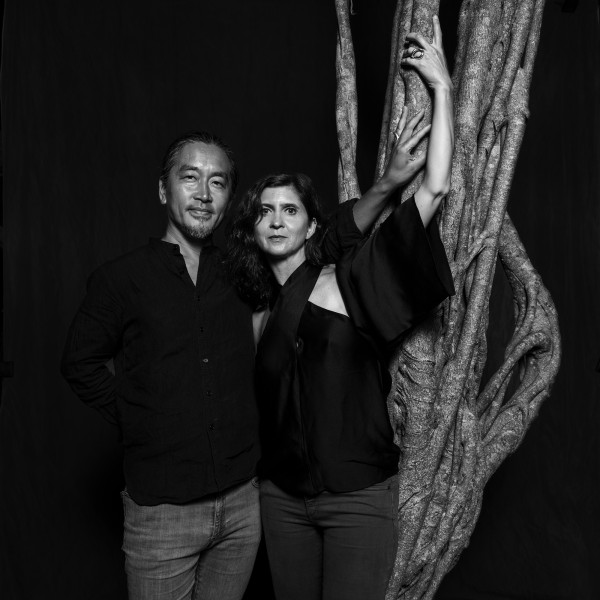
LFI: Lucille, you are a photographer from France, and Yusuke a lighting artist from Japan. How did the two of you first connect?
Lucille Reyboz & Yusuke Nakanishi: We met in Tokyo in 2011, and by chance we realised that we were both reading the same book. It was Kwaidan by Lafcadio Hearn, a collection of Japanese ghost stories. That became the starting point for our first collaboration, a photographic series called
Kyo-kaï, inspired by those narratives. We realised that our complementary practices and skills found a natural meeting point which has continued to develop ever since.
What led you to the idea for the festival in general, and Kyoto in particular?
Shortly after we met, Japan was hit by the Tōhoku earthquake and tsunami. That had a real impact on us, and it strengthened our desire to do something meaningful for the photography scene in Japan. We needed a location that could carry that ambition – somewhere with cultural weight. Kyoto made complete sense. It’s considered the cultural capital of Japan, home to around 2,000 temples and shrines. In 2013, we launched the first edition of Kyotographie.
Can you tell us a little about your initial vision for the festival?
The 2011 Tōhoku earthquake and tsunami was a stark reminder of the need for communication and cultural exchange between Japan and the rest of the world. We were struck by how limited the flow of information felt at the time, and it made us realise how important it was to create a space in Japan where people could come together and discuss pressing social, environmental, and political issues.
The summer after we met, we showed our series
Kyo-kaï in Paris and visited Rencontres d’Arles. It’s a mecca for photographers from around the world, but we noticed just how few Japanese people were there, and how little information existed about it back in Japan.
Japan has such a rich and influential photographic history, yet there was nothing quite like Arles for its own community. We wanted to create an international platform where photographers could exchange ideas, share knowledge, and where local artists could connect more directly with the global photography scene.
In recent years, Kyotographie has become one of the most important photography events in Japan. What makes its programme so unique, and how has the festival evolved over time?
There are several factors. Firstly, the festival has always been committed to bringing together established masters and emerging photographers in the same programme. Then there’s the venues. Kyoto gives us access to extraordinary sites like temples and traditional tea houses. These are spaces where people aren’t accustomed to encountering art. That element of surprise changes how you engage with the exhibits, and the setting becomes part of the experience.
Over time, the festival has also expanded across the whole city. We have public talks, children’s workshops, as well as KG+, a satellite event that runs alongside Kyotographie. All sorts of places – not just galleries, but also cafes and shops – participate by hosting independent showcases, thereby allowing emerging artists and curators to make the most of the festival’s international audience. It really turns the entire city into an exhibition space, with unexpected shows that can all be encountered for free.
Can you share a particular highlight of this year’s edition?
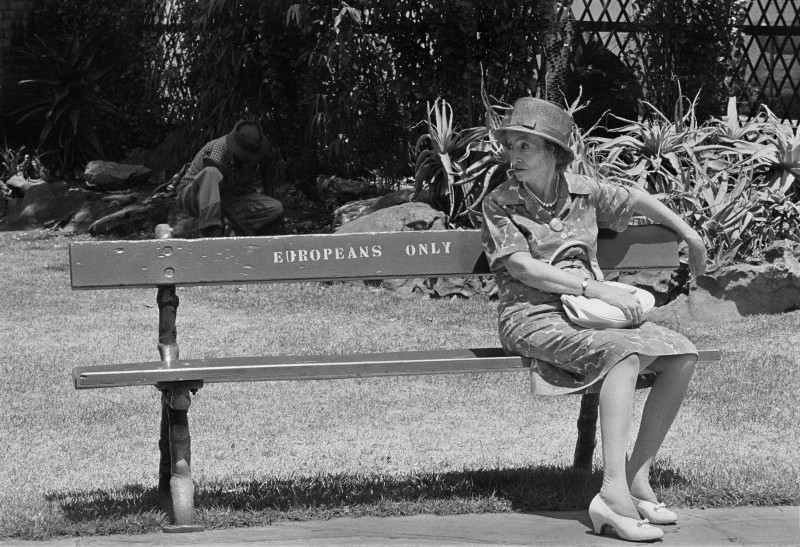
We are, for the first time, dedicating an entire section of the festival to a specific region. Last July, we visited South Africa to meet with artists and curators, and we were deeply moved by the vitality of the country’s photographic community, but also by how deeply the history of Apartheid is still felt in public discourse and artistic expression. The struggle against Apartheid stands as one of the most significant examples of collective resistance in recent history, but here in Japan, awareness around it remains limited.
For
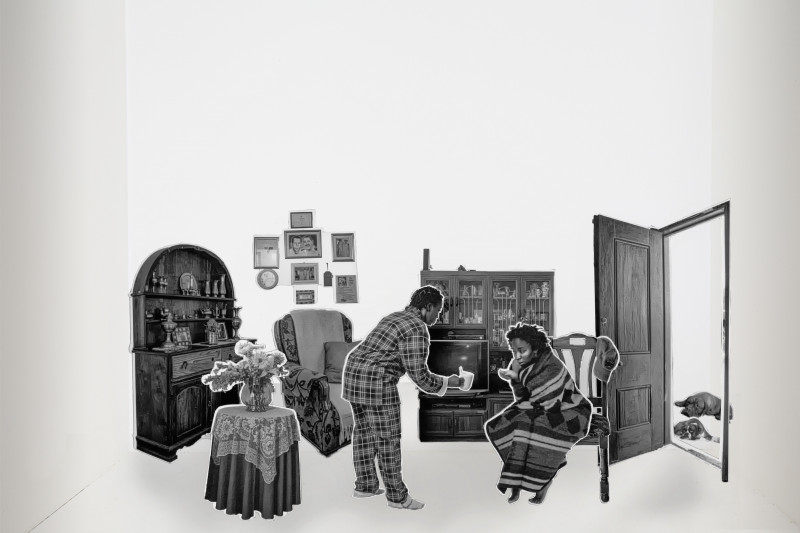
South Africa in Focus, we have three main exhibitions by Ernest Cole, Pieter Hugo, and Lebohang Kganye. They are very distinct voices from different generations, and together they paint a powerful picture of South Africa across different eras and perspectives. We’re also collaborating with Cape Town’s A4 Arts Foundation and curator Sean O’Toole, who will be presenting a collection of photobooks tracing the country’s history from the 1940s to the present day.
We’ve also invited South African musicians Msaki and Tsubatsi to perform at the opening ceremony, and we’ll be welcoming Siyabulela Mandela, Nelson Mandela’s great-grandson, who will be in conversation with the artists during a special talk. In each festival edition, we also try to pay tribute to one ‘master’. This year, we’re showing a major retrospective of the great Japanese photographer Daido Moriyama.
What are your plans and ambitions for the festival’s future?
While Kyoto will always be Kyotographie’s home, we’ve really started to branch out and expand the festival overseas. We’ve always wanted to showcase more Japanese artists abroad. This summer, we’ll return to the Arles Associé programme for the third year running, presenting images by Rinko Kawauchi and Tokuko Ushioda. We first showed their work at Kyotographie 2024, then at Japan House Sao Paulo in 2025 – and this summer they will be represented in Arles. In June, we’ll also present an exhibition at Japan House London featuring Kikuji Kawada and Ai Iwane.
We love that this extended programme highlights Japan’s amazing photography scene – and gives people around the world a chance to experience a piece of Kyotographie.