Within the increasingly polarized discussion about East and West, this exhibition offers insight into the commonalities shared by the two German states up until 1989, and invites reconciliation through humour, humanity and a touch of melancholy.
An exhibition at the Ahrenshoop Art Museum features an unusual collection of images exploring the era of a divided Germany. 200 photographs, both famous and obscure, are displayed side by side, documenting just how similar people in the West and East actually were (and still are), despite the barbed wire fences and the Wall. The pictures offer unexpected and quirky insights into the lives of citizens of West Germany and the GDR, and speak of humour and humanity. LFI talked with curator Petra Göllnitz about this pan-German kaleidoscope.
LFI: German reunification happened 35 years ago. What significance do you find for this exhibition today?
Petra Göllnitz: It’s my belated contribution to the reconciliation and understanding of the two parts of our country. The exhibition and the book have something enlightening. The parallels are so surprising, at times carefree despite the gravity of the situation. This humour could be healing. Without malice or envy. Perhaps it will spark a conversation; let’s look at one another now; and remember at the same time. There is no ‘you over there’, because everything is over there. Or here.
Where did the idea for the project come from?
At the beginning of 2024, Die Zeit newspaper invited me to contribute with photos from the East, on the occasion of the 75th anniversary of the BRD [West Germany] and the DDR [East Germany]. So, in my mind, I went through all the different aspects of my life in the East and found a wide variety of images in my photographic archive to illustrate them. When I presented the pictures to the editorial team, the reaction was one of amazement and surprise. That’s how the idea for the book and exhibition was born. Then I also remembered the pictures of siblings from the West. But over time, it became clear to me that I hadn’t fully internalised the early images from the BRD. So Margot Klingsporn became a great help: two women photographers from East and West – what a stroke of luck.
How and according to which criteria did you put together the collection of photos?
I put together various paths or axles. I started with the tough beginnings for our grandparents, the hopes and experiences of the 60s and 70s. There were rumours of social unrest, culminating in revolts in both East and West. There were also historical events that, in some respects, can’t be compared: the construction of the Berlin Wall and June 17 in the East; and the protest movements of the late 1960s right through to the Red Army Faction (RAF) in the West, for example. Yet, even so, the main component of the exhibition is the so-called ‘siblings images’. For almost every event and perspective captured by the photographers, a counterpart was found with seeming ease. It’s as though the photographers had coordinated their work, although they had never met.
Was there any connection at all between the East and West German photographers?
Apart from family ties, I know of few other examples of friendship. There were certainly mutual influences, however. Though I can imagine that the thirst for photographic knowledge and technology was probably stronger from the East German side towards the West, than the other way around.
Which pictures are on display in the exhibition?
Alongside popular ones, I’ve found new pearls of German photography: unknown or nearly forgotten. There are a lot of new discoveries, because there’s never been an exhibition in this form before. It doesn’t judge, it just signals. The book and exhibition have something reconciliatory. The pictures are like twins that were separated at birth. Now they’re being shown side by side. It’s extremely interesting, amusing and, in all respects, worth seeing.
Did any one image interest you in particular?
I could immediately choose from three. In one sequence of images, for example, I’ve united whole generations: father and daughter, Ludwig Schirmer and Ute Mahler; fathers and sons, like Richard Peter senior and junior, Wolfgang G. and Erasmus Schröter, Wolf and Lutz Grünke. One pair of pictures on display is titled Your racing legends, our racing legends. I remembered the enthusiasm of my male relatives in the East, for father and son Melkus. During my researching, I stumbled across a female racing driver in the DDR, Helga Heinrich. She must have been great – as well as pretty and self-confident. However, she was only rarely able to compete, because there were no rules for female racing drivers. In the exhibition she appears in a lovely picture next to Wolfgang Graf Berghe von Trips. In the RAF in the West and in the East series, I present just a single private picture of terrorist Susanne Albrecht – who had gone into hiding in the DDR –, surrounded by her unsuspecting colleagues.
What conclusions can be drawn from the two segments – photography from the East and photography from the West?
The East and the West have nearly identical photographer personalities. They observe, tells us their stories, they stage that which can’t be seen, they’re right in the thick of things, are deeply moved at times, and occasionally make light of situations. In this exhibition covering nearly 45 years, you’ll see that any one of the photographers could have taken a similar picture on the other side of Germany. We’ve grown up with the same cultural influences. It was just our social and political circumstances that were fundamentally different.
Katja HübnerJürgen Schadeberg
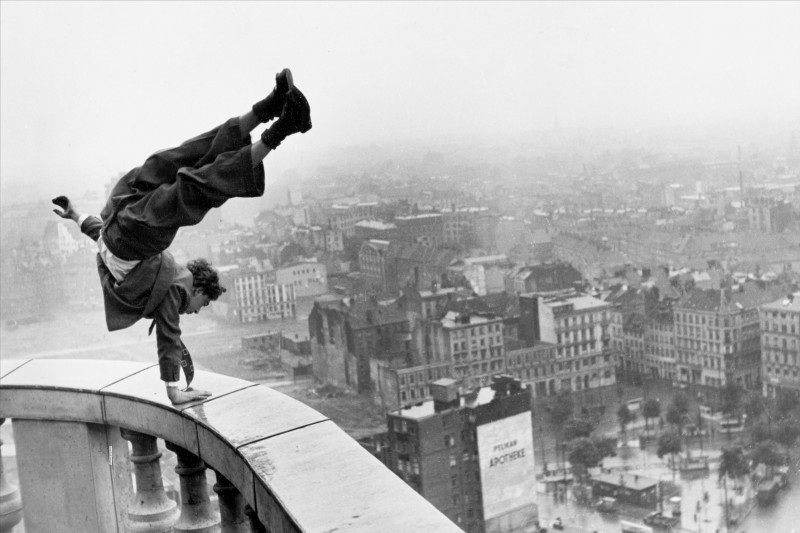
Handstand on Michel, Hamburg 1948
Max Scheler
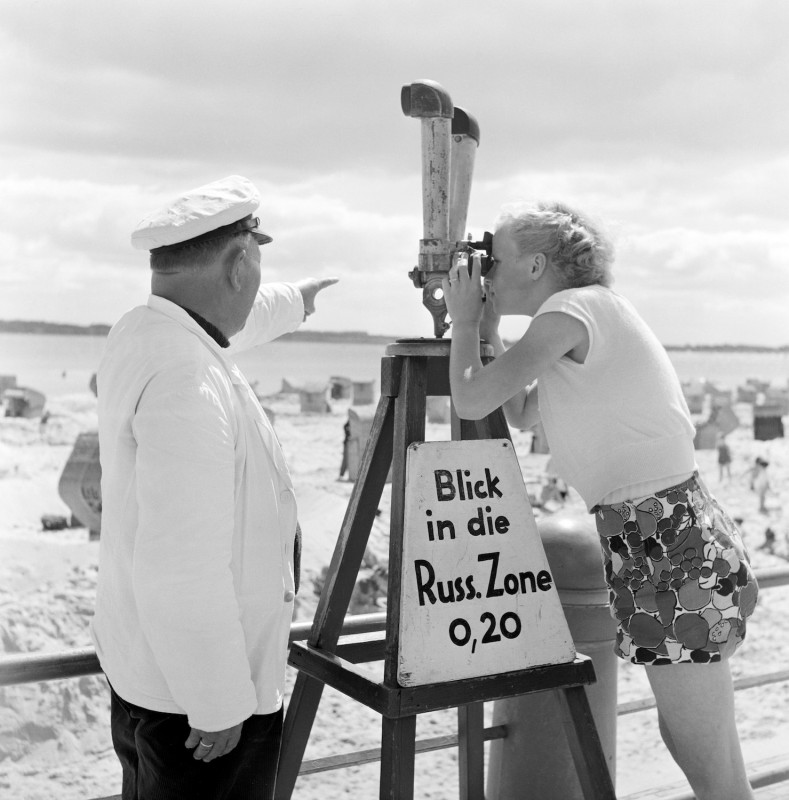
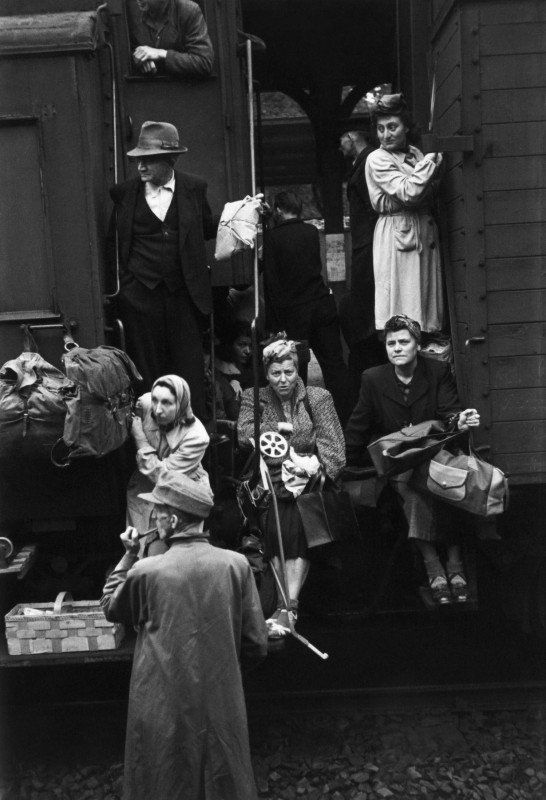
View of the Russian Zone, Travemünde 1952
Gerhard Weber
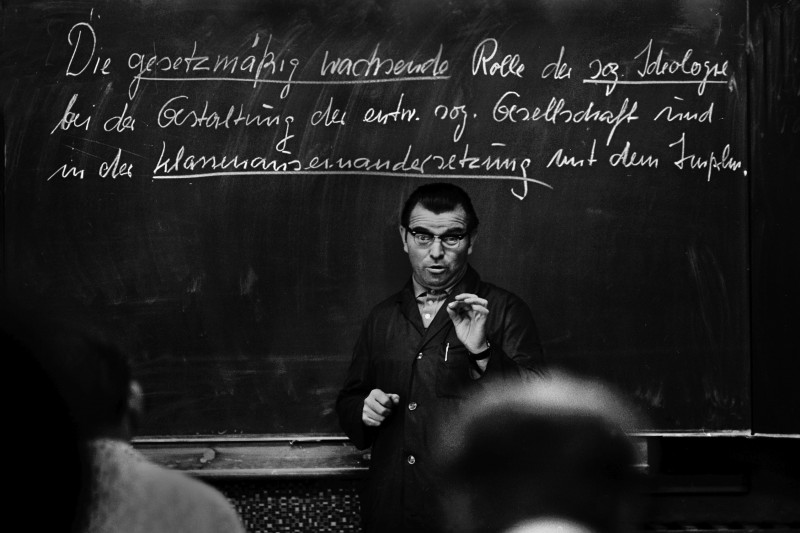
Agitator, Grimma 1973
Barbara Klemm
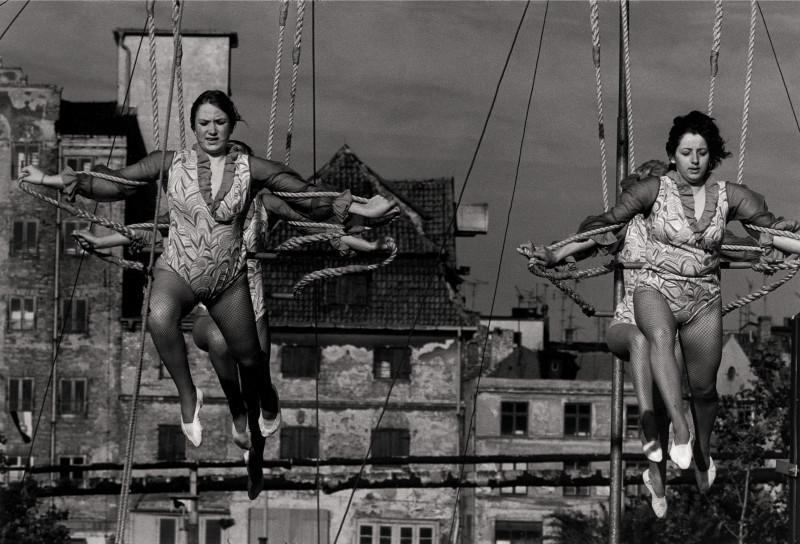
Trapeze artists, Rostock
Reinhard Hentze
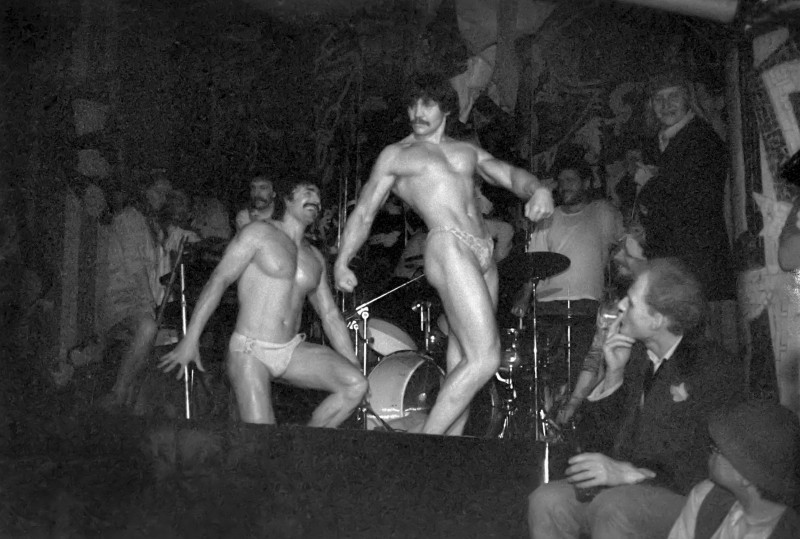
Male strip show, Halle 1987
Martin Langer
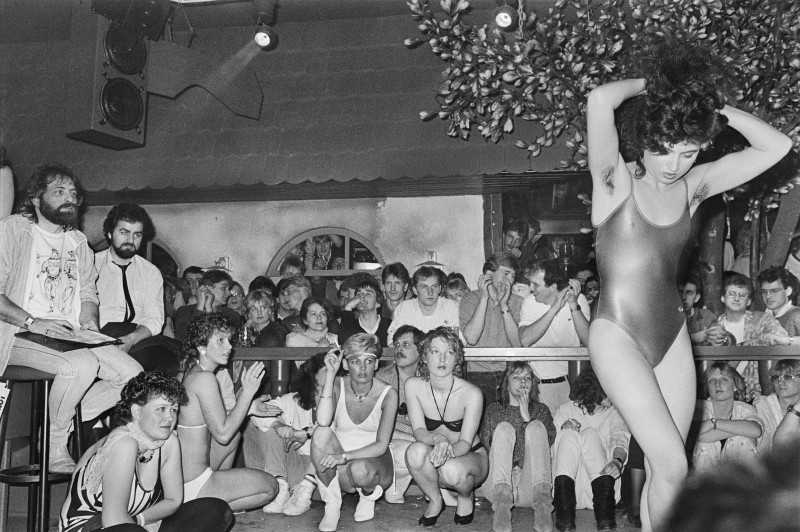
Beauty pageant, Brackwede 1985
Volker Krämer
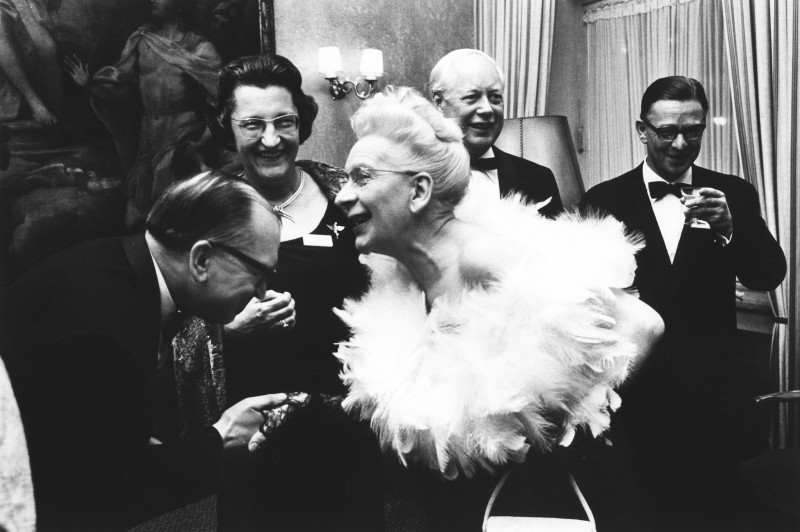
Reception of a Düsseldorf association of businesswomen, 1965
Friedrich Seidenstücker
Foraging trips to the Berlin countryside, Potsdam 1946
Ludwig Schirmer
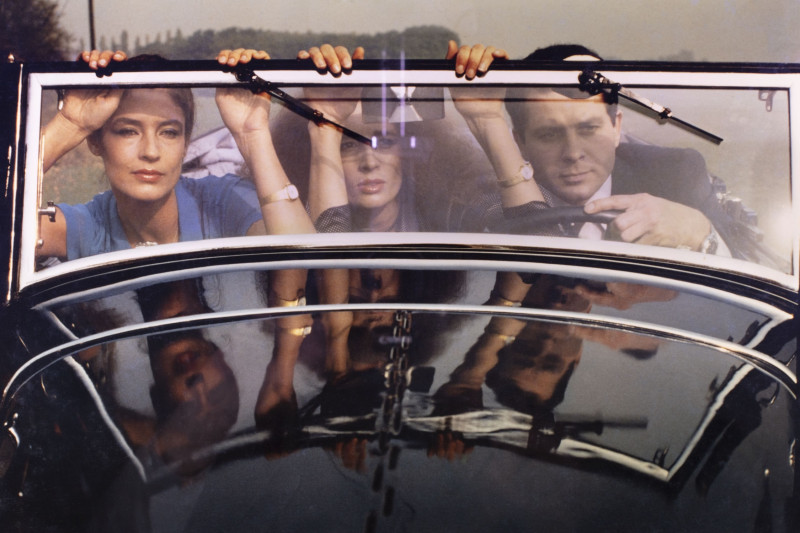
Advertising photo for VEB watch factory, Ruhla 1970
Max Ittenbach
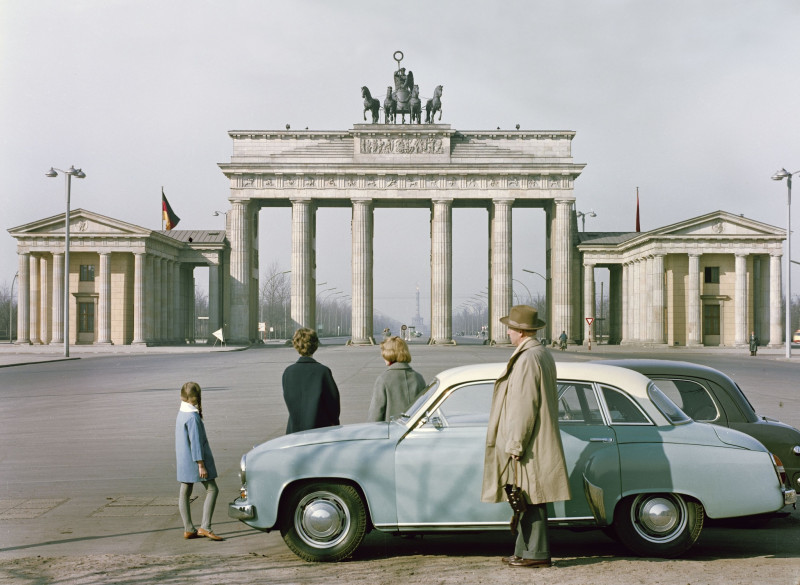
Brandenburg Gate, Berlin Ost
Petra Göllnitz+-
Born in Chemnitz, Göllnitz studied cultural sciences after graduating from high school, then went on to work, among others, for Das Magazin in East Berlin. After the fall of the Wall in the autumn of 1989, she immediately moved to Hamburg, where she worked as photo editor at stern for three decades. She mentored photographers and was responsible for the legendary colour spreads. In 2019, she set up her own business and has since been working as a curator for exhibitions and photography projects – such as the exhibition Der große Schwof (the big dance).
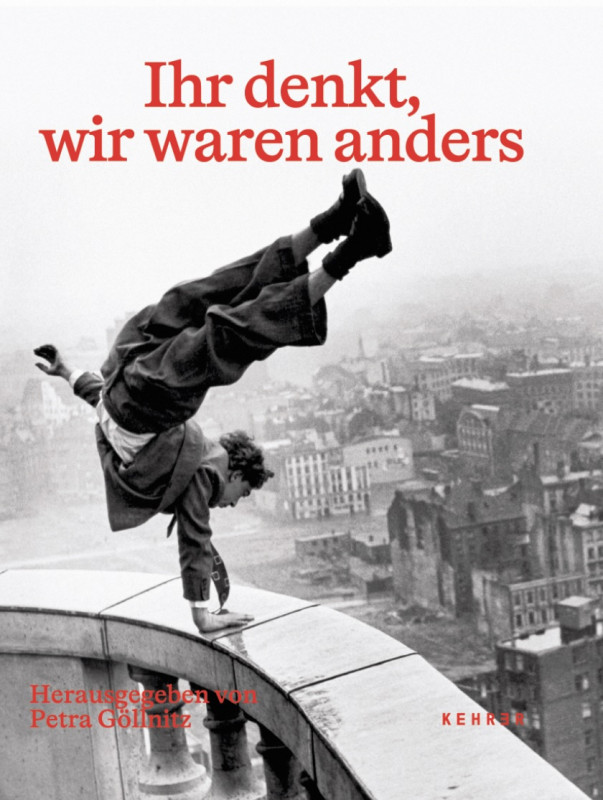
You think we were different.Photographs from East and West, from 1945 to 1989+-
Producer: Petra Göllnitz
German, 224 pages, 320mm x 240
Kehrer
Exhibition+-
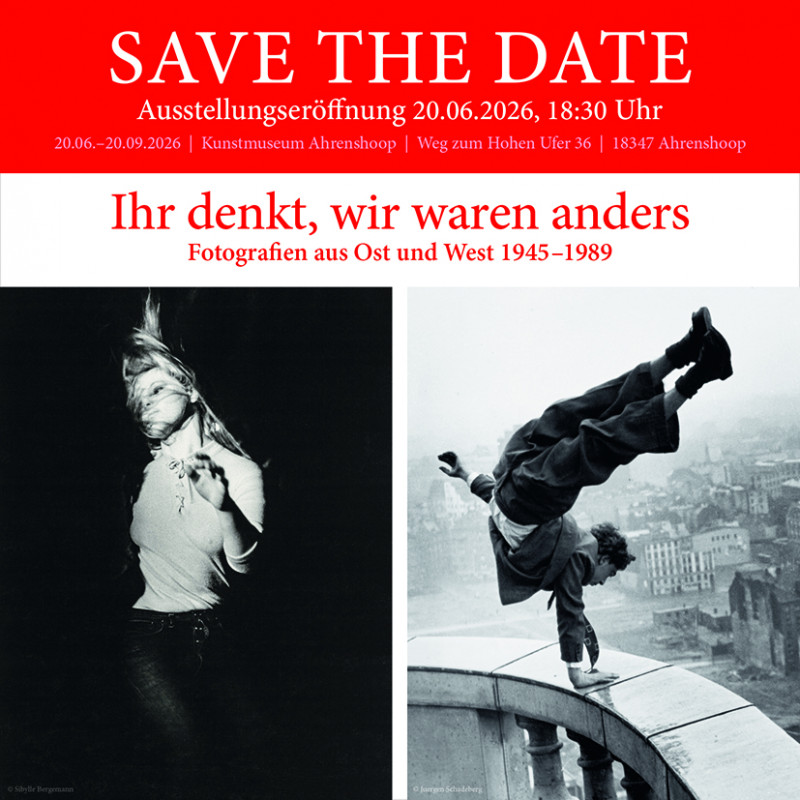
The exhibition, You think we were different, Photographs from East and West, from 1945 to 1989 is on display at the Ahrenshoop Art Museum from June 20 to September 20, 2026.