“The greatest thing you’ll ever learn / Is to love and be loved in return” – this lines from the 1948 song,
Nature Boy, sum up the main theme behind Hamburg’s
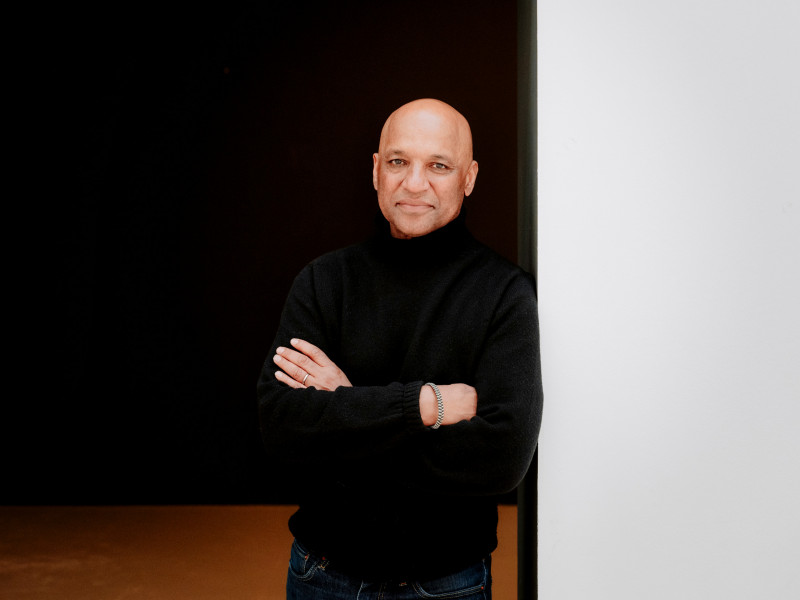
9th Triennial of Photography. It invites us to reflect on everything that unites humanity – and, in addition, to consider the role that photography might play therein. At the core of the matter stands the question of how we treat those we see as ‘the other’; with responsibility, openness and the willingness to see differences as an asset. We spoke with Artistic Director Mark Sealy about this year’s leitmotiv and the curatorial work.
LFI: The 9th Triennale of Photography has the motto Alliance, Infinity, Love – in the Face of the Other. Could you elaborate on this theme a little further?
Mark Sealy: The idea of
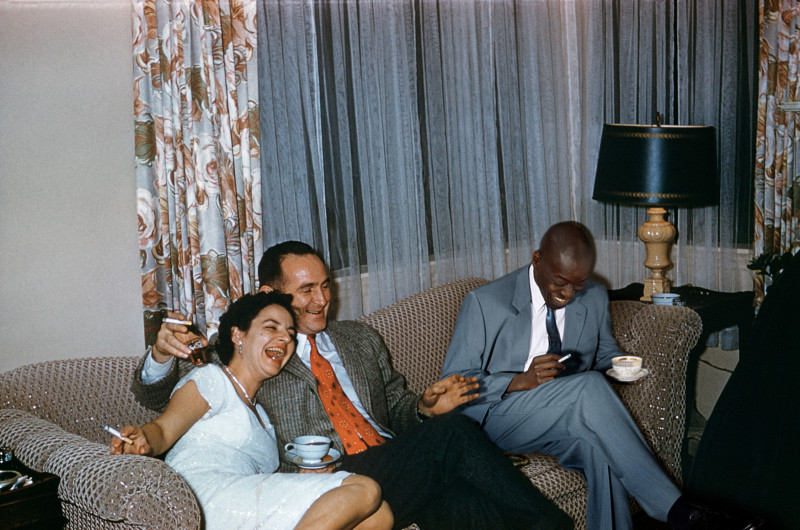
Alliance relates to thinking about why there’s a necessity to really embrace things that you might not necessarily understand, to walk into a place and think it’s okay not to have things that are the same, but to embrace difference and to align with those things as a form of human connection. It’s about more complex perspectives that go beyond binary positions, and about an attitude of openness, acceptance and generosity.
Infinity is based on the work of the philosopher Emmanuel Lévinas. He invites us to think about our responsibilities in the face of the other. And what he reminds us about is the infinite possibilities in that moment of human kindness. When thinking about the infinite, history has taught us that we must do better than what we are currently doing.
Love in the Face of the Other is based on African-American thinker and author bell hooks. In her book,
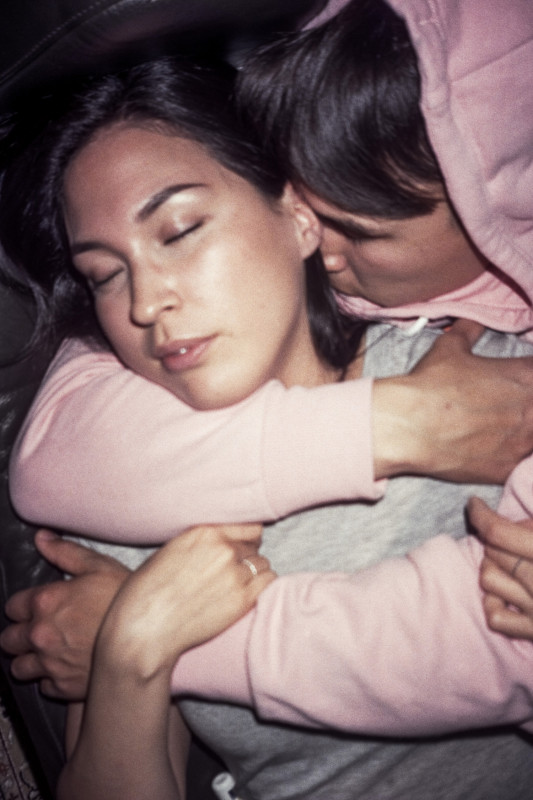
All About Love, she writes about what it could mean if we were to think about love not in a romantic way but as a political act, and as a way of seeing the world through the lens of love, which gives rise to new perspectives, openness, sensitivity and compassion.
I’ve been working a lot around topics of “them and us”, “black and white”, “gay and straight”, “female and male”, “non-binary and binary”. I think there’s a space within all of this where we have to come together rather than be divisive. And I think that’s one of the things I wanted this Triennial to do.
Why is this aspect so important at this time?
We have to talk about how people are treated, and show works that really emphasise the challenges that we face. At the same time, however, I don’t want to get caught in stereotypes and live in a world where everything is placed in boxes. It’s important that we allow borders to come down – not just physical borders, but psychological, sexual, and racial ones as well. We must understand that the world is moving and that we move within it.
Can you give us some insight into the curatorial process?
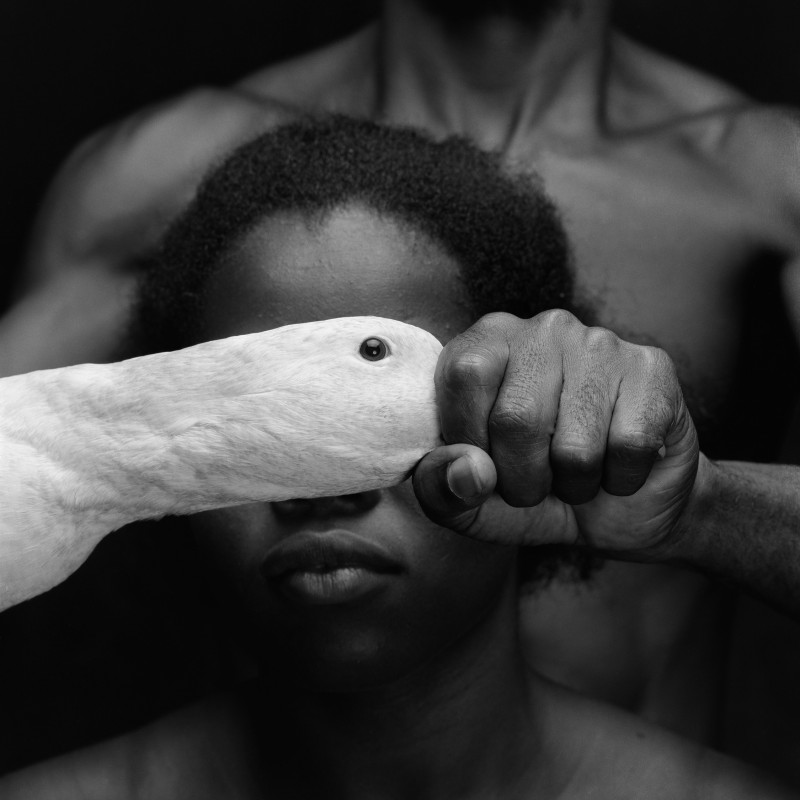
Most of the artists that I’ve curated for this exhibition are ones that I’ve been in a dialogue with over many years. The special thing about having the opportunity to be the Artistic Director of this Triennial is to bring these people together and reveal their diversity. Their works are very transgressive, very diverse, and I’m trying not to use the word “radical”, but there are certain twists and turns in their work. It’s not a statement about greatness or power, but rather it’s very much about people.
Can you name a particular highlight of this year’s edition?
One of the things I realised is that on one day I will really embrace somebody’s work, and on the next day I might change. We humans are complex emotional beings. Every time you look at a piece of art, you’re in a different phase of life and in a different inner state. That’s why it’s not about a favourite piece or a highlight; it’s about where you are in your own life at the time of observation.
At a time when physical spaces for gathering, so-called third places, are becoming increasingly important, how can the guiding ideas of Alliance, Infinity and Love be conveyed into the event itself?
We live in an era when people have access to incredible amounts of information. It can often be very isolating as well. We know this from what’s happening around the impact of social media on young people. If we get locked into a kind of digital silo where our only information is fed through a mobile phone, then we lose so much of the capabilities that come from being on the journey together. I think triennials, biennials, photographic exhibitions and gallery spaces are places of exchange. It’s not about having a good time. It’s about recognising that you’re part of something.
A very important aspect is that we must be truly inclusive. We must try to make the programme not just for the elite, but to create moments of cultural interaction for everyone.
And what role does Hamburg play in this context?
I think that Hamburg has a genuine desire to be a city that recognises the complexities of our times, with all the differences and diversity. As a port city that has always been open, Hamburg has a history of facing outwards. My sense is that if Hamburg were to really embrace and develop this character, the city could be something quite special.