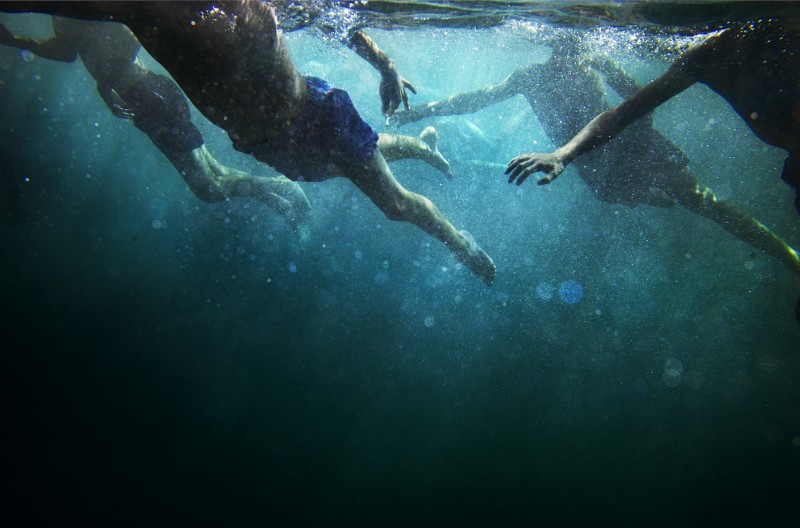
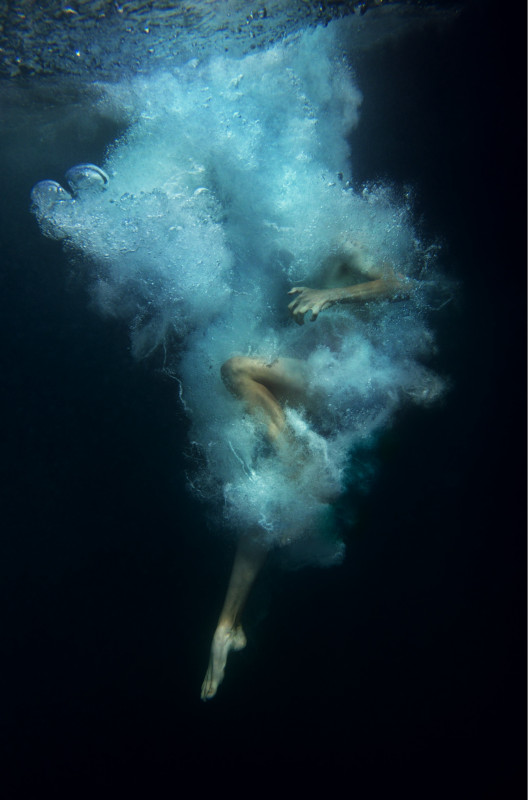
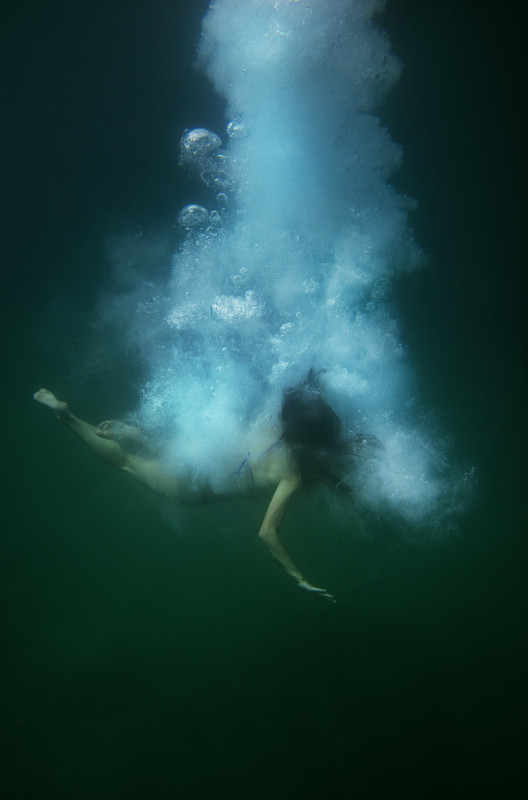
Water is and always has been a symbol of change. Equipped with a Leica M11-P with waterproof casing, the Australian artist’s photographic project explores the moment when the human body dives into the ocean.
LFI: How did you come up with the project and what was your biggest challenge?
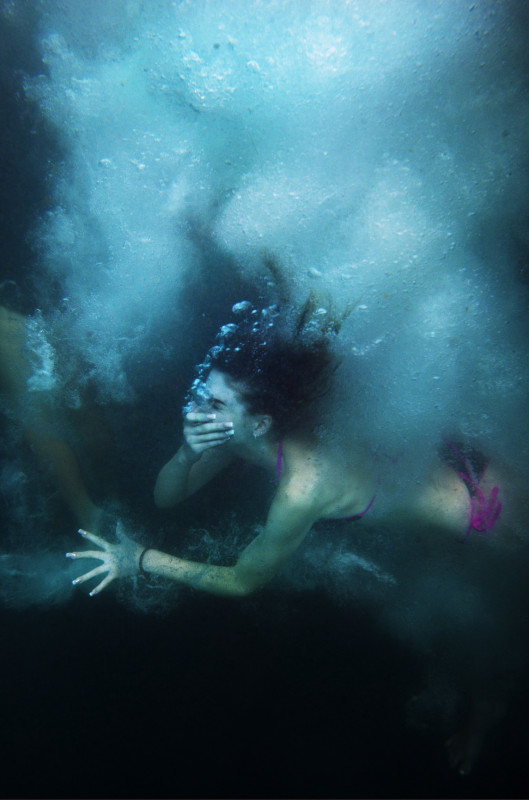
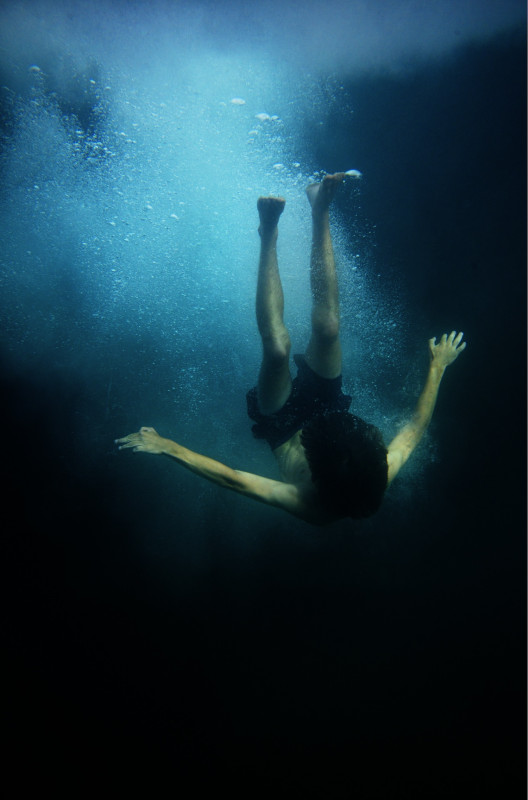
Narelle Autio: I’ve always felt the ocean sends me different stories; the sea, in many ways has been my muse for most of my artistic career. For this project, The Eyes of Her, I’m especially drawn to the ‘in between space’. The fleeting moment after entry into the ocean, where the body is held in a spiritual effervescent embrace. That moment where the bubbles cling and hold us. It feels like there’s a possibility of magic: we’re submerged and suspended between the air and the deep. A place between life and death.
What makes people under water different?
There’s a freedom in the water... a body moves very differently than when on land. Free from gravity, we are untethered and graceful. I’ve always been a collector of beauty. I like to photograph what is good about the world. A feeling of joy, awe and connection to nature is what’s important to me. I love the idea of the ocean being a place of possibility and healing.
What exactly was your photographic approach?
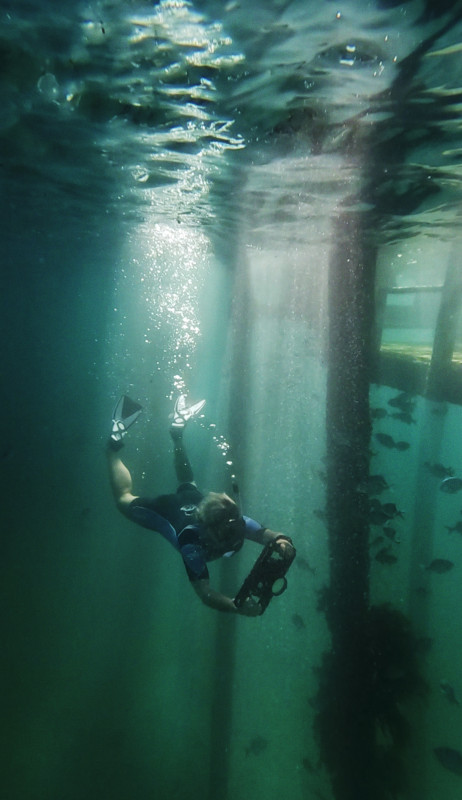
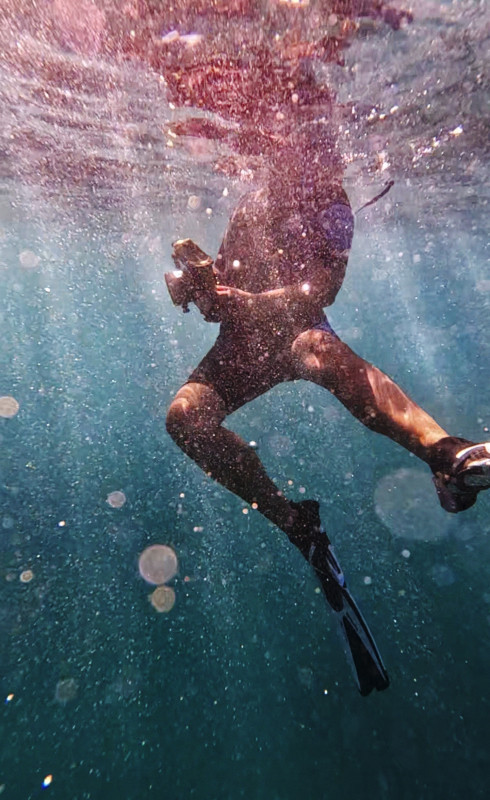
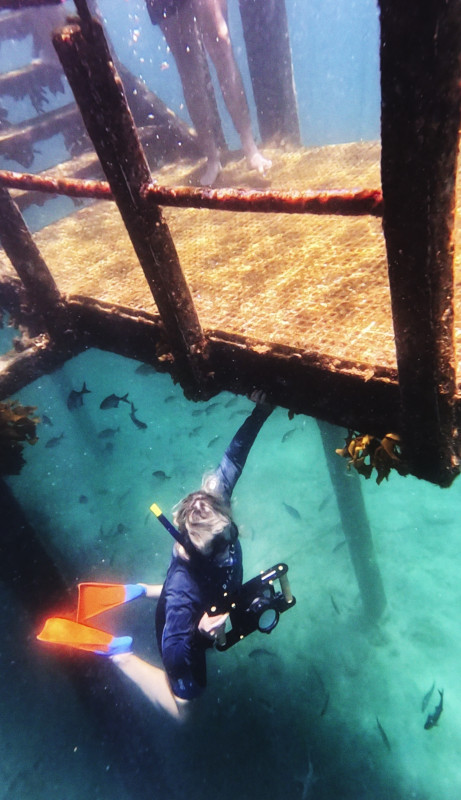
I’m at home in the water and I’m photographing what I’m also experiencing. The philosophy of memory ties me to the work. I feel connected to the photographs as they are also my memories of my time in the world, as well as a document of others. These photographs were taken at the end of various jetties along the coast of South Australia. I swim and float out in the deep water under the jetty and wait. Nothing is planned and nothing is staged. I wait until someone is about to jump in front of me. Taking a breath, I dive under and attempt to capture the moment a jumper bursts through the watery membrane and their subsequent passage through the water. Re-surface and do it all again. There’s no training involved and the process is very physical.
What does “speed” in this case mean in the photographic process?
The ability to shoot at very high shutter speeds was exciting. I have only every used a film camera with colour transparency. With fast moving subjects, it could be very limiting in low light conditions. Having access to the very high shutter speeds of the M11-P, revealed a quality of sharpness I was blown away by, and the choice of a motor drive gave me more latitude over a scene that was in constant motion. Collecting a few more images from the one moment was a beautiful discovery for me.
How did the underwater lens work?
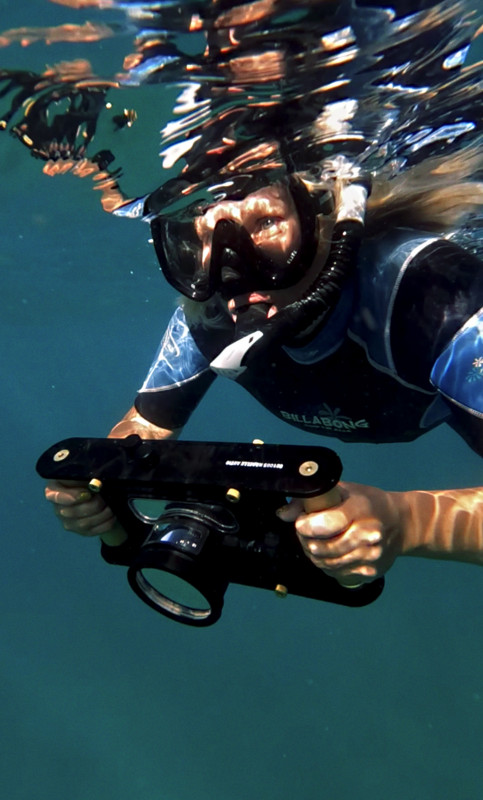
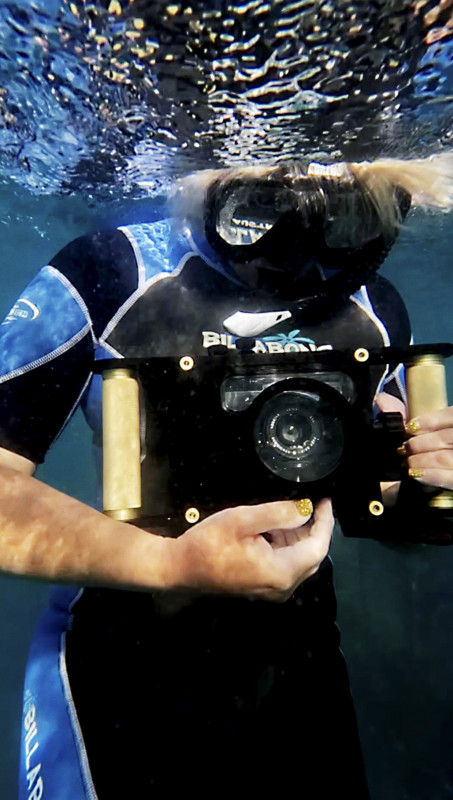
For this shoot I used a Sub 13 underwater housing, purpose built for the M11-P. The housing designed by Matt Draper and Matt Hipsley is machined from a single block of aluminium and has a high-quality optical crystal glass front port made to fit the M11-P and a Summicron-M 28 f/2 Asph. I had never used a housing for my underwater photography before, and coming to terms with putting all this beautiful and expensive equipment under the sea was the hardest part of the endeavour. Fitting the M11-P into the housing immediately revealed the precision and effort of the mechanical engineering. Incredibly snug, it was the most perfect of fits and, when locked and loaded, every button on the camera was operational.
How was the Leica M11 itself suited to the project?
Having only ever used the M6 before, The Leica M11 was a new but very easy experience. I enjoyed being able to check exposures on the back of the camera, as the light changes quickly as you dive deeper. I loved the feeling of ‘driving’ the housing/camera around looking for images, and felt the solid unit gave an advantageous counterweight when diving downwards. The shutter was easy to access while gripping those gold handles and, while I settled on pre-focusing most of the time, when I did change focus in situ it grew easier as I worked through the challenge of looking through the dive mask.Being able to stay in the water for hours was a dream, although it nearly caused hypothermia a few too many times. Not having to get out and change rolls every 36 frames was such a bonus. I may have shot too many frames in my enthusiastic first weeks, but it was so nice not to agonise over the push of the shutter. As an artist this gave me the luxury and freedom of creative experimentation, rather than the worry over ‘wasting’ frames (and money).
Katja Hübner
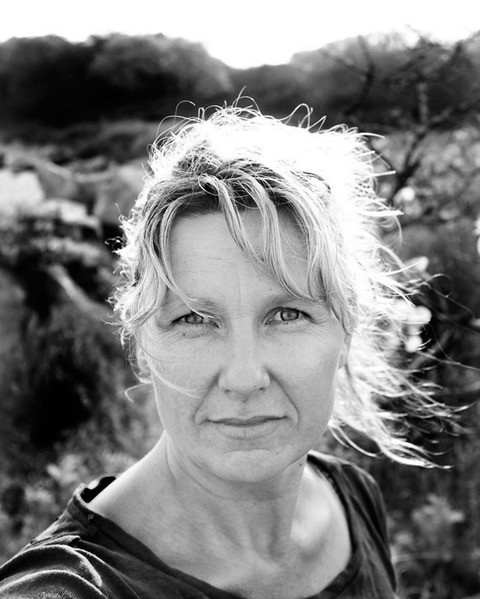
Narelle Autio+-
Born in 1969, Narelle Autio is a multi-award-winning photographer, whose artistic career has stretched over thirty years. In 2002, she became the first Australian woman to win the Leica Oskar Barnack Award for her The Coastal Dwellers photographic series. Her complex compositions are a homage to the beauty of life in Australia: saturated colours, intense light, blue water. Among others, she has received two World Press Awards and one American Picture of the Year Award. Her work has appeared in national and international exhibitions. More