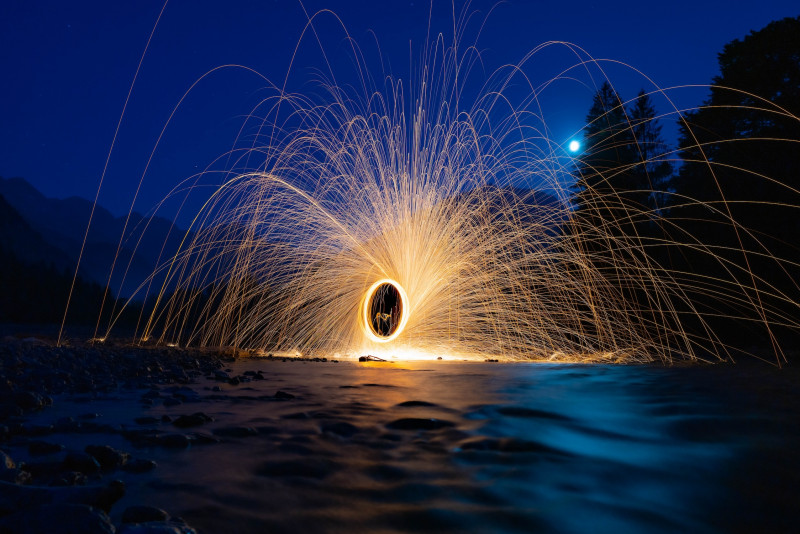
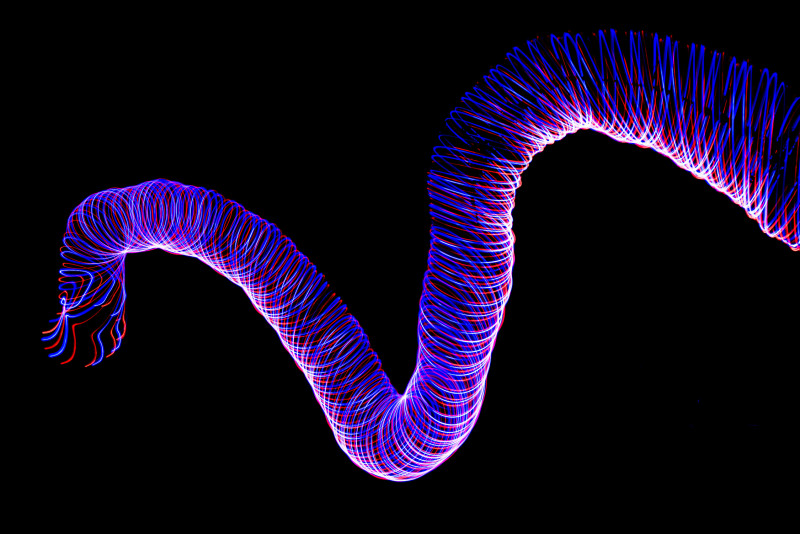
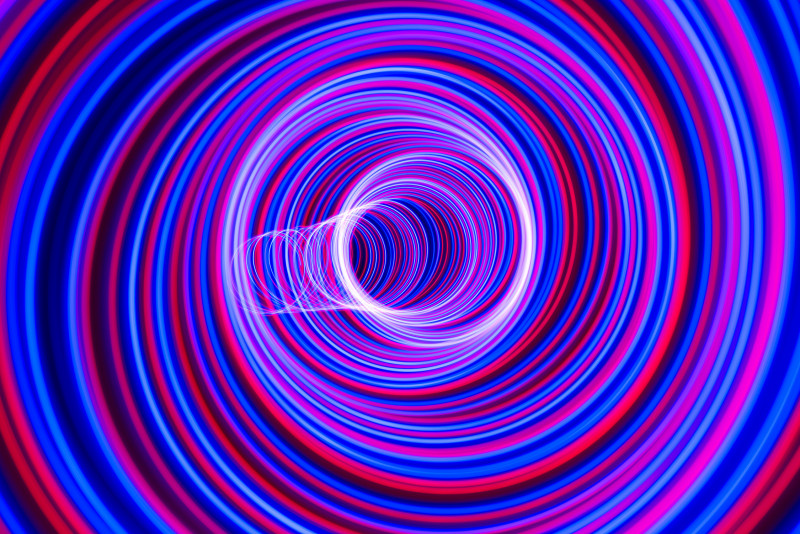
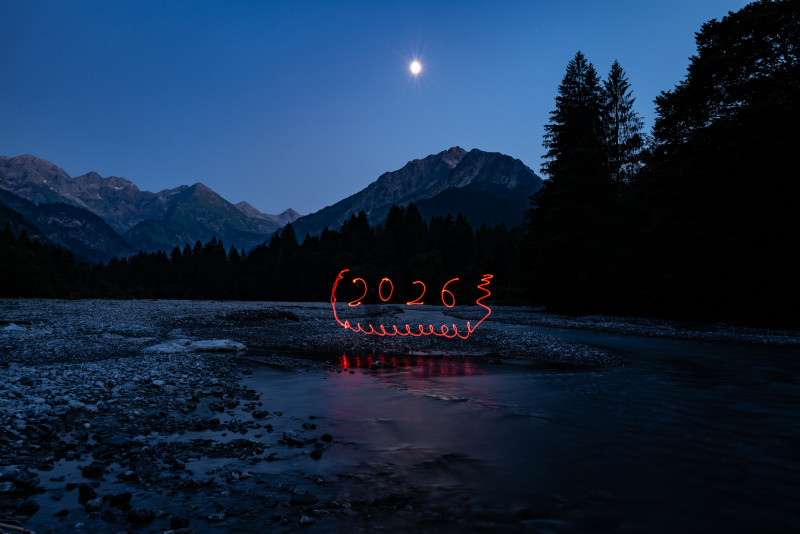
Writing or drawing with light – this description of the meaning of photography is rarely as spot on as when speaking of light art photography.
Andreas Schweiger is a master in the art of light painting: he spoke with us about his fascination, important tools and extraordinary motifs. Light art photography – or light art performance photography, LAPP as it is also known in abbreviated form – relies on choreographed movements in front of the camera and the resulting light effects, which only become visible in the final image. Discs, tunnels, UFOs, fire wheels – all of these can be LAPP.
LFI: How did you get into light art photography?
Andreas Schweiger: I got to know more about light painting techniques at a workshop during the Fotogipfel in Oberstdorf. My father-in-law and I chose the light painting workshop specifically, because we wanted to try something completely different and broaden our horizons.
What was it in particular that fascinated you about it?
You can give well-known motifs a totally new look, and present them in a completely different manner.
What equipment do you use (camera, lenses, tripod, lamps (fire), etc.)?
A tripod is an absolute necessity. The Leica Q2 or the SL2 with a 24-90mm lens works best for this. For light effects, for beginners, a torch with a colour foil over it is good to project a coloured beam of light. Glow sticks, which you can get at a fishing tackle shop, or battery-powered LED chains, which can be wrapped around a hula hoop or similar, can also be effective.
Be careful: burning steel wool should only be used by professionals. It's placed in a common whisk and then set on fire. The whisk is attached to about a metre-long chain and then thrown or spun in a circle. In doing so, small, burning pieces of steel wool fly out of the whisk and create traces in the images. This must be kept to a setting where nothing can catch fire.
Do you plan your motifs and locations, or do you let places themselves inspire you?
Both are possible, though the preparation for this kind of photography technique takes a certain amount of time, so it can never be the most spontaneous type of photography. Of course, a place might produce an idea: for example, in most cities you find sculptures, statues or such. If there's a sculpture you like, you can use torches or LEDs to light it up at night. Another idea is to use light sources to trace graffiti in underpasses. However, for such shots it always has to be as dark as possible, with no disturbing light sources such as street lamps to detract from the actual effect.
What is important with regard to light art photography? Can you give photographers who want to try this out a few tips?
You need a camera with a remote trigger or, better yet, a second person. Furthermore you need a solid tripod. You choose the long exposure (30 seconds or bulb), ISO 100 to 200, on the camera, and a closed aperture (f/16 to f/22) on the lens. There are three important tips I want to add here too:
First: a suitable location that provides the perfect backdrop for the image, like the mountains in the Allgäu region, for example, or a city park without street lights, dark pedestrian underpasses, etc.. In the evening hours, when the sunlight has faded, it's time to start painting or writing with light.
Second: a person who manages the light is enormously helpful. This is where creativity is required. Among other things, for example, you can use LED fairy lights attached to a stick, children's toy light sabers, torches, glow sticks, and so on. It's particularly important for the person in front of the camera to wear black clothing without and reflective bits. This will ensure that, despite the long exposure time, they're not visible in the final images.
Third: another person working the camera clarifies the framework conditions with the light artist. This works best when the starting point of the light effects, and the start of the camera capturing it are communicated between those involved, so that all the desired effects can be seen in the image later on.
Tobias Habura-SternEQUIPMENT: Leica Q2 with Summilux 28 f/1.7 Asph, Leica SL2, Vario-Elmarit-SL 24-90 f/2.8-4 Asph, tripod, various light sources