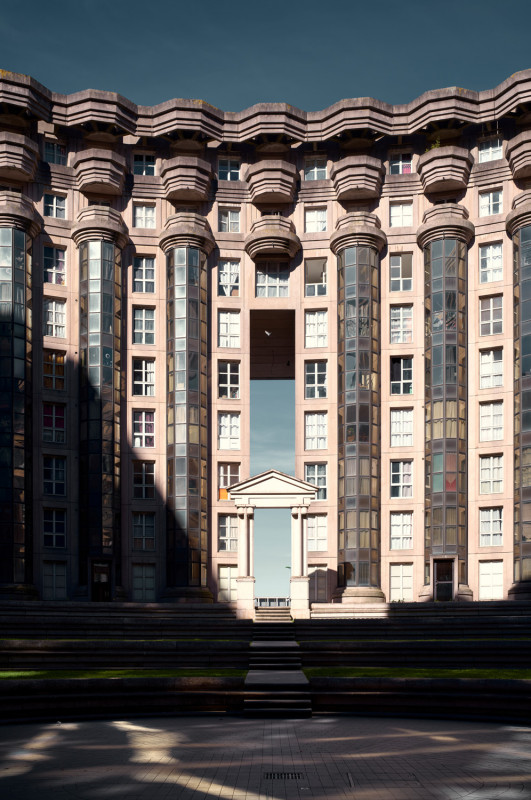
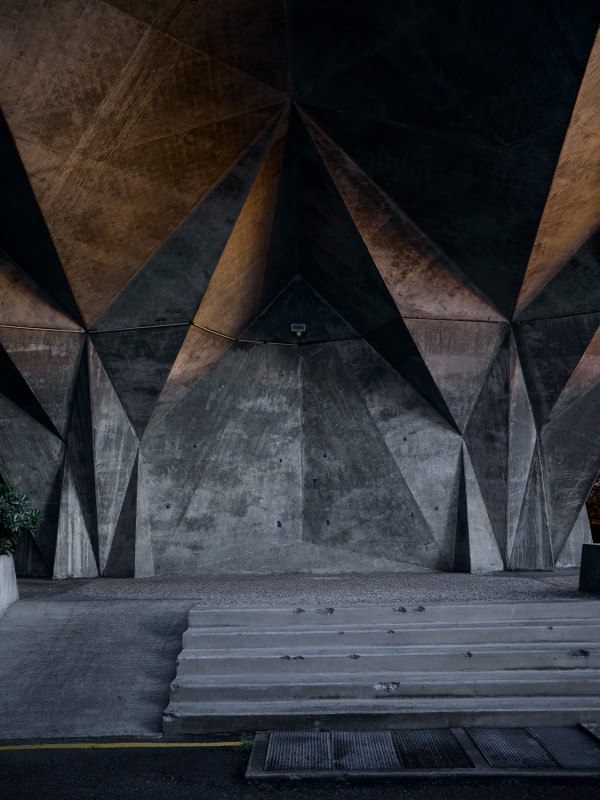
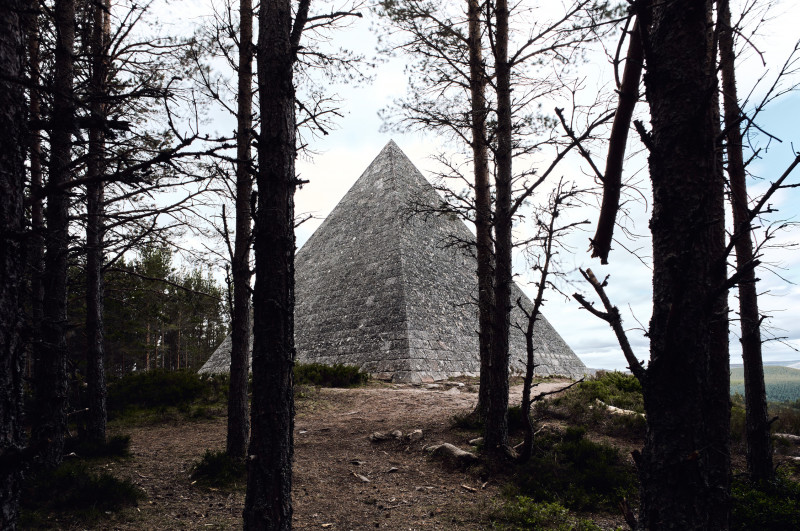
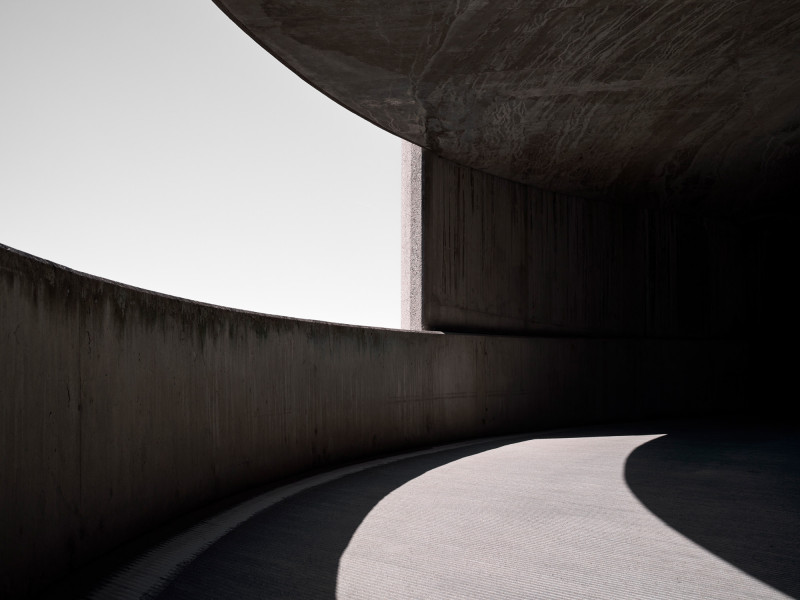
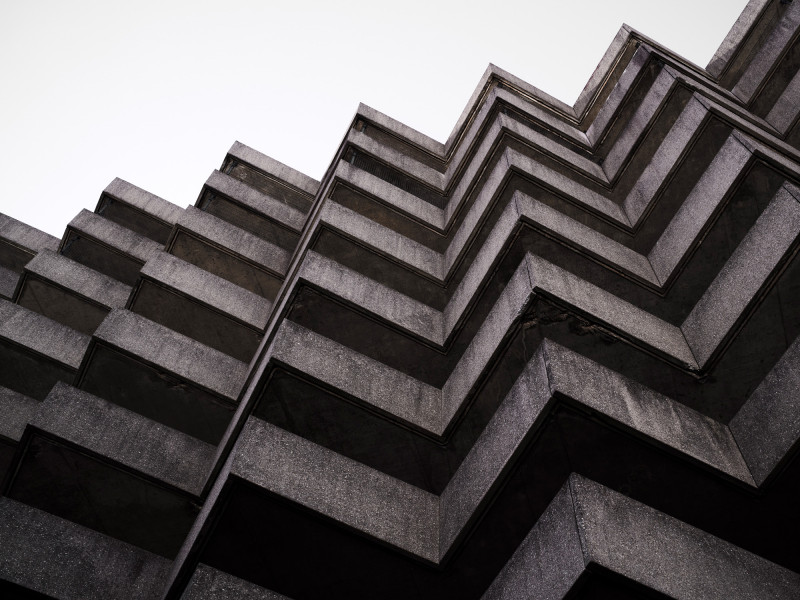
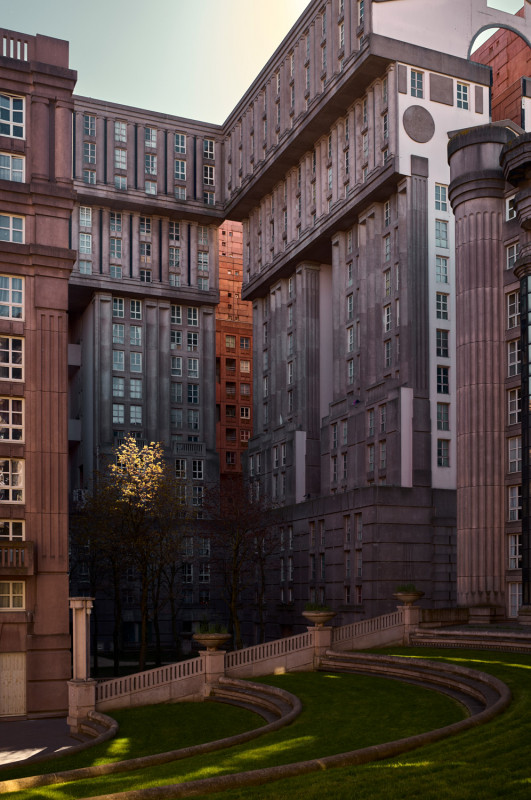
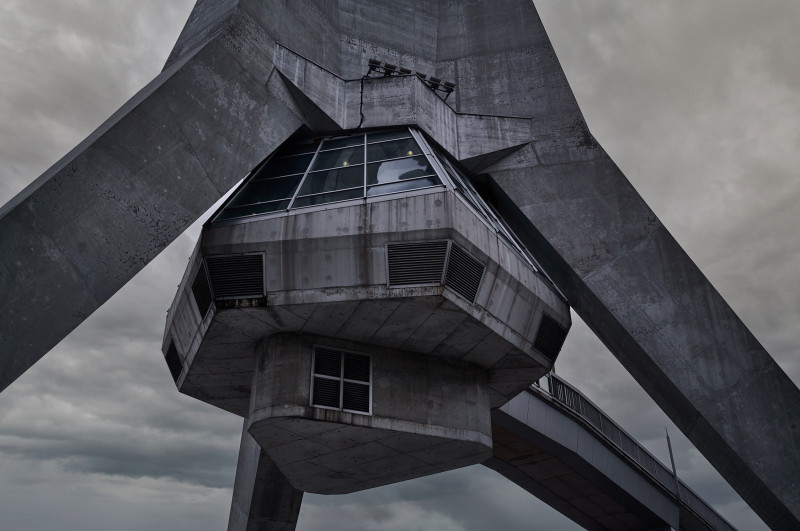
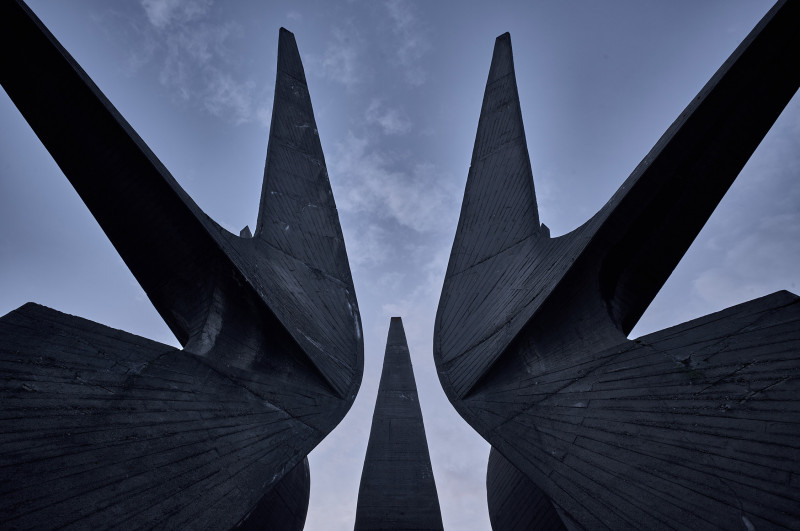
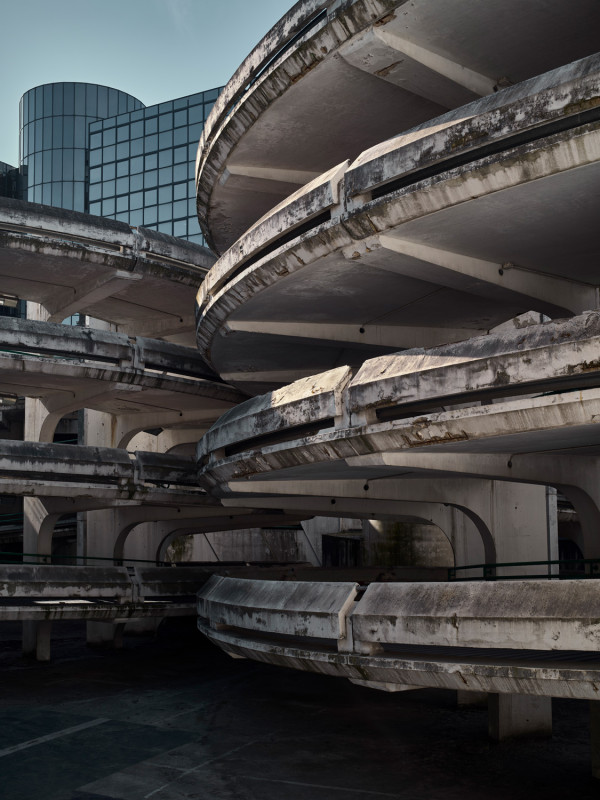
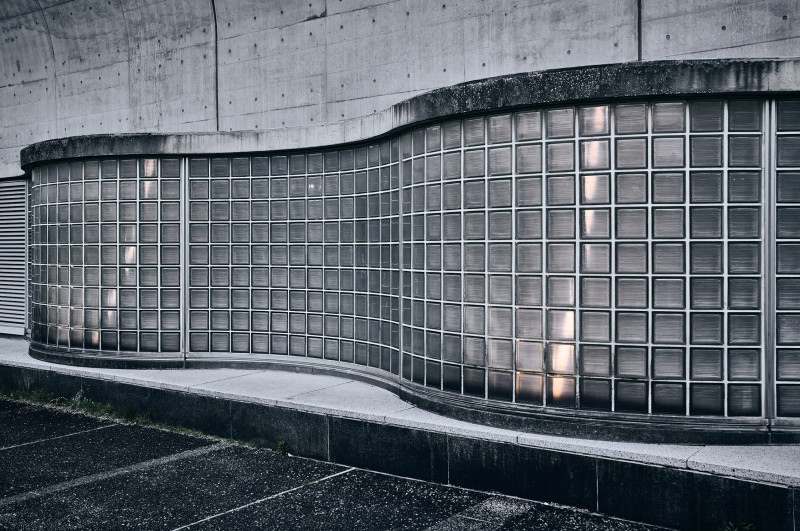
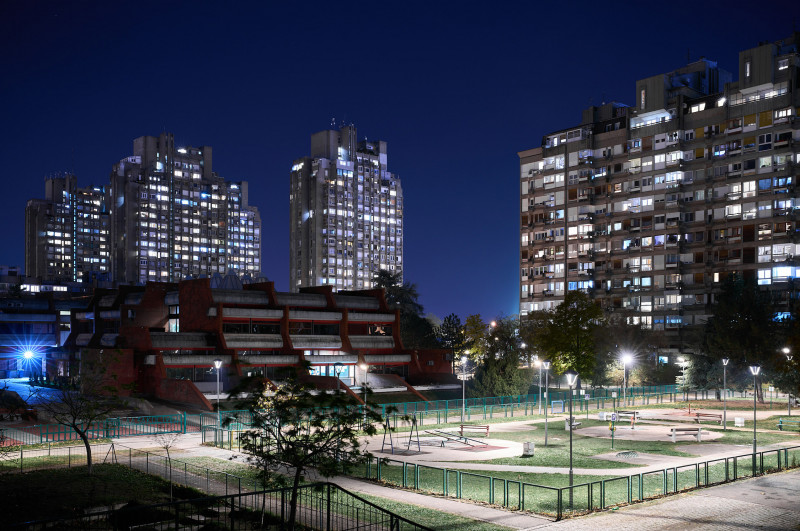
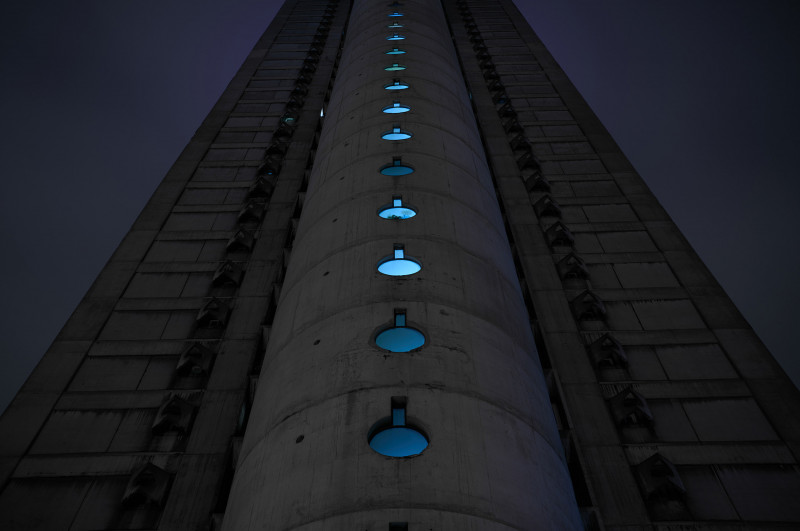
Cubist shapes, hard contrasts, atmospheric lighting – the features of Brutalist architecture, interpreted through photography.
Rough, clearly-organised structures with an emphasis on construction and functionality: Brutalism originated in post-war Europe in the 1950s. This architectural era was defined by the need for rapid rebuilding under difficult economic conditions and with shortages of materials. Cultural, residential and commercial spaces were frequently built using raw concrete, béton brut. Based on the first prefab building – the Unité d'habitation designed by architect Le Corbusier –, Brutalism soon developed worldwide into the dominant architectural form of the 1960s to 1980s.
Brutalism’s massive aesthetics polarised opinions: its presence in cityscapes was hated by some, while others loved the straightforward buildings and geometric shapes. The style was regularly acknowledged and thematised by contemporary art and culture.
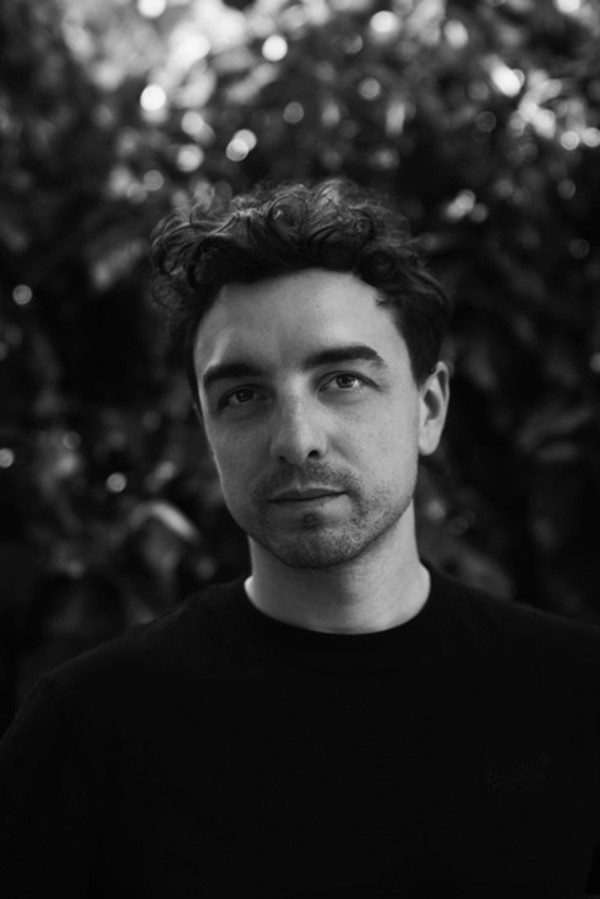
Swiss photographer Severin Jakob is also attracted to its powerful shapes and consistent simplicity. The strong aura and atmosphere of the buildings serve as the theme for his Concreto series. He has been taking photographs for this project for three years now, travelling all over the world, from Japan to Serbia. The photographer uses a Leica M11 to capture his observations and impressions.
LFI: You photographed Brutalist architecture, buildings and places for your Concreto project. What is it that interests you, in particular, about this style?
Severin Jakob: I’ve always been fascinated by Brutalism. Above all, by its simplicity - the clear shapes, as well as the reductionism of the buildings made of concrete, glass and metal. I also find the diversity of the style exciting: there are both simple and incredibly complex applications, and so much to discover. So, when I'm travelling for business or for pleasure, I always keep my eyes wide open for buildings.
Can you share something about the evolution of your idea for this series?
The idea for this series developed step by step. After analysing the first pictures I took in Lugano, I really wanted to move on and photograph other buildings, so as to see what else I might find. I want to get to know the diversity and stories of this architecture. Brutalism is a style that gives space for many interpretations, and I was curious to see how I might represent it through my photographs. For me, the series is an ongoing project, in which each building tells a new chapter.
Do you use special equipment or a particular photographic technique for your architectural pictures?
It’s important to me to concentrate fully on the motif. That’s why I prefer light and compact equipment: a tripod, my camera and two or three lenses. For this, I place great value on the quality. To me, the M System is ideal for fulfilling these requirements.
Which focal length do you prefer to work with?
Definitely 35 mm. As I’m not primarily an architectural photographer, I have other requirements for my pictures. Rather than telling everything in one picture, I want to leave room for interpretation with a small series. I like it if the people looking at my photographs are able to discover the story of a building for themselves.
Is there a specific light or type of weather in which you especially like to photograph architecture? If yes, why?
That very much depends on the building. I mostly prefer a cloudy sky, because the soft light emphasizes the atmosphere of the structure. There are buildings, however, where I prefer sunshine, so as to work with the shadows. A deciding factor for me is the orientation of the building, and I plan the time of day for my visit according to the direction. I like to spend a lot of time at the location, preferably from late afternoon into night: the buildings change and open up new perspectives for me.
Some of the buildings in Concreto fulfil a mundane function. How do you discover or research your motifs?
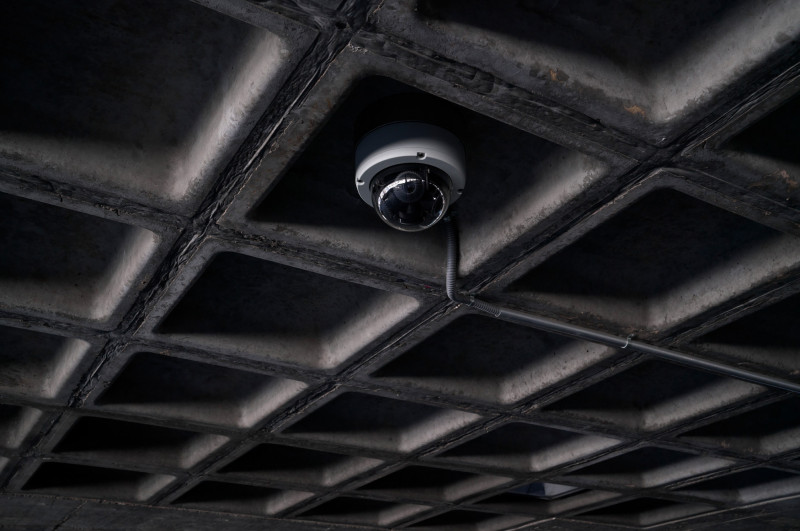
I use books on architecture and do intensive online research. Over time, I’ve put together a comprehensive list of buildings that I still want to visit. The car park in my series was a stroke of luck: I had an assignment there that was cancelled at short notice. The purpose of the structure is secondary for me. I’m inspired primarily by the shapes.
So far, you found the motifs for Concreto in Japan, Switzerland, Scotland, Serbia and France. Where else might you go?
Following the earthquake in the sixties, the town of Skopje in North Macedonia was rebuilt. The Japanese architect Kenzō Tange designed the master plan using the Brutalist approach; and I find his work very inspiring. Furthermore, there are many impressive buildings I want to photograph in the former countries of Yugoslavia – Slovenia, Croatia, Bosnia and Herzegovina, Serbia, Montenegro, North Macedonia and Kosovo.
Hannah AgelEQUIPMENT: Leica M11, Super-Elmar-M 21 f/3.4 Asph, Apo-Summicron-M 35 f/2 Asph, Apo-Summicron-M 50 f/2 Asph
Severin Jakob+-
The Swiss photographer hasa keen sense for the unassuming and the authentic. Raised in Emmental and now based in Zurich, he has been working freelance on portraits, reportages and editorials since 2015. His interest in his fellow human beings and their lives shapes his work, as does his appreciation for the mundane. With a calm and objective imagery, he transforms small details into pictures with genuine intimacy and depth. More