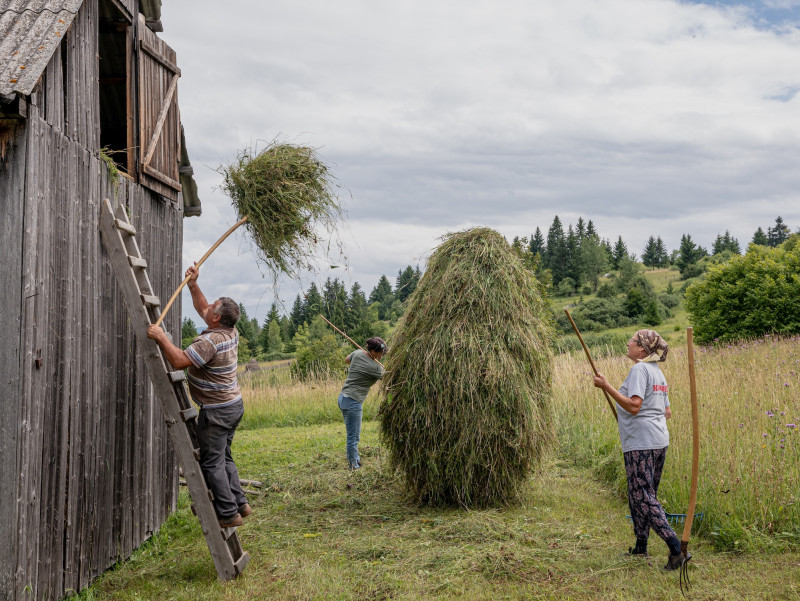
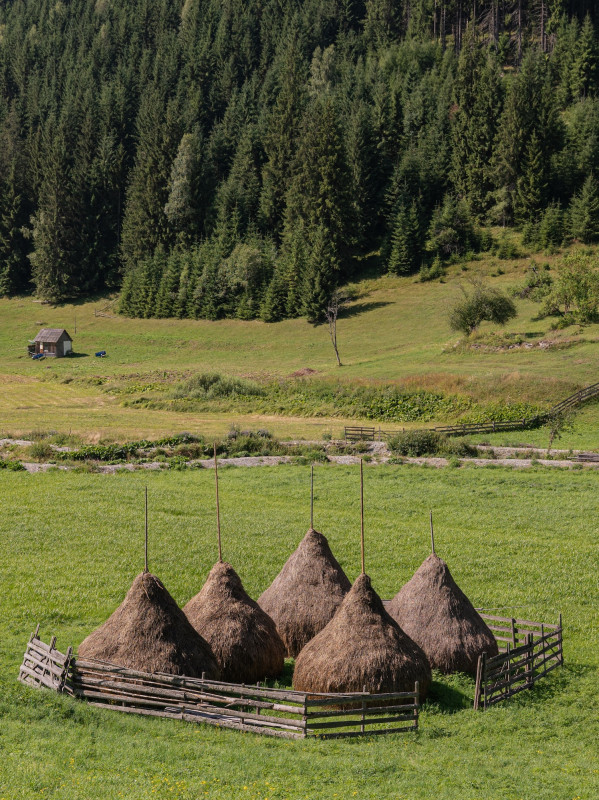
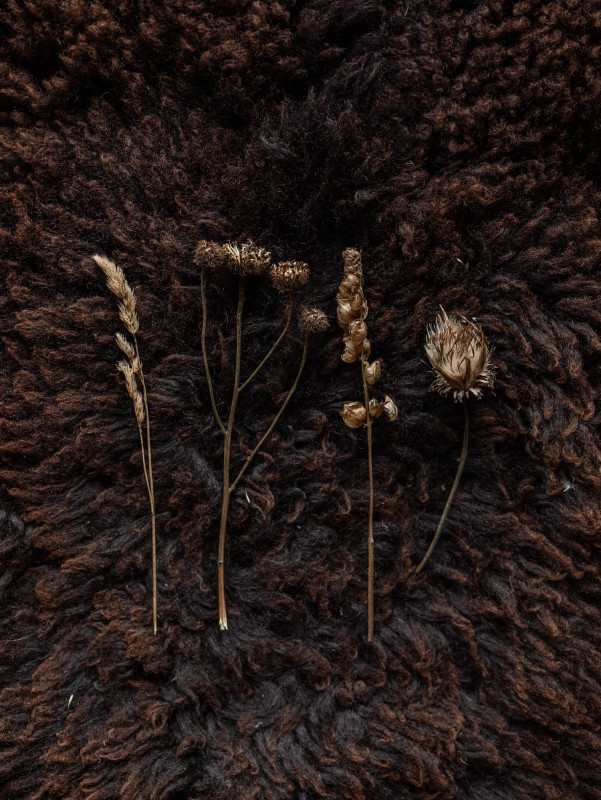
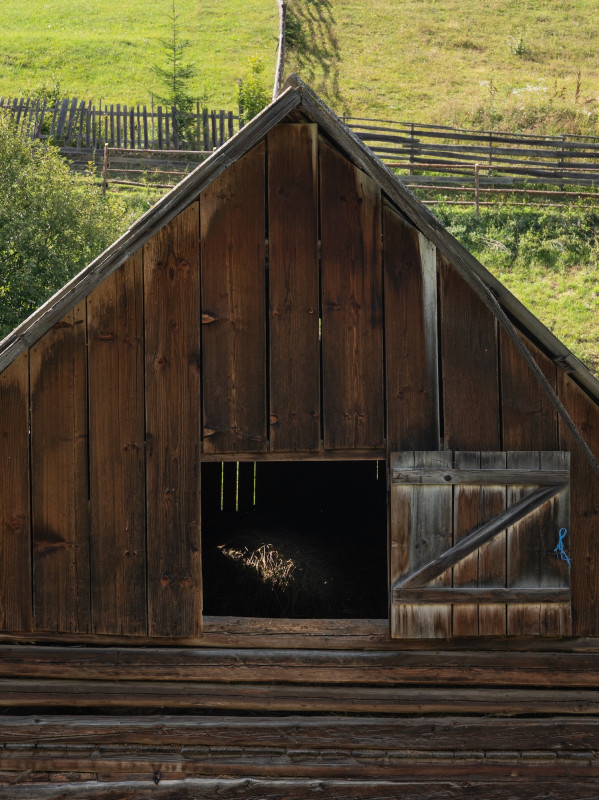
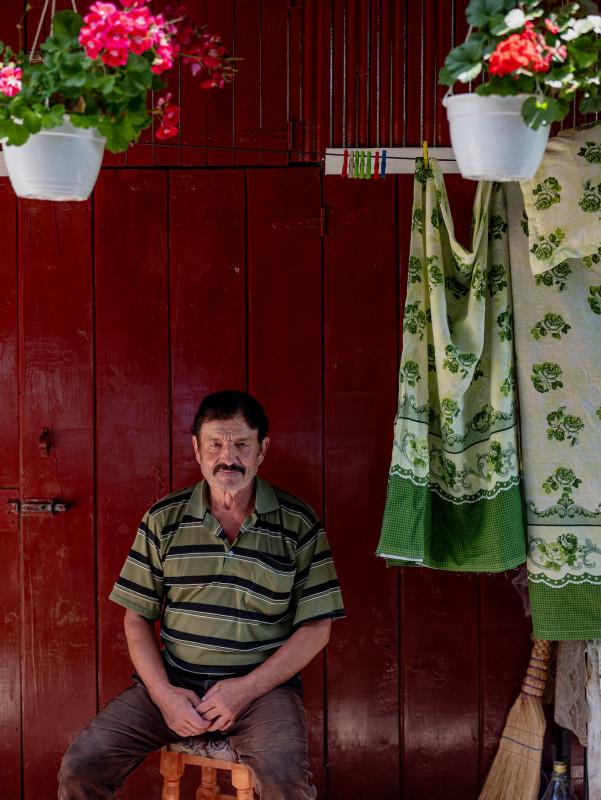
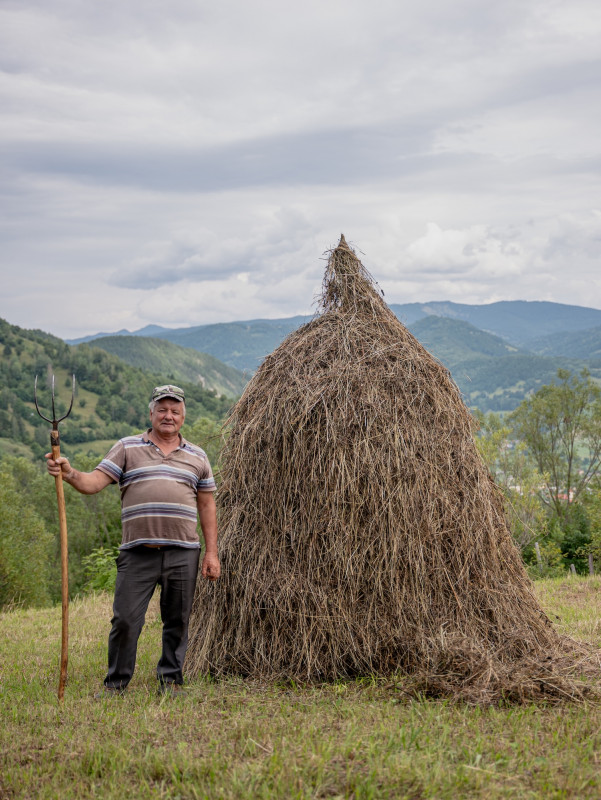
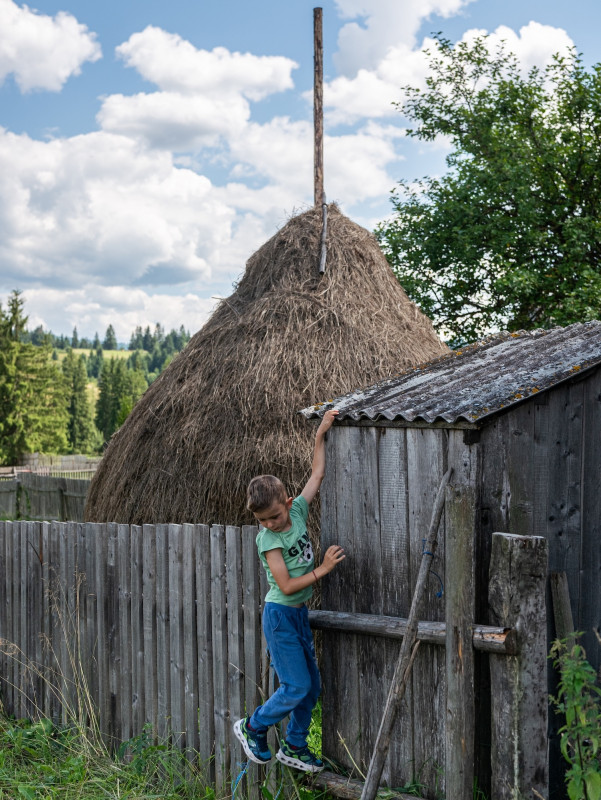
The hay meadows of north-eastern Romania are among the last places in Europe where hay is still scythed by hand, and piled into tall stacks using traditional techniques. In their series, the photographers capture the artistry and beauty of this tradition.
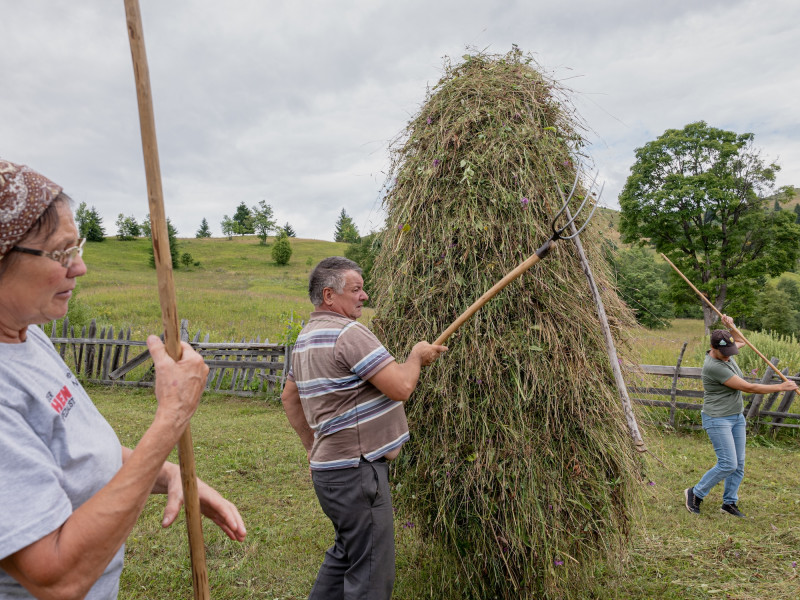
Romania’s Haystacks - a disappearing landscape of biodiversity is a joint project that speaks about one of the last traditional forms of agriculture remaining in Europe: meadows of hay in the mountainous regions of north-eastern Romania are scythed by hand and piled into 3-metre-high haystacks. Unfortunately, this practice is declining rapidly, leading to the loss of the types of agricultural lands that are important for the preservation of ecosystems.
LFI: What do the haystacks say about tradition, and what does the future look like?
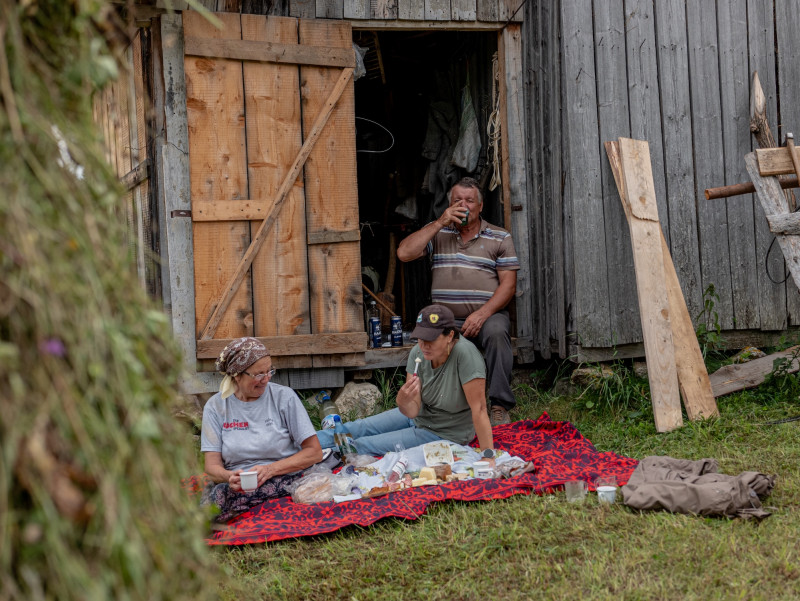
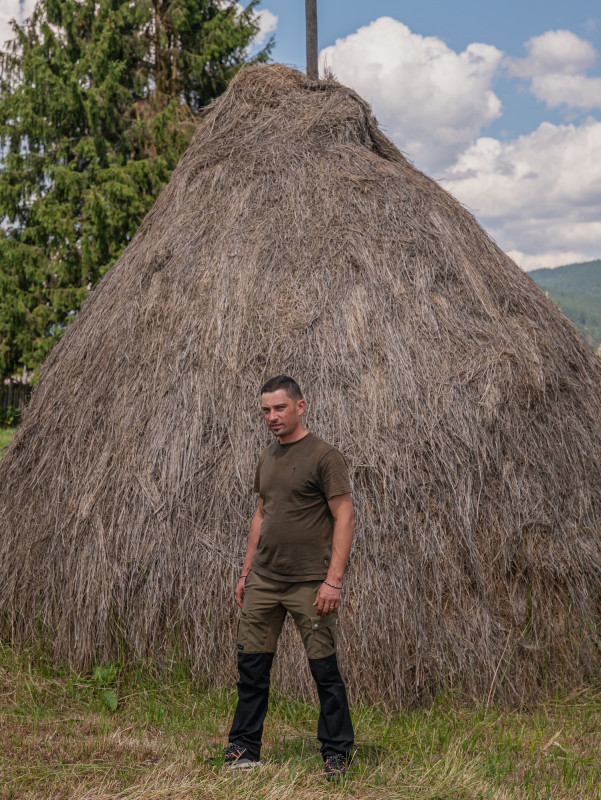
Federico Borella/ Michela Balboni: Haystacks tell the story about a relationship to the landscape that is based on community collaboration – each haystack is the result of collective work. Whether this will survive or not depends on whether small family businesses still make sense for the next generation. In many areas of rural Romania, haystacks are part of the landscape, created by hand from season to season. People have been cutting the grass with scythes for centuries, leaving it to slowly dry in the sun, and then stacking it into sculptural cones. But if young people move to the cities and industrial agriculture takes over, this rhythm will collapse.
To what degree does your project deal with a social issue as a whole?
To a large degree it deals with a wider social problem. What’s going on in these villages reflects a more comprehensive transformation affecting rural Europe. In recent decades, the number of people involved in agriculture has reduced drastically, and younger generations are leaving mountain regions. Once the traditional ways of cutting hay are abandoned, the biodiversity in meadows is quickly lost. The disappearance of haystacks is a sign of agricultural marginalisation, demographic transformation and a different appreciation of the soil.
Are your pictures a reminiscence of the past?
Our pictures don’t aim to romanticise the past; we want to document the present that is still visible and is fragile. With our photographs, we want to show a living system of working environments where people, animals and seasonal rhythms still follow a reciprocal logic that is gradually disappearing. The preservation of a cultural heritage is difficult, because it is indivisibly connected to economic conditions. You can’t protect a tradition, when the people who follow it can’t make a living from it.
What was it like working with the camera?
We felt very good with the Leica SL system. Its dependability was decisive, especially in isolated areas, where equipment failure is not an option. The electronic viewfinder offered a clear and precise image, which allowed us to work accurately under changing light conditions; and the outstanding quality of the data gave us the flexibility and depth that we needed during post-production.
Katja Hübner
LFI 2.2026+-
Finden Sie Borellas Portfolio über sowjetische Koreaner in Usbekistan im LFI Magazin 2.2026. More
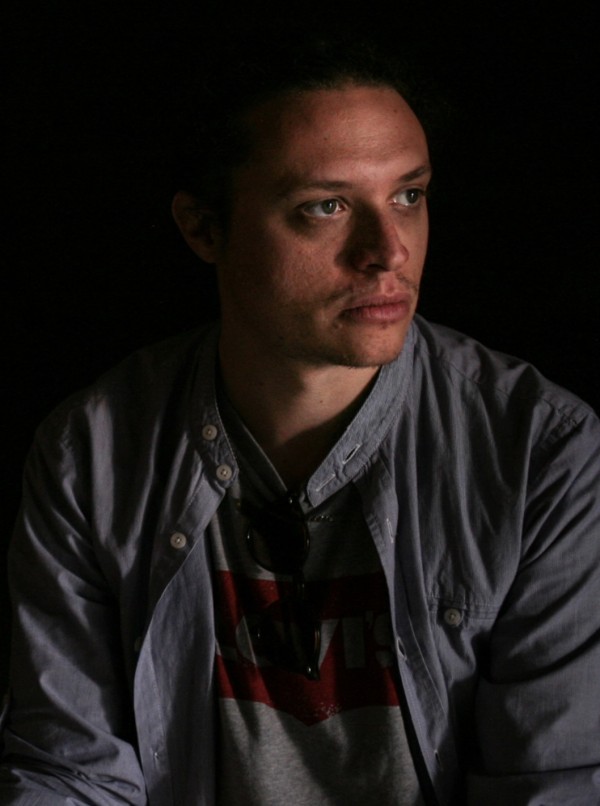
Federico Borella+-
After graduating in Classic Literature and Mesoamerican Archaeology from the University of Bologna, Borella earned a Master’s in Photography and Journalism at the John Kaverdash Academy in Milan. He concentrates on social and ecological issues and has been published in The New York Times, Time, Newsweek and National Geographic, among others. His reportage on people and elephants in Sri Lanka was named “Picture of the Year” in 2024. More
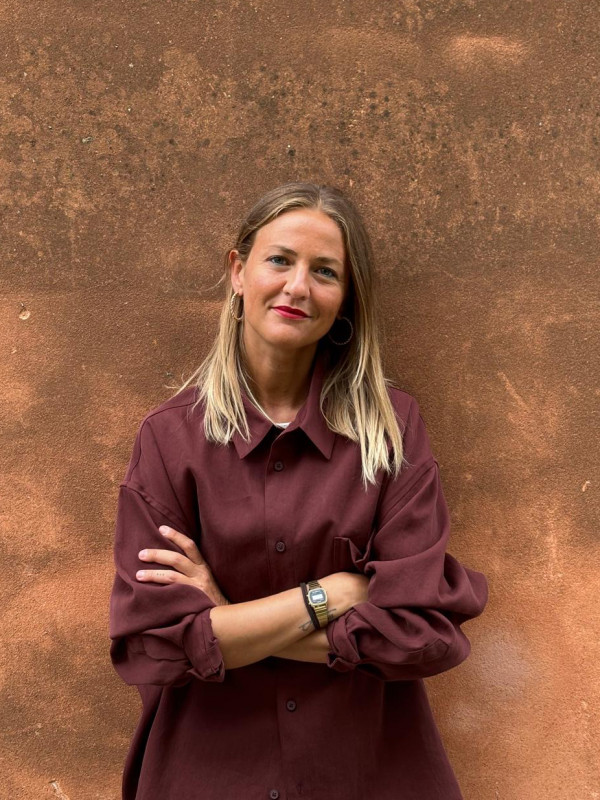
Michela Balboni+-
The freelance photographer explores in her work the relationship between food, people and places. She combines commissioned work with visual storytelling projects for Der Spiegel, Politiken, GEO, WePresent, Michelin Guide, and others. More