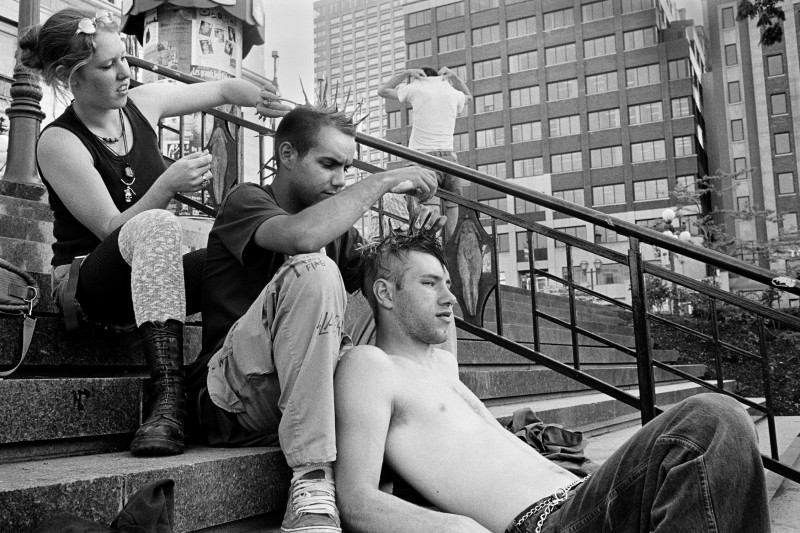
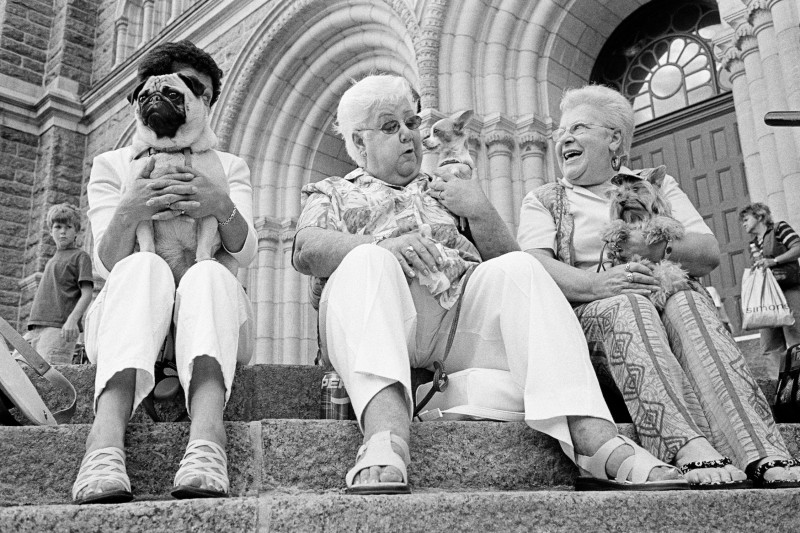
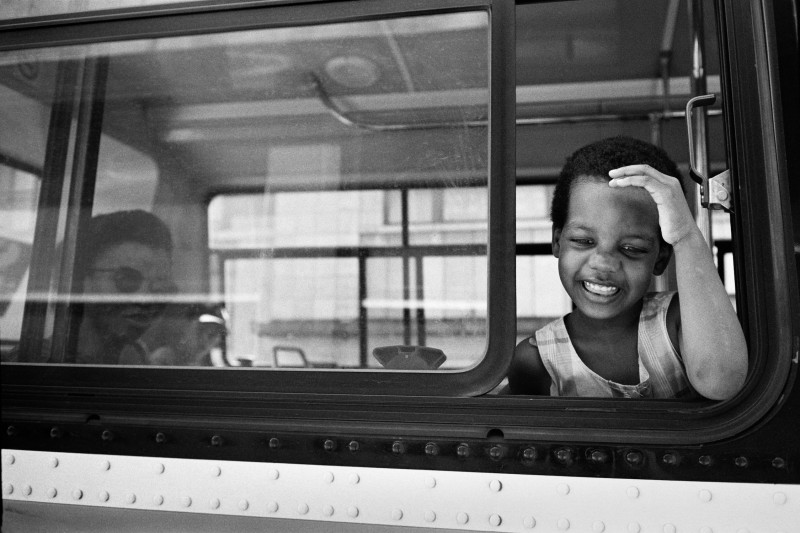
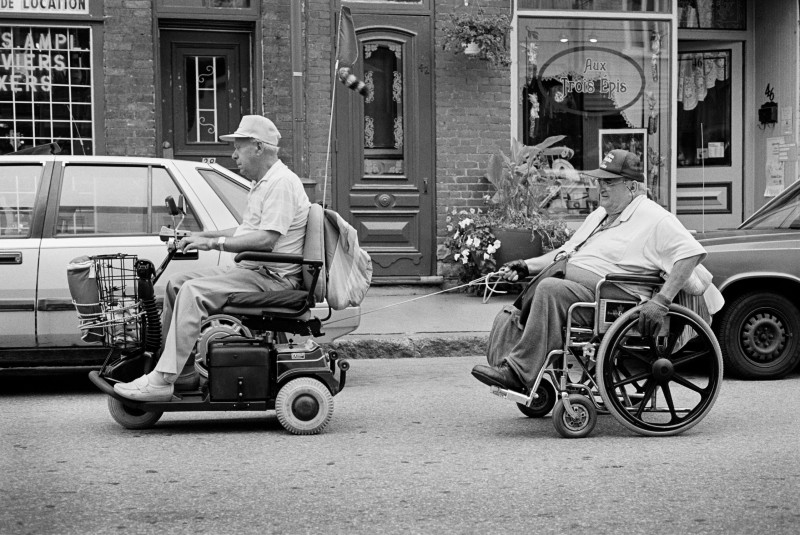
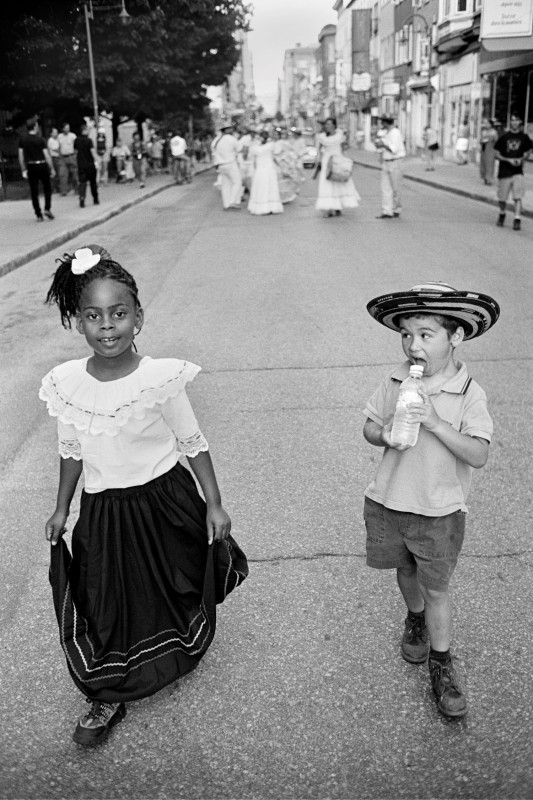
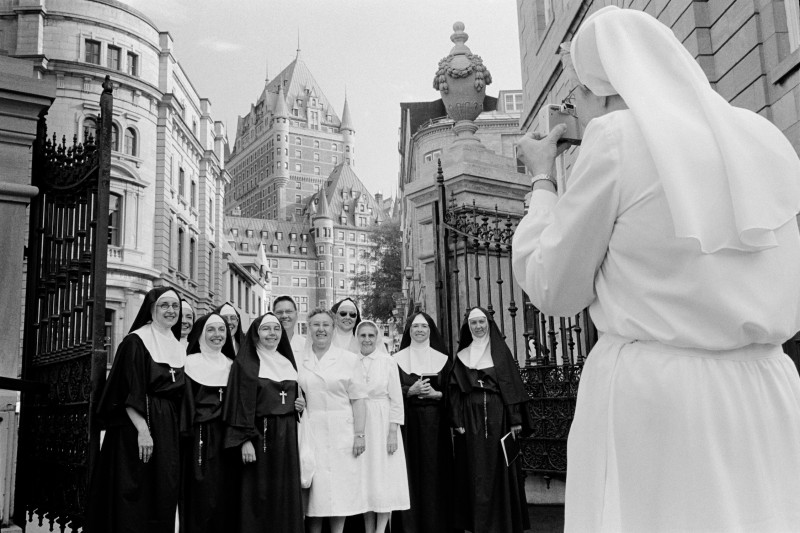
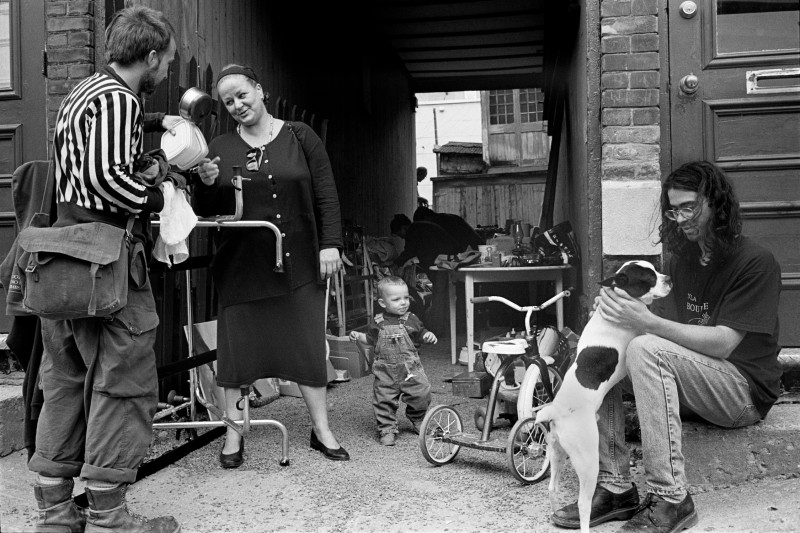
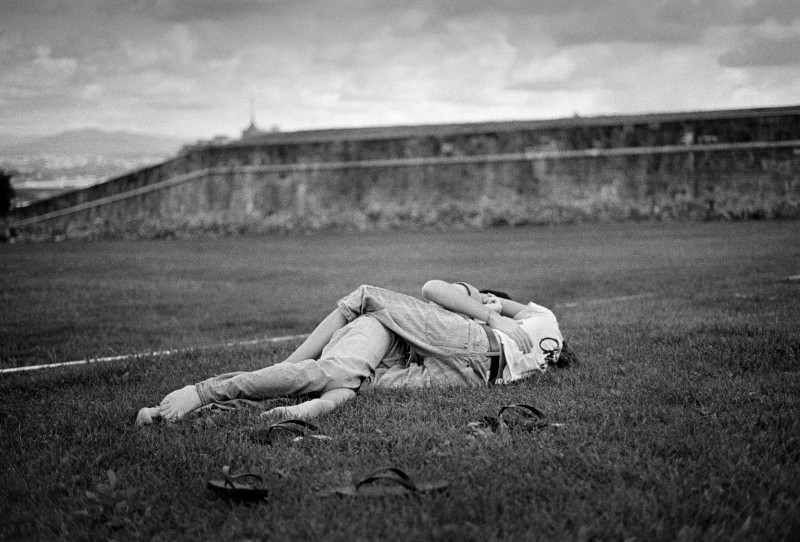
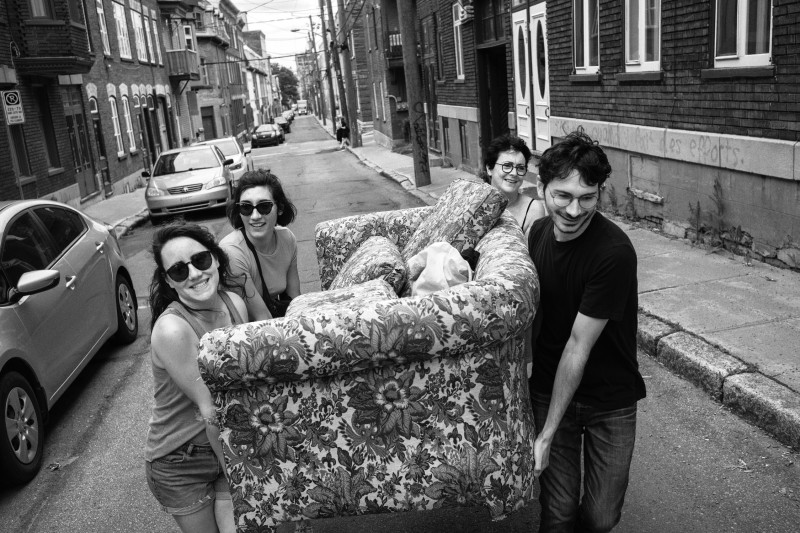
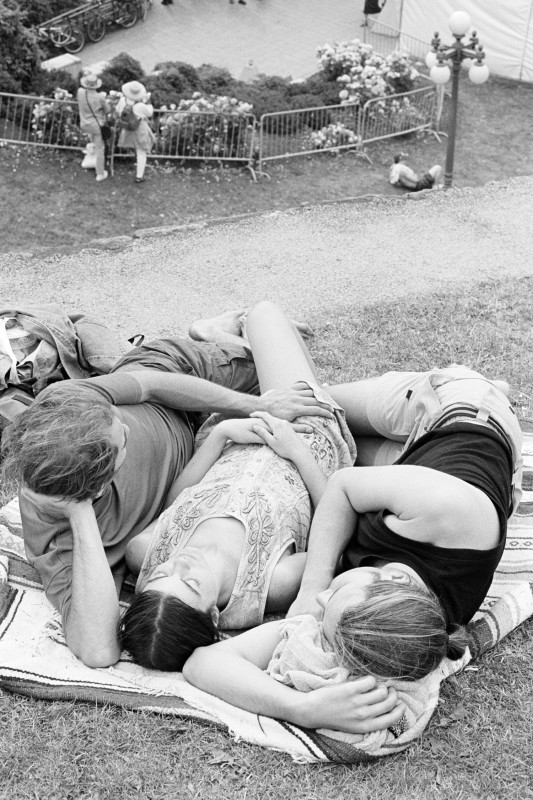
Street photography in Québec City is a series about grace, loneliness, love and friendship in a city. At the same time, the pictures of mundane moments speak of solidarity and humanity, and reveal a sense of identity.
LFI: What fascinates you about street photography?
Éric Côté: The encounter. Stepping into the life of a complete stranger for just a few moments, waiting patiently for the right gesture, the right expression to emerge. I let myself be guided by sounds, sights, smells, and, of course, by human interaction. I observe how people look at one another, how they behave, how they engage with their surroundings. It’s a constant performance, an open-air theater, and I’m a privileged witness. Street photography is, above all, an act of empathy, a way of seeking a shared meaning through the eyes of others. Walk, observe, wait for the right moment, and click. To offer an honest, timeless image, a fragment of life… a kind of eternity within the everyday.
What makes Québec an exciting place for you in particular?
The town with its unique blend of history, cultural diversity and urban contrasts, is a fascinating playground for street photography. I primarily work in Quebec City, where I’m a director and cameraman for television, a role that allows me to explore the city daily and feel deeply rooted in its rhythm.
Old Quebec, a UNESCO World Heritage Site, offers exceptional visual richness: cobblestone streets, stone buildings, historic fortifications… Every corner feels steeped in history. This intimate, almost timeless atmosphere gives street scenes a cinematic quality. But beyond the city itself, it’s the human element that interests me most. I look for moments of truth and authenticity in my subjects, a glance, a gesture, an interaction between two people or between a person and their environment. The coexistence of cultures, lifestyles, and generations nourishes my photographic eye.
What does black and white mean to you in photography?
I grew up discovering the works of the great masters of humanist photography: Henri Cartier-Bresson, Robert Doisneau, André Kertész, to name just a few, and most of their iconic images are in black and white. It’s an aesthetic that left a strong impression on me and continues to shape how I see. What I love most about black and white is its timeless quality. By removing color, you strip the image of all artifice and return to the essence: light, form, contrast, and above all, emotion. It’s a way of seeing the world in shades, in subtleties, without visual distraction. The narrative tone it evokes allows me to tell stories with greater subjectivity and intimacy. Sometimes, by playing with strong contrasts or visible grain, I also try to translate a certain tension, a bit of chaos. It’s a way of expressing a more personal, more internal vision of reality.
What stories do you want to tell with your photos?
Through my photos, I primarily seek to tell stories of humanity. It is the simple scenes of everyday life that attract me: an outstretched hand, the smile of a stranger, a conversation between two people sitting on a bench. These are fragments of life that bear witness to our fundamental need for connection. Photography allows me to freeze these moments, to give them a voice, a memory. In a world marked by polarization, indifference, or sometimes loneliness, I want to show that there are also gestures of compassion, altruism, and attentiveness to others. My images are, in a way, a gentle response to the harshness of the world. They tell of hope, resilience, but also the beauty of “living together”.
Katja HübnerEQUIPMENT: Leica M11 Monochrom, Elmarit-M 28 f/2.8 Asph, Summicron-M 35 f/2 Asph, Summicron-M 50 f/2 Asph
Éric Côté+-
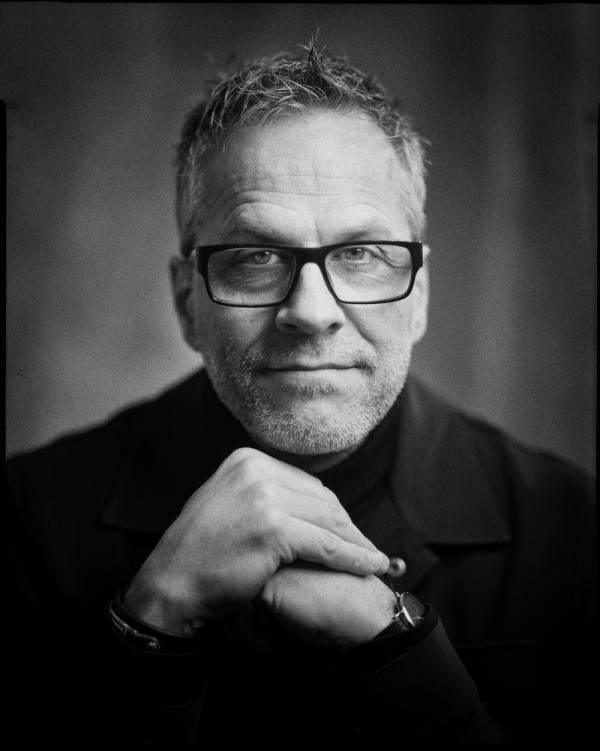
Photographer, camera man and director from Québec City, Canada. His pictures have been displayed in numerous exhibitions throughout Québec province, and he has published three books. In addition, he organises workshops dealing with reportage and street photography, and is a co-founder of the Festival International de photojournalisme de Saguenay. Côté has been using Leica M equipment since the nineties, and was part of the Magic Moments II exhibition presented by Leica AG . The photographer is currently preparing a monograph reflecting 35 years of street photography in Québec City, due to appear in the spring of 2026. More