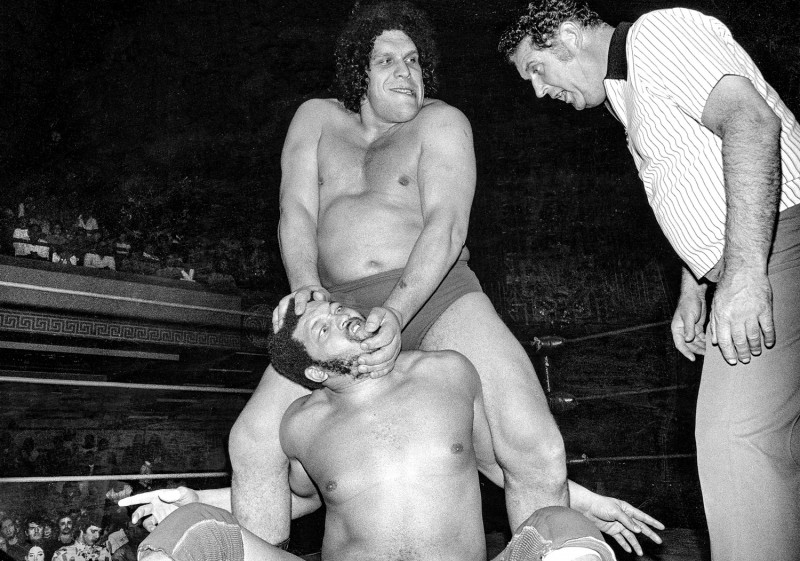
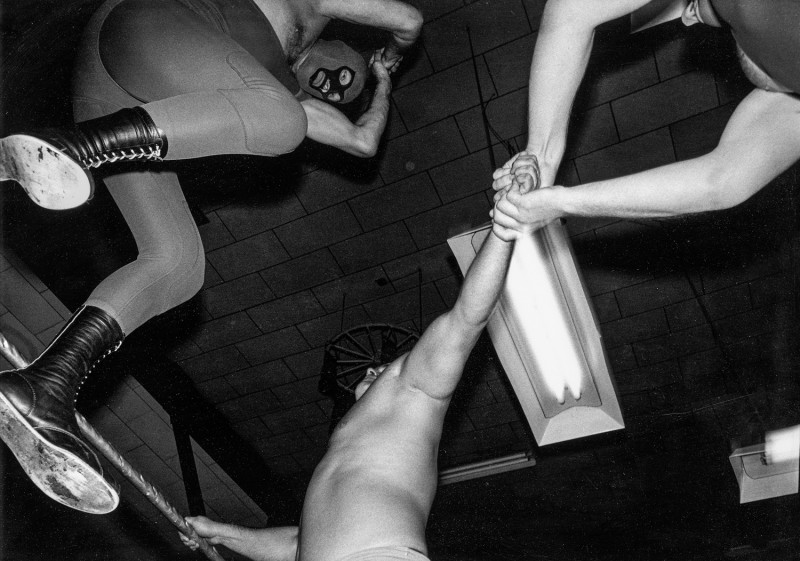
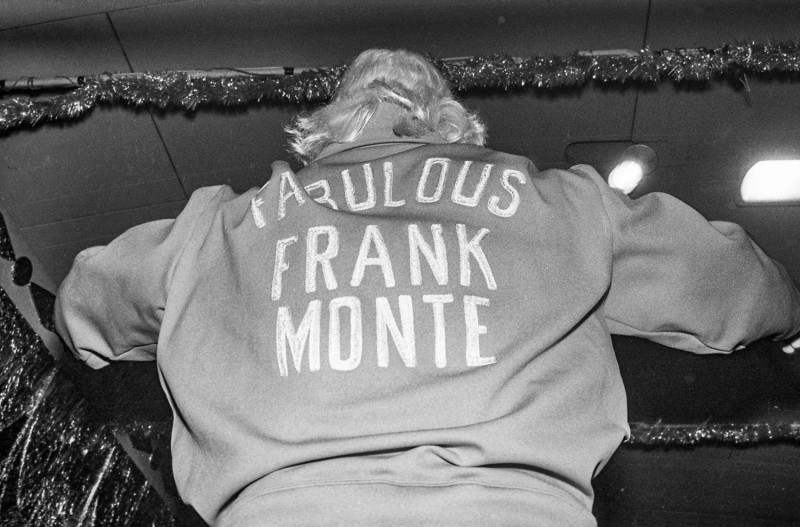
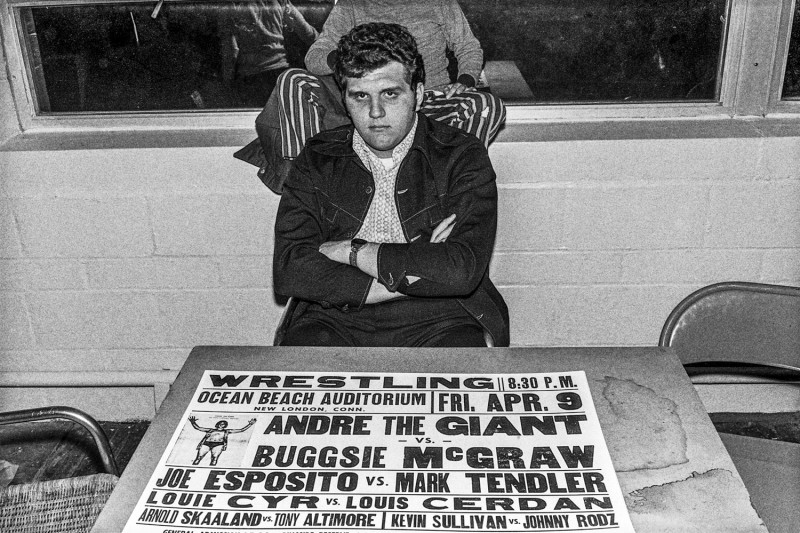
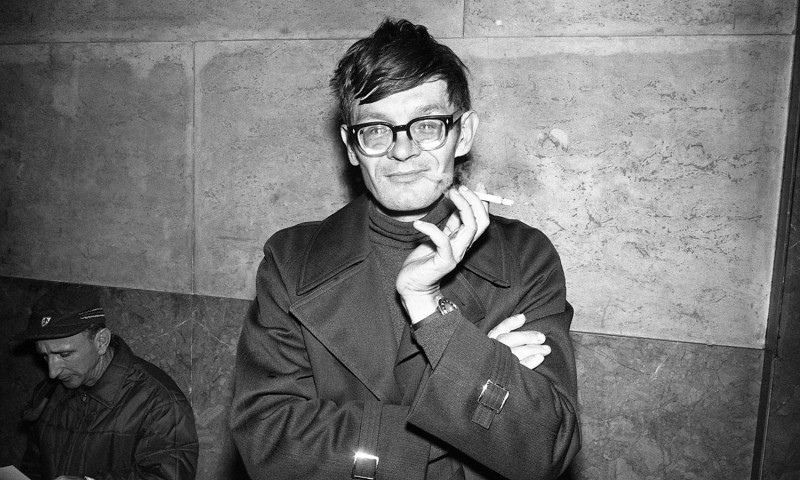
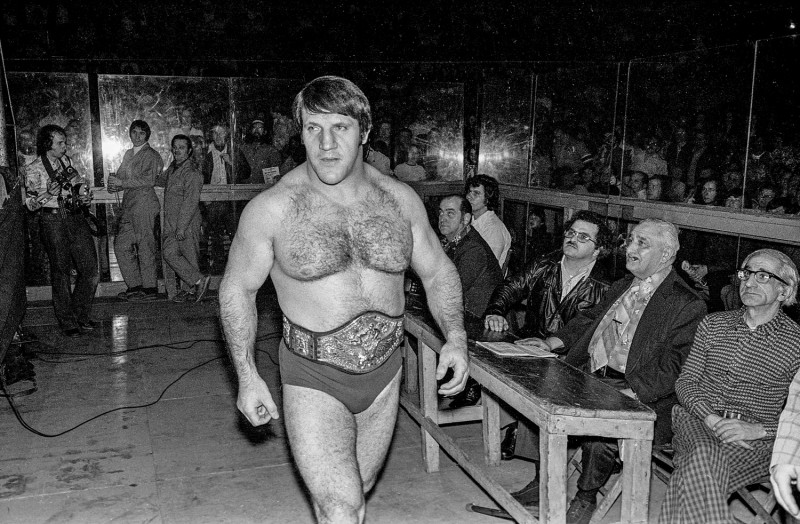
50 years ago, the photographer accompanied his childhood friend and later professional wrestler, Kevin Sullivan, to a number of fights. The atmosphere there still haunts him and is vividly palpable in his images.
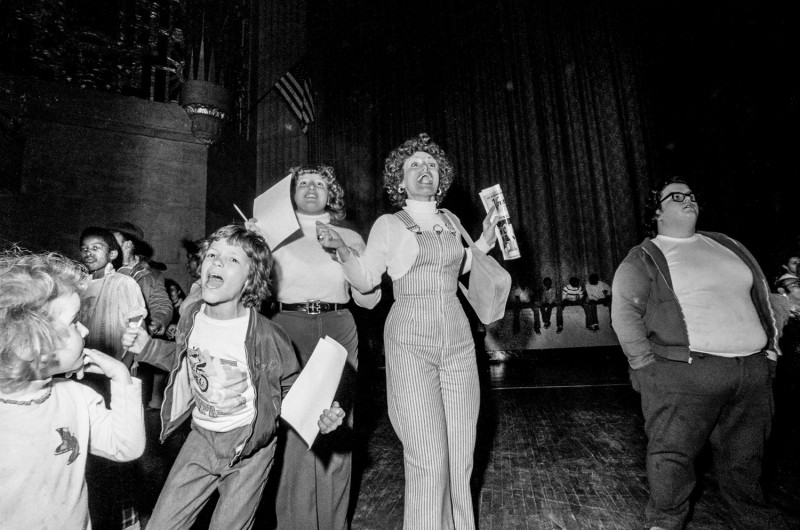
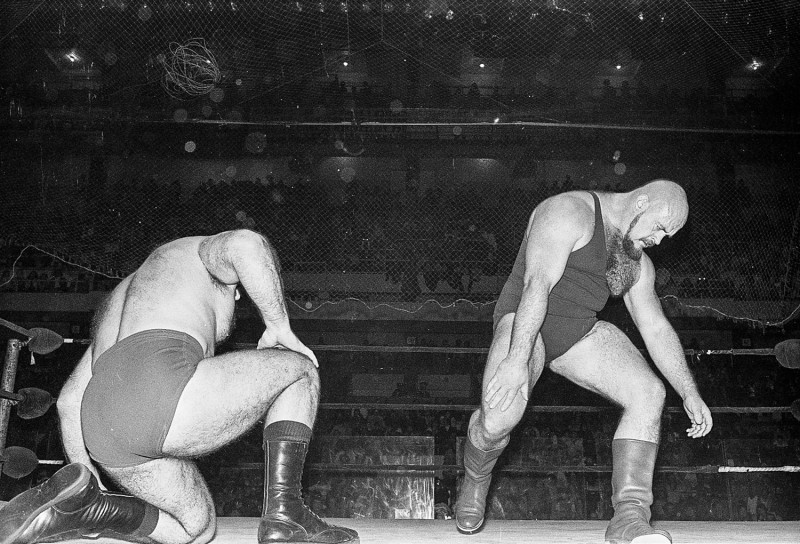
Wrestling in the seventies was an affordable game of Bingo with heroes, John A. Rizzo says. His black and white pictures of fights in north-east USA speak of a rough, theatrical world, and of the possibility to escape daily life for a short, ecstatic moment.
LFI: What fascinates you about wrestling?
John A. Rizzo: Initially, I think the fascination stemmed from the curiosity my friend, now a pro wrestler, sparked. I wondered, “What does he do? What is this about?” There was the excitement of meeting the wrestlers I watched perform on TV every Saturday. That first night, Kevin not only introduced me to a few of the stars, he also made it possible to be ringside, as close as I could be to the action. I was immediately fascinated by the choreography, the sweat, the action, the bodies and the athleticism. All of it came together as this incredible mosaic: real, visceral and abstract as art; it was all so photographable. I knew I had to photograph. All of it! From the action and wrestlers to the fans and the culture – the banality of the sport. I loved being close to be able to capture the action – the faces and the forms created by the bodies in action. I wanted to document the fans and their emotions, faces, and screams. I was hooked!
What was the photographic work like for you?
It was physical; at times very physical and fast. Almost always a rush of adrenaline and a rush of satisfaction. The amazing camera, the Leica M, was part of me, the perfect machine or instrument to do the job, and a shot of energy holding and pointing it – to view the action and the flash through the finder was amazing. The M2 and Leitz 28mm lens, with a trusty Braun RL 515 Strobe, made the perfect combo. I felt empowered by the camera.
Wrestling is still a very popular event today. What has changed since your series in the 1970s?
Today: the spectacle, the entertainment and the star worship. Approachability to the everyday person, and wrestling’s crossover into the movie industry, with stars such as The Rock and John Cena. Then: money! That’s what has changed. Wrestling was the common working person’s event or sport, affordable and approachable on a smaller local scale. A bingo game with action and heroes. Simply put, it was black and white, good and evil, win or lose, the banality of life injected with heroes and conquest. Somewhat unattainable to the fans, providing a simple excitement and justification of life, where things can be murky or unsure, even difficult.
What challenges does a “sports photographer” face with subjects that are constantly in motion?
The speed at which things happen. Learning to anticipate. I do think the digital camera offers some great advantages – ISO speed and dynamic range alone are significant improvements.
But what does analogue photography still mean to you today, in the age of digital transformation?
Analogue photography is like a fine aged wine, a nice Barolo or Pinot Noir, full of texture and layers. It might be said that vintage work is best appreciated over time. There’s sensuality in both the wine and the vintage B&W silver gelatin print. I’m grateful to have been able to do good work with film and a simple camera. All that said, I’m a big fan and committed to the digital era of photography. Without question, it allows the creation of the best possible image. The Leica M Digital series of cameras is the perfect marriage of analogue and digital worlds – I love using my M11. I wouldn’t choose anything else for my work today. It has been a great 50-year marriage between me and the M series cameras.
Katja Hübner
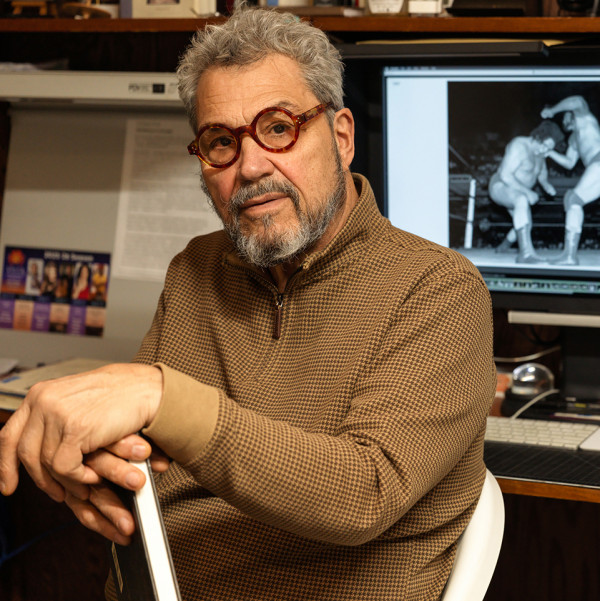
John Anthony Rizzo+-
The art and documentary photographer began his career in Boston, where he studied and taught photography. After moving to Portland, Oregon, he worked as a commercial and editorial photographer. Over the years he has, among other things, followed the Massachusetts Artist Residency of the Merce Cunningham Dance Company and professional wrestling with his camera. In Portland he established the Ars Nova Gallery and was co-founder and artistic director of the Obscura Gallery. His pictures have been exhibited at the Griffin Museum of Photography, the 555 Gallery and the Black Box Gallery, i.a.. Today, John lives alternately between Lincoln, Massachusetts, and Barbaresco, Italy. He teaches, gives talks and is a jury member at exhibitions. More