It is calculated that there are about 70 trillion stars in the visible universe. LFI Gallery photographers offer us a glimpse into the night skies.
Between cosmic light and oceans of stars: in the first part of our series on astrophotography, we spoke about the technical aspects that need to be considered to take a good astrophoto. Now LFI Gallery photographers add their input. They show us what astrophotography looks like in practice, explain why a long exposure is essential and share the origins of their deep fascination with the universe.
1. Xuhui Sun
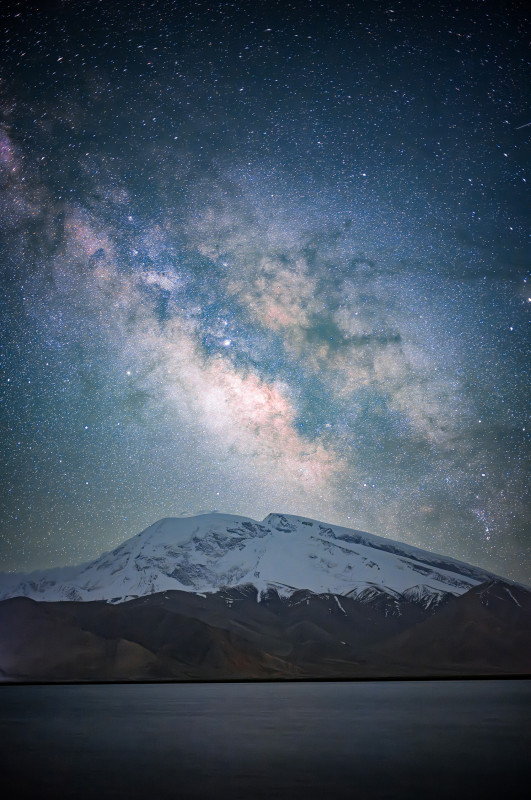
“For me, a deep understanding of the night sky is indispensable. I do research beforehand to know the position of the Milky Way, and the best season and times for taking pictures. Furthermore, I check on weather conditions. Astrophotography reminds me of how extensive the universe is. The snow-covered mountain in the picture is the famous Muztagh Ata in China, brushing the Milky Way.”
2. Thibault Gerbaldi
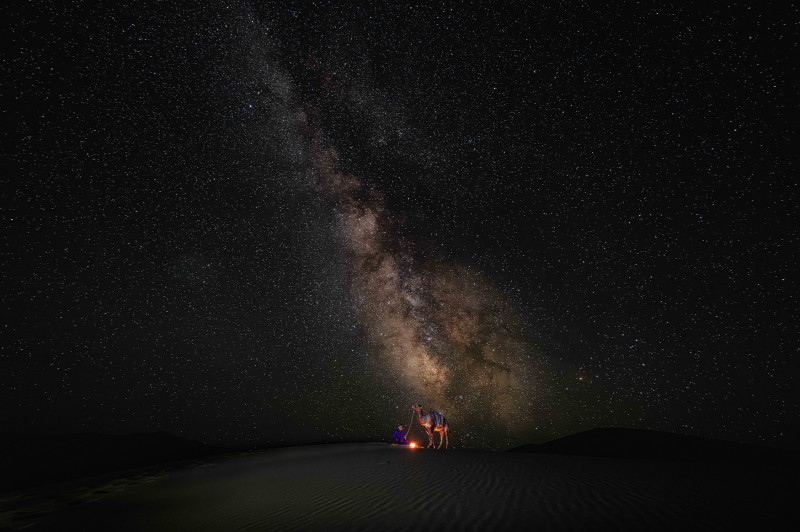
“The balance between detail, colours and atmosphere is decisive. I’m fascinated by the possibility of capturing the vastness of the Milky Way and a star-filled sky. This scene reveals a sense of loneliness – the forlornness of this person and this animal within the expanse, on Earth in the Gobi Desert and in the endless heavens beyond: a quiet dialogue between life, land and cosmos.”
3. Sunil Mehta
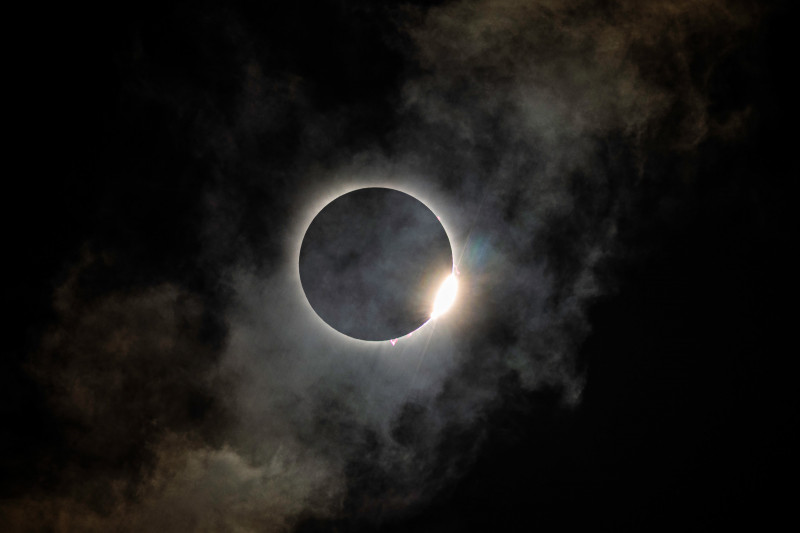
“Astrophotography often includes extreme contrasts and very short moments, which is why careful exposure control, a precise focus and a stable set-up are crucial. This picture was taken during a total solar eclipse on April 8, 2024 in Rowlett City, Texas, USA. Such moments reminds us of how small we are within the context of the universe.”
4. Christian Bluhm
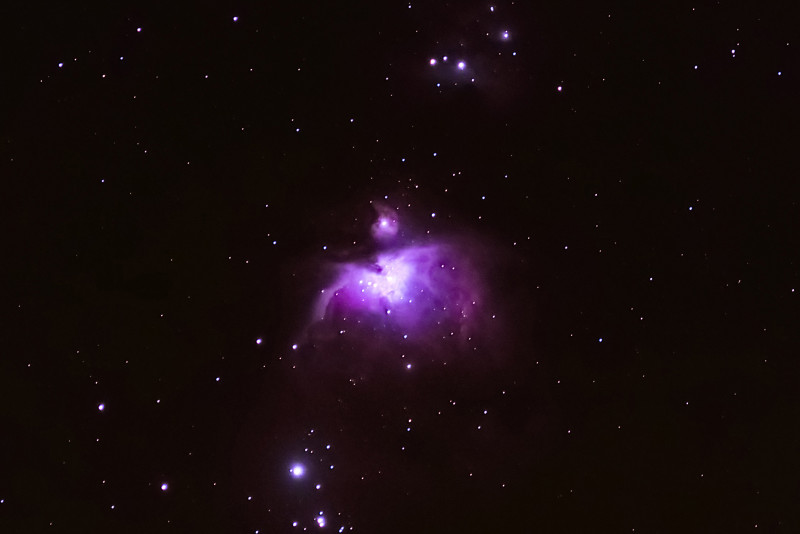
“There are two big challenges when it comes to astrophotography: noise and clarity. That’s why you have to think through the shot right from the beginning, and you need to apply the right tools during post-production. Already as a child, I used to spend hours observing the night skies during the summer. Because light pollution is well controlled in Switzerland, I was able to take this picture with my Leica SL2 with a star tracker, set on a tripod. For me, the Orion Nebula is one of the most fascinating objects for night photography: it’s easy to find in the night sky in the Northern Hemisphere and, on a clear night, it’s even visible to the naked eye.”
5. Arne Jansen
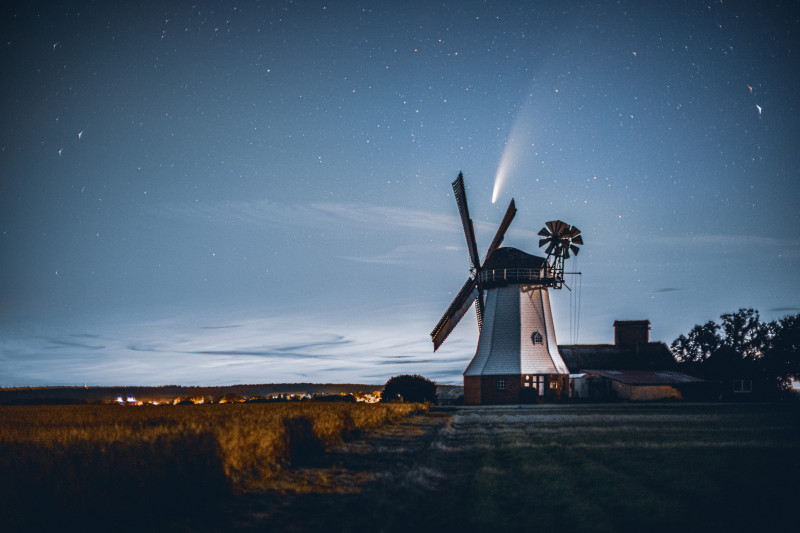
“Being well prepared is essential. The trade-off between a long exposure time and a brief moment, so as the capture stars as points, creates the foundation. In this picture it was four seconds at a f/1.4 aperture and ISO 800 with a Noctilux-M 50 f/0.95 Asph. For me, the windmill represents my home on the edge of the Lüneburger Heide (Germany). I find that the fact that it crossed paths with the comet – which was only visible for a few weeks – made the scene quite unique.”
6. Edgardo Michele Cerruto
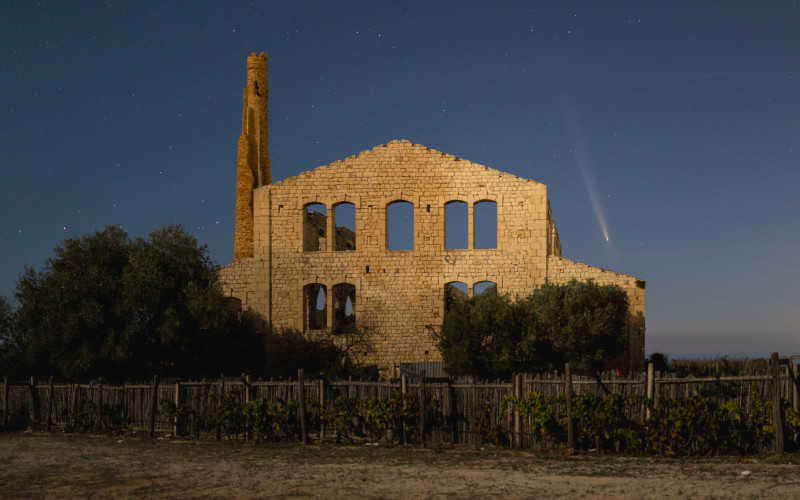
“I plan my astrophotography process down to the smallest detail. I work primarily with two applications: PhotoPills and Star Walk 2. With these, I explore potential locations during the day, and with the help of Augmented Reality analyse the potential conditions of the night sky. With the aim of showing the size of the ‘comet of the year’ at the height of its visibility, I decided to photograph it together with a recognisable structure: La Fornace Penna, a monument to industrial archaeology in Contrada Pisciotto near Sampieri, in the south-east of Sicily.”
Eliza TrappXuhui Sun chose a striking location, Muztagh Ata in China, to capture this image of the Milky Way. The Leica M11 allowed him to apply a sensitivity of ISO 3200 without any annoying noise artefacts. He stopped down his Summilux-M 35 f/1.4 ASPH to 1:16 and exposed the shot for 15 seconds. As a result, the stars no longer appear as sharp points, but the band of the Milky Way looks very vivid. © Xuhui Sun
Places where there is almost no light pollution – such as here in the Gobi Desert –, allow for impressive night sky images: the human and the camel in a dialogue with the elements. Thibault Gerbaldi took this shot with a Leica SL3 and the Super-Vario-Elmar-SL 16–35 f/3.5–4.5 Asph, exposed for 24 seconds at ISO 4000 with a 1:16 aperture and 16mm-wide-angle. This works because of the viewing distance; if you zoom in on the image, the star trails become visible. © Thibault Gerbaldi
For this shot, Sunil Mehta chose the moment in which the sun is moving out of the shadow of the Earth. The exposure time of 1/640 of a second at aperture 1:7.1 (two thirds of a stop above 1:5.6) and ISO 400, at the maximum telephoto setting of his Sigma 150–600 f/5–6.3 DG DN OS Sports, was the correct choice to allow him to capture details at the edge of the sun as well as the atmospheric lighting created by the clouds. © Sunil Mehta
The clarity with which Christian Bluhm captured the Orion Nebula is impressive. The image is composed of 17 individual shots exposed for 24 seconds at ICO 400 with a 1:4 aperture. In order to compensate for Earth’s rotation, the Leica SL2 and the Apo-Vario-Elmarit-SL 90–280 f/2.8–4 (at 280 mm) were used on a Vixen Polarie Star Tracker. © Christian Bluhm
The right place at the right time: Arne Jansen placed himself in such a manner that he was able to capture the tail of the comet in perfect alignment with the sails of the windmill. He took this picture with a Leica M10-P and a Noctilux-M 50 f/0.95 Asph, exposed for 4 seconds at ISO 800 and a 1:1.4 aperture. © Arne Jansen
Edgardo Cerruto captured the comet with his Leica Q2, an exposure time of 4 seconds, open aperture and ISO 400. Night had not yet fallen, which is why the architecture in the foreground dominates the image and forms a frame for the emerging starry sky and the comet. The exposure time was appropriate to make the stars appear as bright points. © Edgardo Michele Cerruto