Belief, tradition, threat: a photographic look at the Yazidi faith – the result of a long-term project extending over twelve years.
The Yazidis are a religious minority with roots in the Middle East: their religious centre is located at the Lalish Holy Site in northern Iraq. They have been subjected to discrimination and persecution for centuries, and were particularly hard hit by the genocide carried out by the Islamic State in 2014. Many now live in the diaspora, where they struggle for recognition and to preserve their culture. Hüsamettin Bahce has been portraying the group for over twelve years.
LFI: What motivated you to dedicate more twelve years to documenting the Yazidi community? How did your perspective on the people change throughout the project?
Hüsamettin Bahce: To tell you the truth, I hadn’t thought about taking photographs over such a long period of time. I can say that the impact the Yazidi community had on me, the mystery of the faith, the morale of people accepting me as a member and, unfortunately, the historical awareness brought about by the genocide in Shengal, were some of the main reasons for my motivation to continue this work.
How do you approach capturing sensitive stories like this in a way that feels both respectful and honest?
I like to work on stories that require extensive study; when dealing with matters of faith, I pay close attention not only to the images but also to the texts I write. Before publishing the texts, I always review them with religious leaders from the community and intervene in any situations that require correction. I conduct thorough research on the topic I’m addressing, learning what to be careful about and what not to do, and asking where my boundaries begin and end. Mastering your subject already earns you a reputation; if you’re truly sincere, people will offer what you need.
The Yazidi community is not very well known for many people. How do you introduce such a specific topic to an audience that might have little or no prior knowledge?
In my presentations, I begin by explaining the basic principles of the Yazidi faith and culture, and try to convey the similarities with other faiths and the situations that cause us to misunderstand this faith.
What challenges did you face during the project, and how did you overcome them as a photographer?
I conducted the study in two areas: Lalish – where the main temple is located – and the surrounding settlements, and the Sinjar region. Sinjar is a more conservative region where the faith is very strict and where the largest Yazidi population lives. Therefore, working in this area was the most challenging. During the US occupation, I experienced the difficulties inherent in carrying out the project. Travelling back and forth with so much film was one of the most serious problems; sometimes I would send my materials in advance in a vehicle. Thanks to the brilliant mind of my guide, Emin, I would bribe Iraqi security forces who asked why I was travelling to Sinjar with a Turkish passport. We would lie to them and get through (the lie was that, according to the Yazidi faith, only a Yazidi can marry a Yazidi, and I was a Yazidi visiting my fiancée in Turkey). To smuggle the films into Turkey – to avoid problems at customs – I would use truck drivers for $100.
Let me tell you about what it is like to be a Yazidi, what I experienced and what led me to focus more on this subject; I was returning to Diyarbakır, my home town, from Lalish, a holy site for the Yazidi community in the Federal Kurdistan Region of Iraq. Back then, public transportation like buses didn’t exist, so you had to cross the border by taxi. People usually rented a car for four people and split the fare. Three construction workers approached me and offered to go to Diyarbakır together, saying they’d save money. When I accepted, they carried my bag and placed it in the trunk. Since the wait was so long, we started chatting, and the conversation turned to what we were doing in Kurdistan. They were workers from Diyarbakır who had come to work on construction sites. When they asked me, I told them I was Yazidi and that I was visiting Lalish – though I wasn’t actually Yazidi (the conversation took place outside the car, walking around). They walked away from me and spoke with the driver. Five minutes later, the driver approached me and explained that the three workers were very tired and wanted to rest in the car. He then asked me to get my bag from the car. I told him they didn’t want to travel with me because I was Yazidi, so I took my bag from the car. I think the experience I’ve briefly described is how I learned what it’s like to be Yazidi through this social experiment.
Why are Yazidis subject to such exclusion and discrimination?
According to other faiths, Yazidis are people who should be ostracized because they worship the angel of evil (Lucifer). In his book, The Yazidis, Roger Lescot (a researcher, writer and diplomat who did research on the Kurdish language and culture) called on Muslim and Christian clergy to force Yazidis to convert to one of these two religions. Not only Lescot but also missionaries and travellers who visited the region defined the Yazidi religion as heretical. Because of this and similar false and incomplete information, people of the Yazidi faith have experienced oppression and even genocide.
What do you hope your viewers will take away from Ezidxan?
I hope that Ezidxan will spark curiosity and help make the unknown known – even if only a little. I believe that the unknown lies at the core of all the massacres that people of this faith have experienced throughout history.
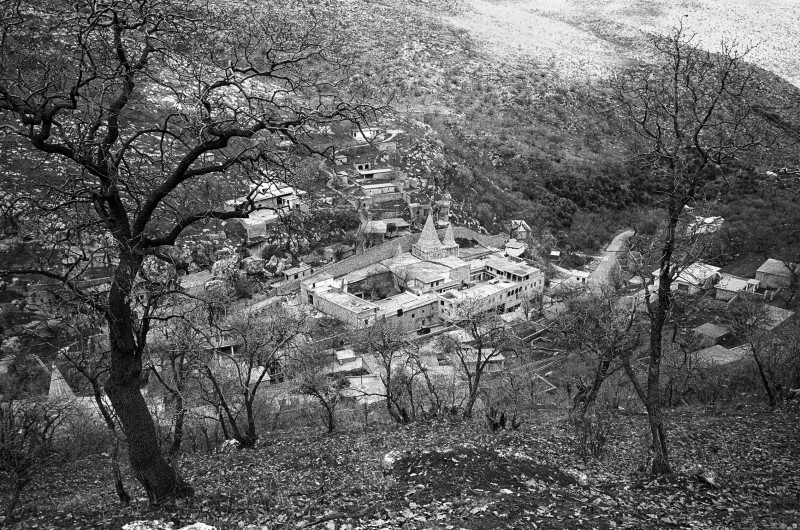
Danilo RößgerLalish, Duhok, April 2005: surrounding the tomb of Sheikh Adî, the main temple in Lalish, are small and large temples, water sources and shrines. Not only the temple, but everything in the valley is sacred to the Yazidis
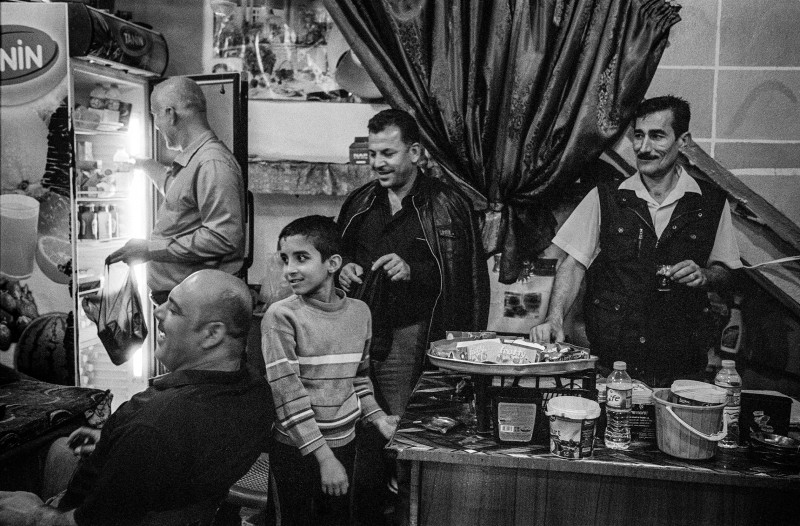
Ain Sifni, Duhok, June 2015: café owner Xelo Îlyas Xwêdêda chats with his customers. One year after the massacre in Sinjar, Xelo Îlyas applied for asylum in Germany
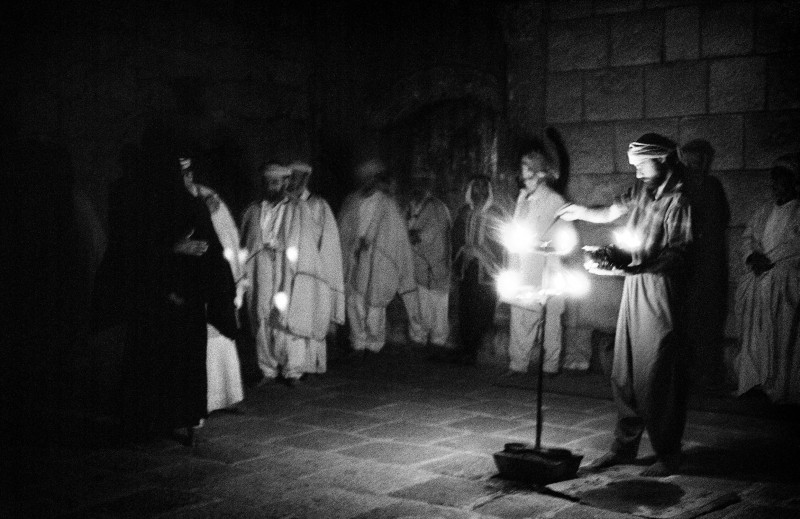
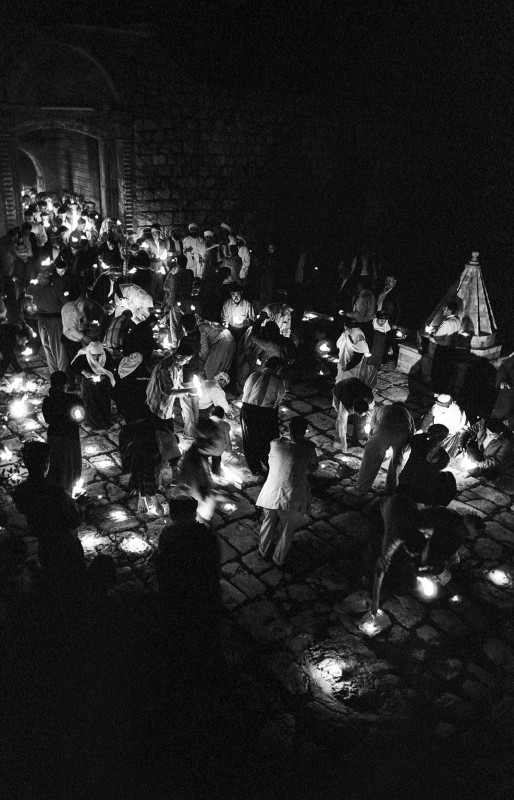
Lalish, Duhok, October 2008: oil lamps are lit during the community festival. Ceremonies related to the belief in the beginnings of the universe are held during this festival. The Yazidi community refers to the Semā procession as a remembrance of the angels bowing before God
Boza, Duhok, December 2014: a woman visits the graves of her relatives during the festival. These visits are carried out as part of various rituals. On the second and third days of the festival, Nanê Mirîya meals are prepared in the name of the dead and visits are made to the graves
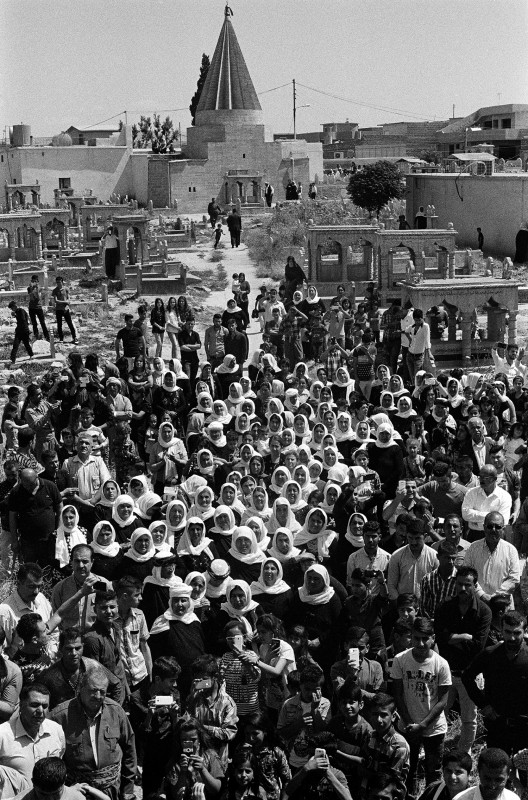
Khatarah, Duhok, May 2016: during the Cema festival, pilgrimages are made to holy sites. The rituals that accompany these festivals are called perîsiwarkirin. The colourful textiles that were hung on the tombs are replaced with new ones
Lalish, Duhok, April 2006: Yazidis celebrate the Çarsema Sor New Year festival by burning oil lamp wicks, praying and ululating in the courtyard of the main temple in Lalish
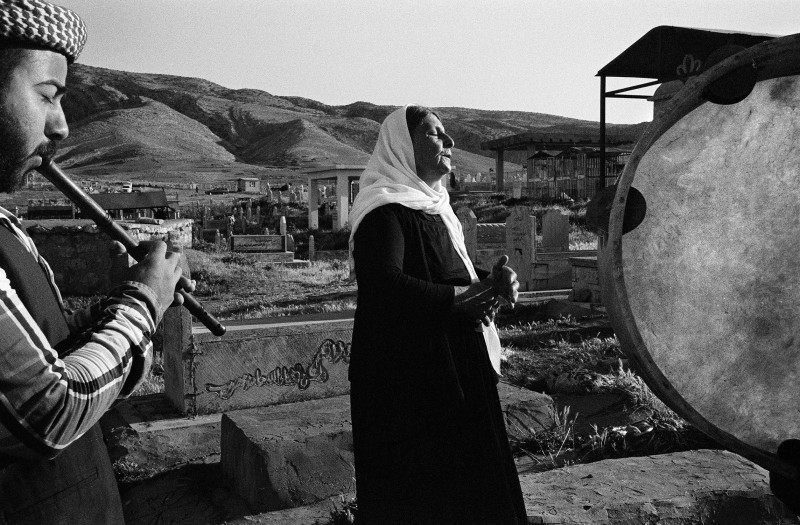
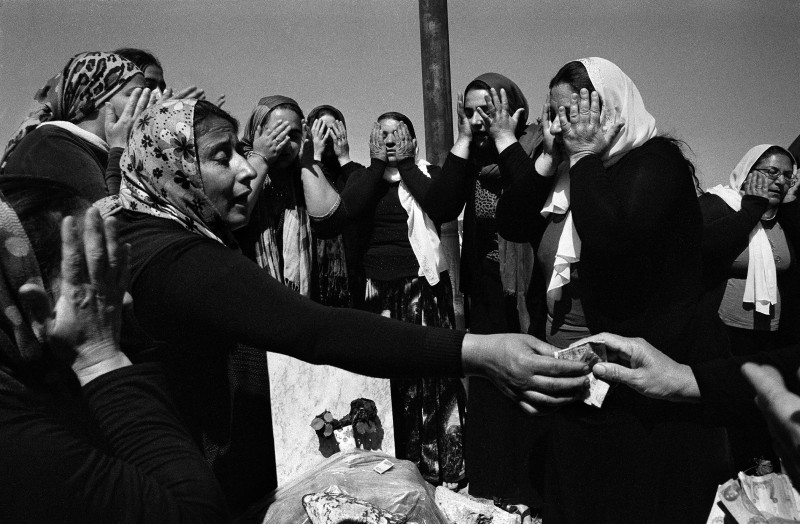
Ain Sifni, Duhok, May 2016: wailing women visit the cemetery in Ain Sifni. Lalish, where the largest temple of the Yazidi community is located, lies within the boundaries of Ain Sifni
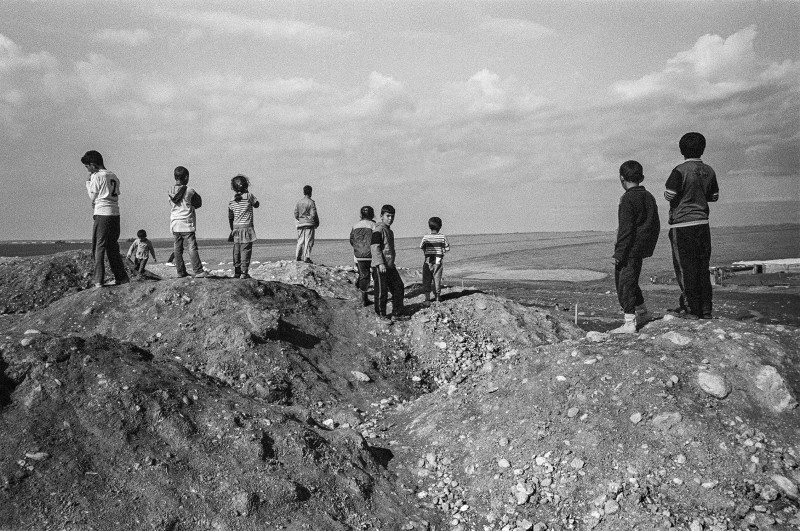
Khanke, Zakho, Duhok, November 2014: near the Khanke camp, children climb onto a mound of earth and look around. The camp was named after the nearby town of Khanke
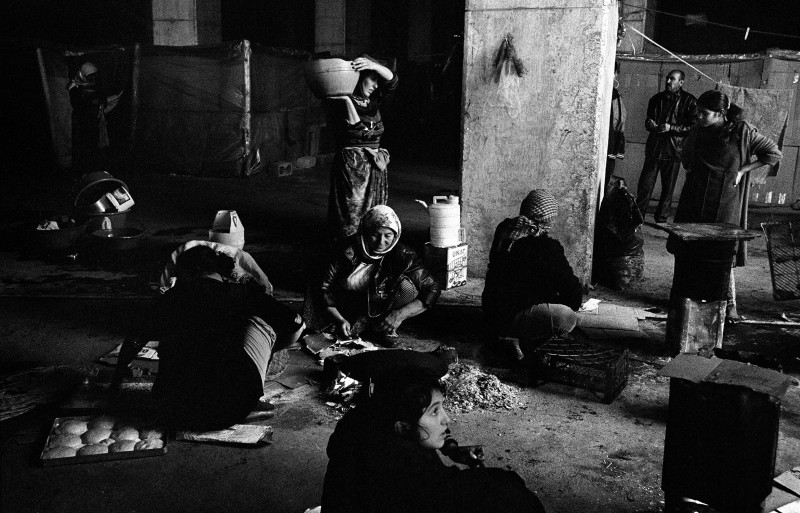
Zakho, Duhok, December 2014: women bake bread in the Zakho shopping centre, which is still under construction. Yazidis who survived the Sinjar massacre, began living in cardboard boxes at the incomplete construction site. Some families decided to stay in these structures in the city centre, even though camps were made available to them
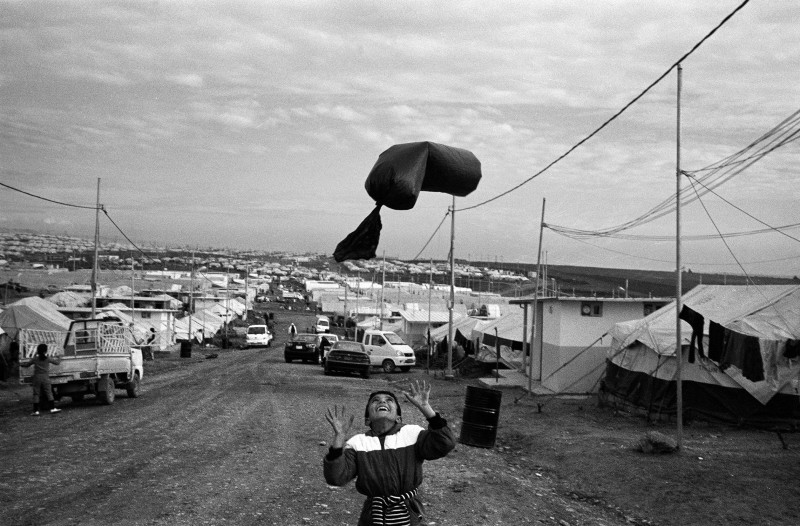
Zakho, Duhok, January 2015: a child plays with the garbage bag distributed by the organisers to each tent at the Bajet Kandala Camp. 20,000 people live in the camp established by the United Nations. Conditions at the tent camps set up in the autonomous region of Kurdistan, are particularly tough in winter. The tents do not protect from the cold and easily catch fire when exposed to heating devices
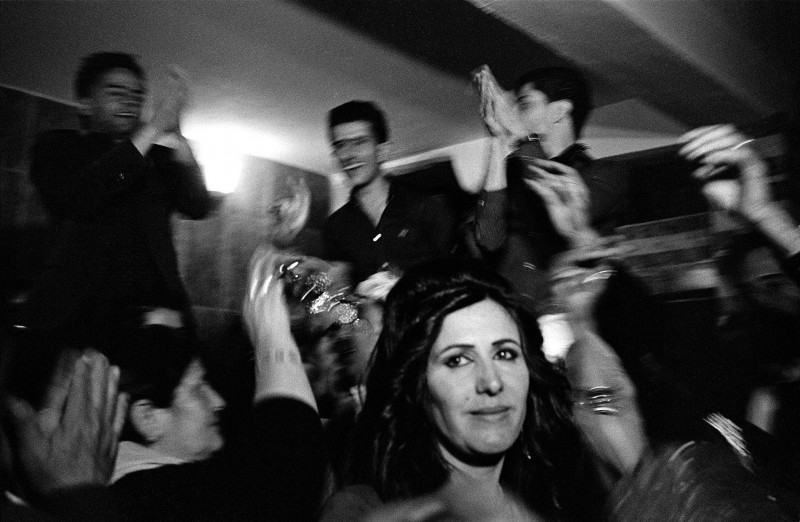
Serhêçka, Duhok, March 2016: the wedding celebration, which began in the morning in the village square, continues at home in the evening. Four couples from the Basa tribe are getting married after the liberation of Sinjar. Following the massacre and until Sinjar was completely liberated, the Yazidis did not organise any weddings or other celebrations
Hüsamettin Bahçe+-
Born in Diyarbakır, Turkey, in 1974, Bahçe works on social documentaries covering issues such as migration, human rights violations, environmental awareness, identity and minorities. His Mazxana series (2011) about daily life in the suburbs of Diyarbakır, Hewraman (2022) about the Kurds in the Hewraman region, and Êzîdxan (2024) about the culture and beliefs of the Êzîdîs, have been published as books. More