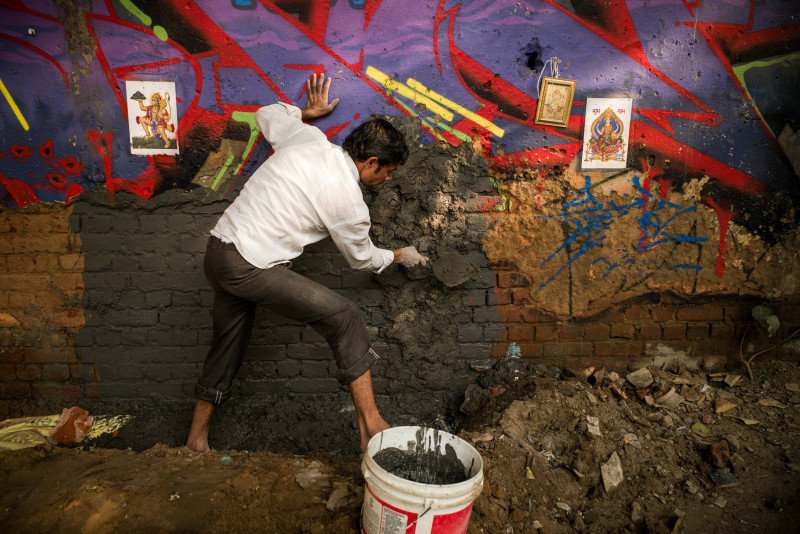
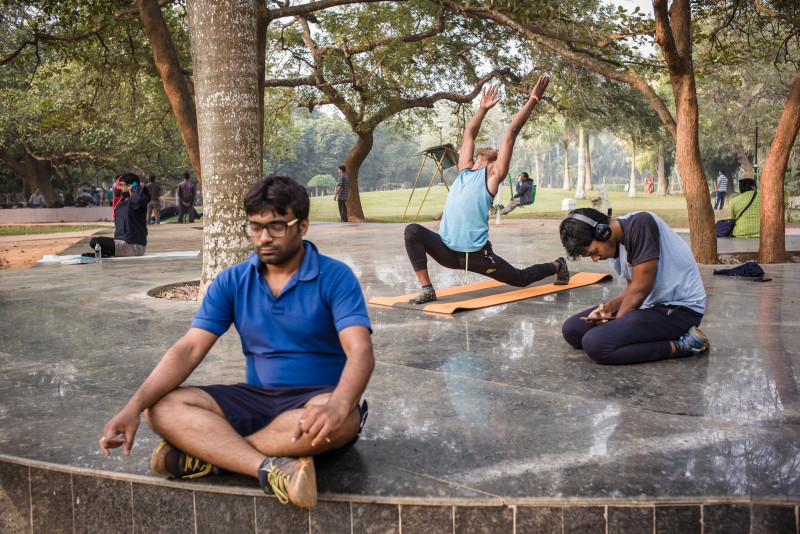
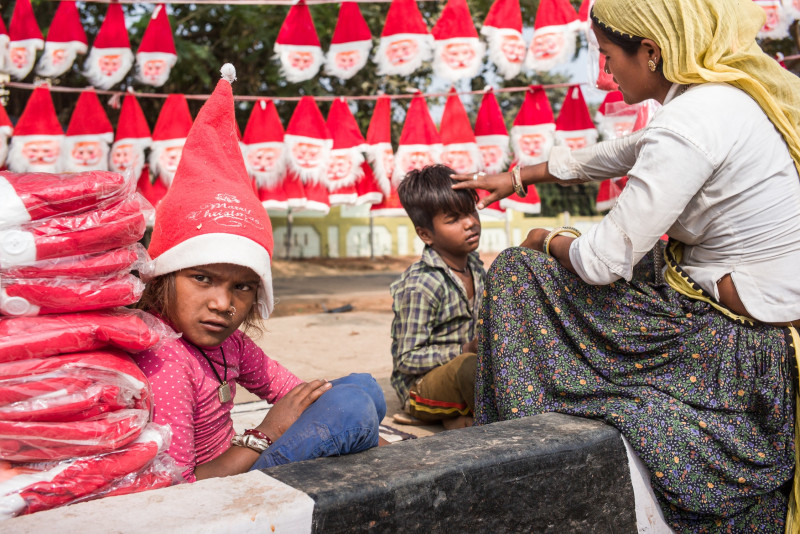
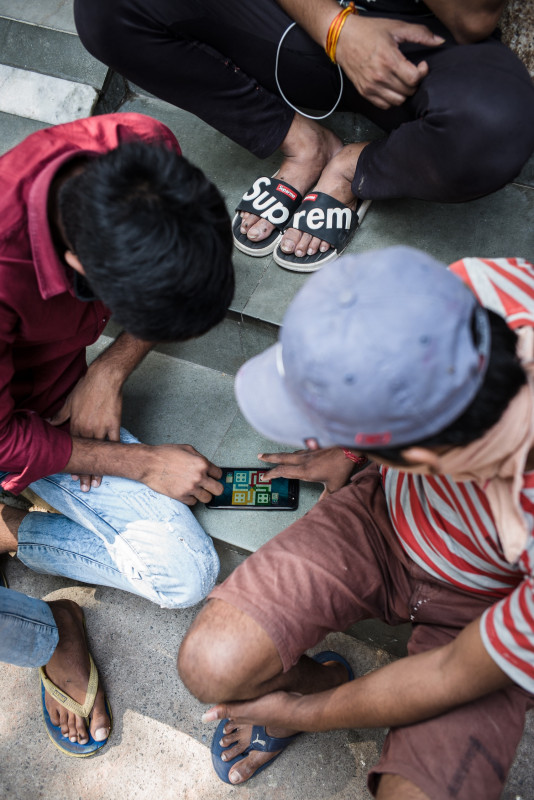
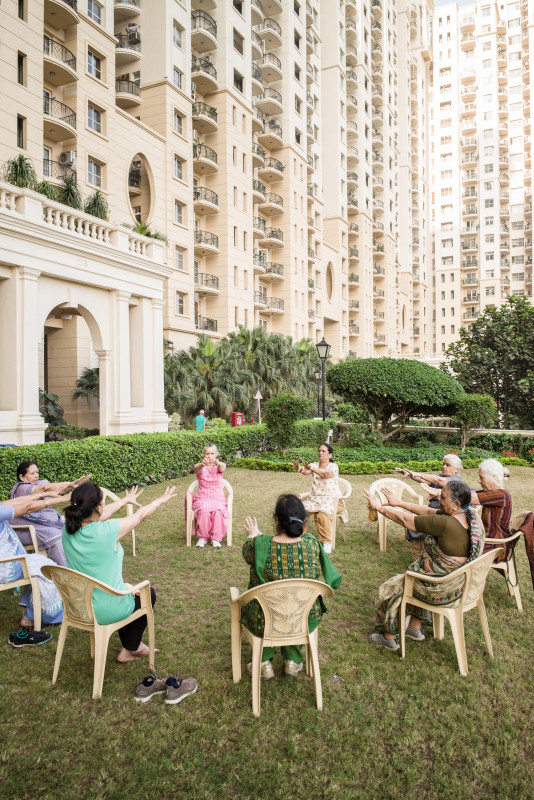
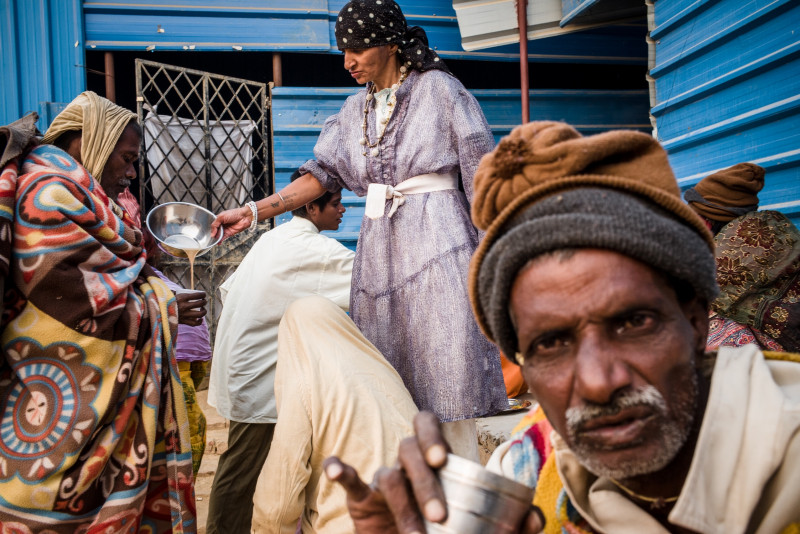
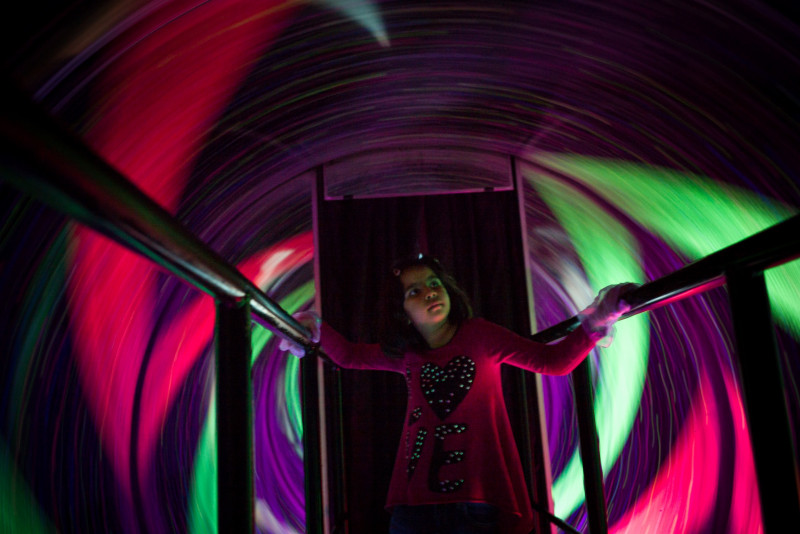
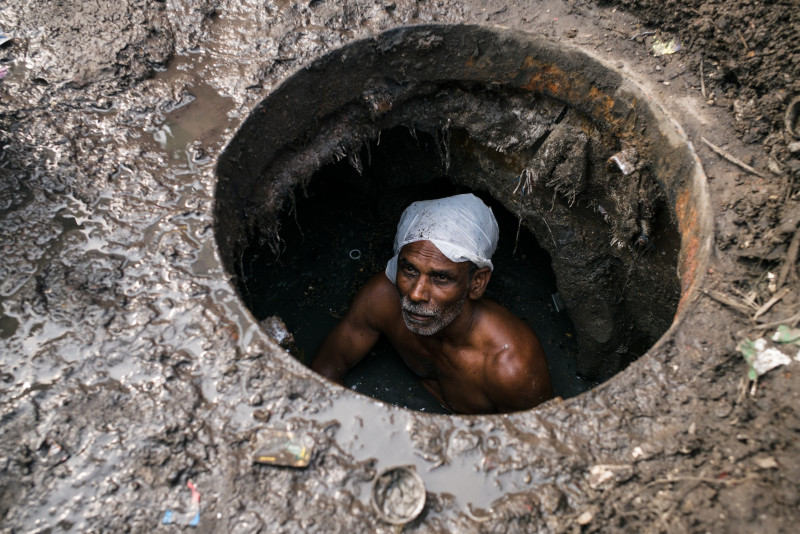
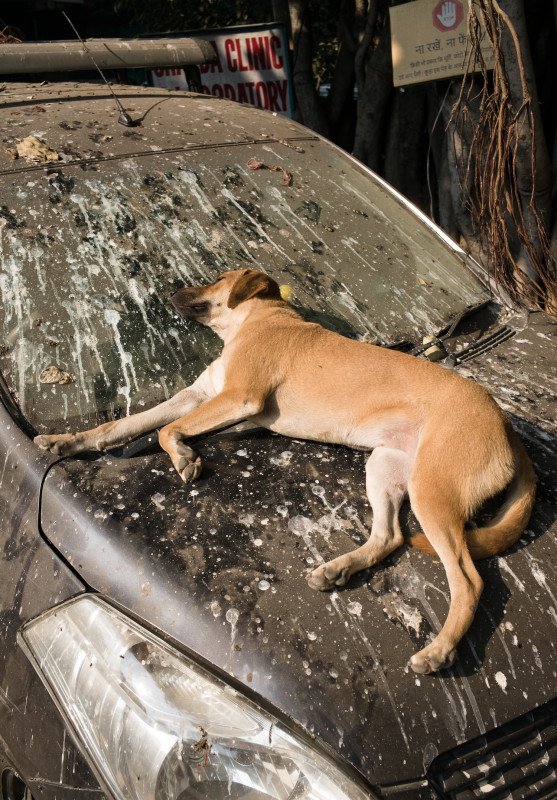
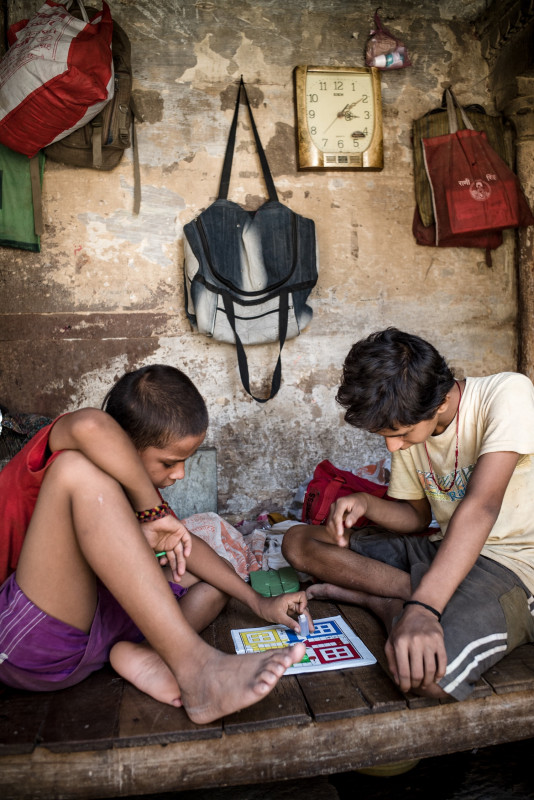
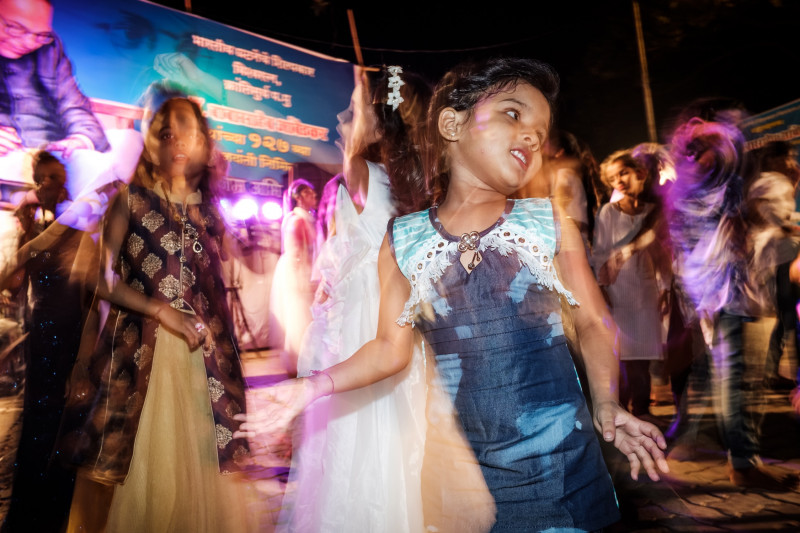
The openness of the people, their flexibility and willingness to improvise – these are the things about India that have fascinated Florian E.J. Lang for years. He lived in the country for over a decade. His long-term projects capture daily life on the streets of the cities, beyond what the tourist sees. Searching for Comfort is about looking for commonalities between individual existences within the urban environment.
LFI: How did this project come about?
Florian E. J. Lang: The first time I went to India, in 2006, I was a back-packing tourist. I was there for only three months, and without a camera. I found the country incredibly intense, loud and colourful. I was totally fascinated, but I had the feeling that I didn’t understand a thing. I left with more questions than answers. After that, I wanted to return, to live in one place for longer, so as to learn to better understand the country and its culture(s). In 2010, a good opportunity arose. It was planned as a five-months project, but developed into a whole chapter of life: I lived in India from 2010 to 2022, with ten of those years in the capital, Delhi. The Searching for Comfort series came about over a very long period of time. The focus was on a modern, often urban, India with all its contradictions. What was clear for me was that I wanted to mostly avoid religion and spirituality, and concentrate instead on the profane.
What do your images speak about?
From the perspective of a photographer, India is a rewarding country. There’s so much going on around you; there’s a real wealth of motifs. Many photographers have worked in India, and many of them found their photographic eye there. Unfortunately, however, at some point that is over. Similar motifs are often sought out and photographed repeatedly. It became increasingly important to me not to look so much for the exotic, but to concentrate more on the basic aspects of life. In the end, for me, it’s not about the otherness, but rather about showing the many commonalities that exist between life in India and life in Germany – the mundane aspects. The title of this series points towards the fact that we strive for feelings of safety, for friendship.
Your series goes beyond simply depicting situations and touches on a social issue – migration from the countryside to the cities...
Originally, I photographed a series about the working and living conditions of workers in the garment industry. That’s why I came to Delhi or rather, the metropolitan region of Delhi. In doing so, I got to see tough, often exploitative conditions. And I learnt that almost all the employees had migrated to Delhi from poor, distant regions, looking for work and better opportunities. At first, I saw them as victims of these circumstances; but at some point, I understood that although they came from poor backgrounds, they weren’t driven solely by desperation. They also wanted to move to a modern city and see the wider world.
In reference to your series, you speak of an unconventional view of India – what exactly does that mean?
This means that I try not to focus – or, at least, not too much – on the all-too-obvious things that spring to mind when you think of India: the things that immediately catch your eye when you’re there, such as the colourful pantheon of Hinduism or the lively street markets – to mention a few clichés. I don’t want to exoticize India further. I want to photograph things where knowing the country or place where they are taken doesn’t play an important role. For me, it’s about the people and about life.
What meaning does colour photography have for you in this?
It’s true that I’ve photographed in black and white for a long time; but it’s often, in fact, colours that delight me – not just in India. There are lighting conditions that give rise to such wonderful colours, so that colour pictures seem fairly obvious. On the other hand, colour represents a particular challenge. In some respects, I consider colour photography a further step towards abstraction from reality; and the particular challenge is to reproduce the colours in the way that I perceived them when I took the shot.
Katja HübnerALL IMAGES ON THIS PAGE: © Florian E.J. Lang
EQUIPMENT: Leica M-P (Typ 240) with Leica Summicron-M 35 f/2 Asph and Elmarit-M 28 f/2.8 Asph.
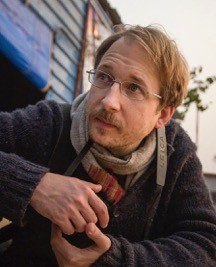
Florian E.J. Lang+-
Born in Fürth, Germany, in 1980, he became fascinated by photography as a child. After studying Cultural and Media Education, he fulfilled his long-cherished dream of travelling over land from Germany to India. This culminated with his first photo project. He has been working as a freelance documentary photographer since 2011; most of his photo projects have been produced in South Asia. Lang returned to Germany at the end of 2022. He works for national and international publications, including Der Spiegel, Die Zeit and Le Monde. More