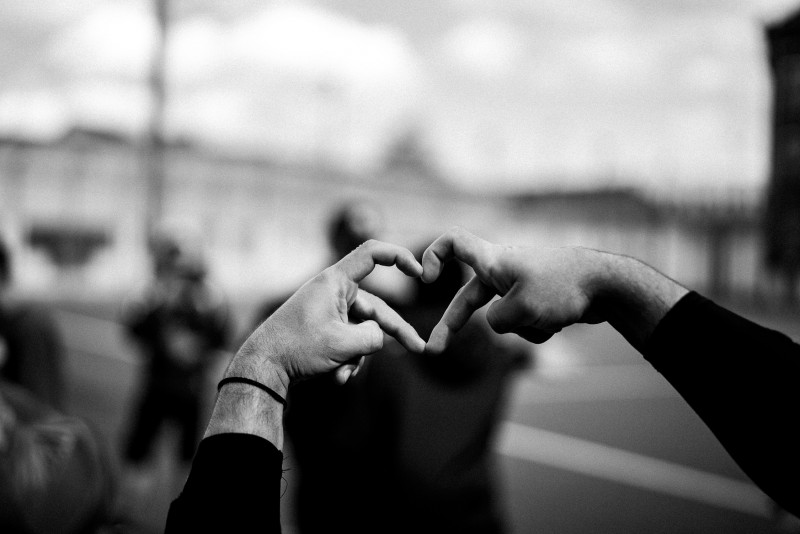
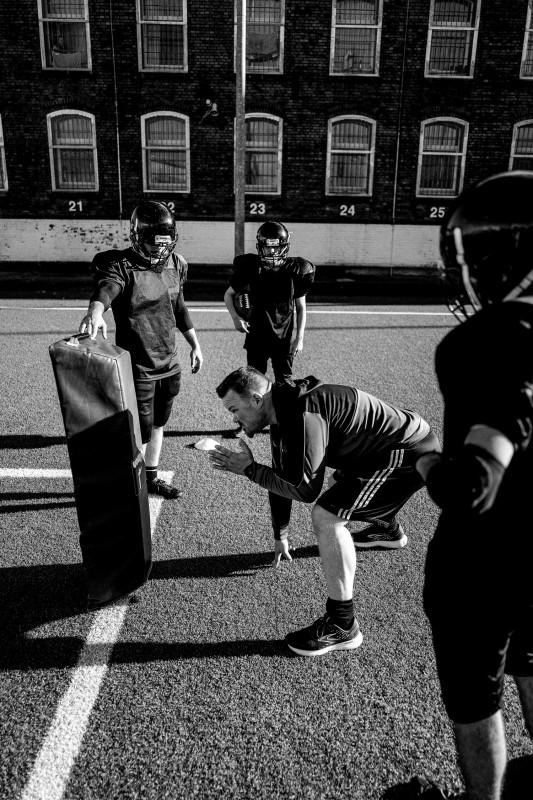
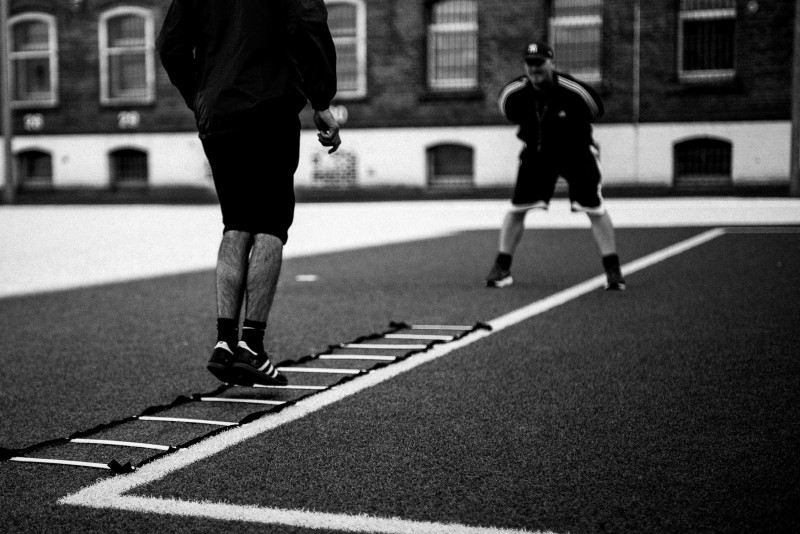
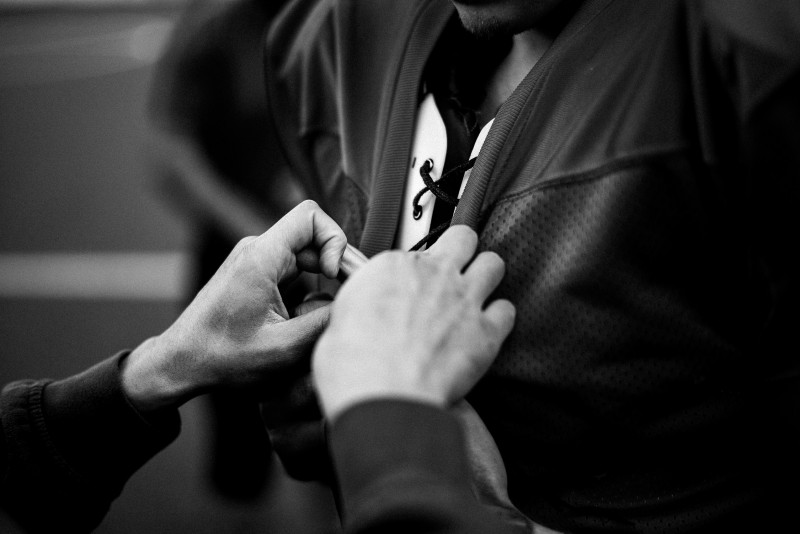
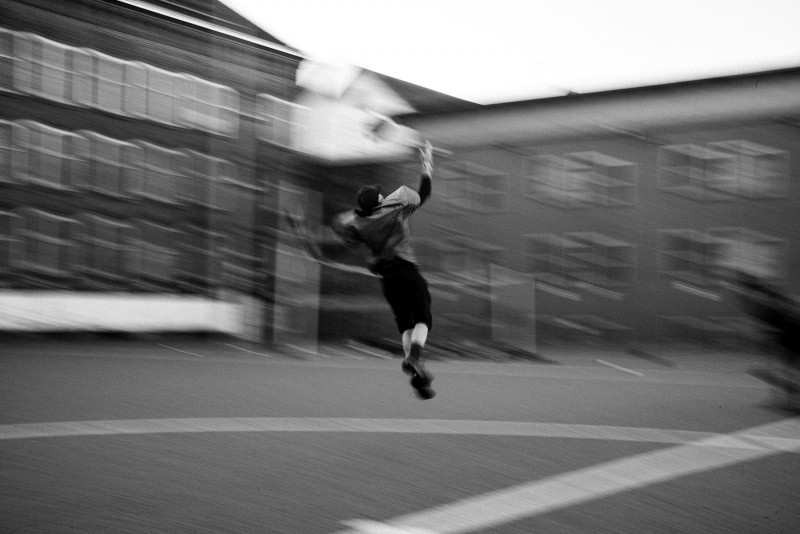
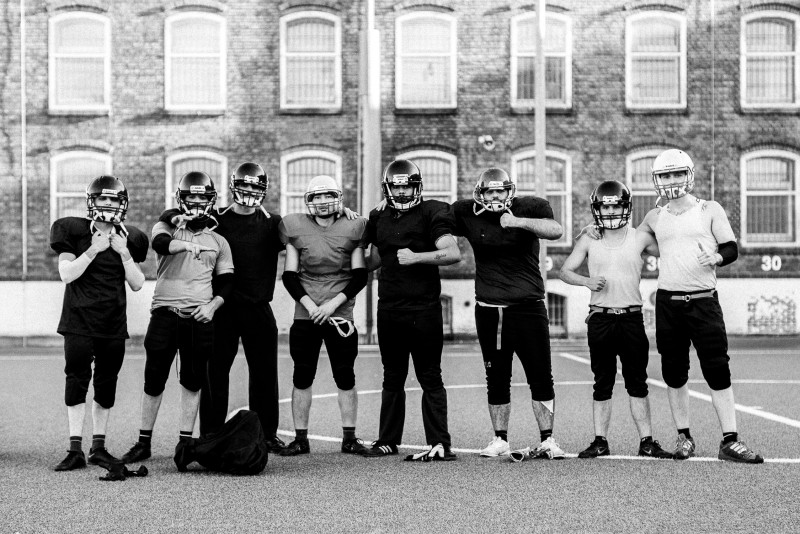
When the Black Devils American football team are on the field, it is about more than just sports. The photographer reveals an authentic atmosphere full of team spirit.
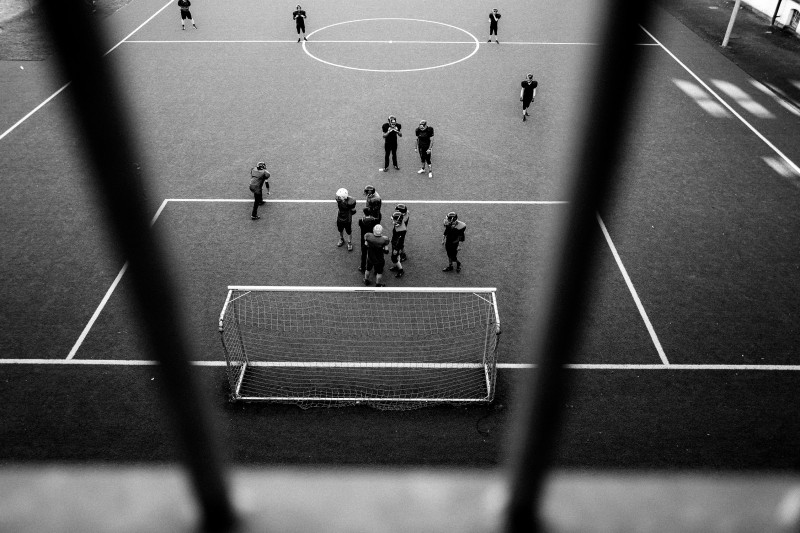
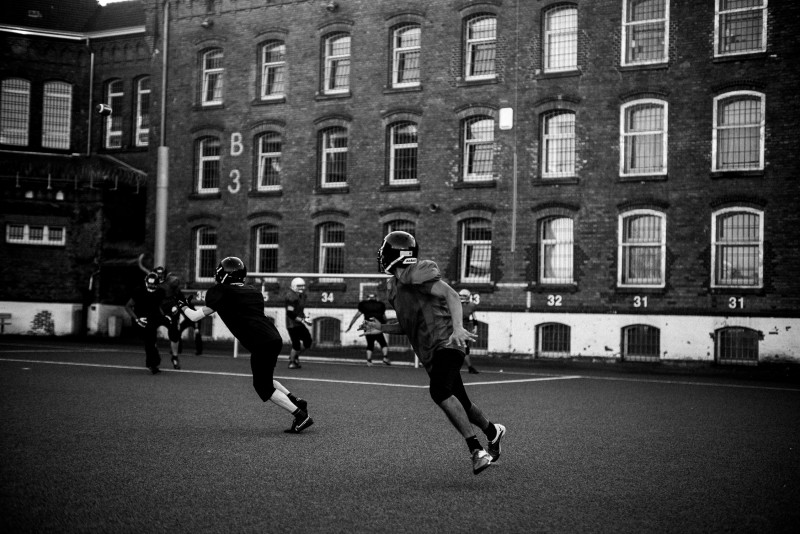
In 2008, the Black Devils American football team was founded at Herford Prison as part of a rehabilitation programme. The sport offered the young inmates a new perspective. Access to training is tied to responsible behaviour during everyday prison life, as sporting activities within the prison are seen as a privilege. Over the following years, the team has established itself with the involvement of various trainers. The players develop commitment, discipline and strategic thinking. “We win together and we lose together – it feels like family,” says one of the players. Photographer Tom Stoeven has documented the atmosphere on the field behind prison walls, and reveals the difference rehabilitation can make.
LFI: How would you describe the Black Devils philosophy?
Tom Stoeven: Everything is based upon responsibility, commitment and belonging. American football is a framework where rules count, performance is expected and behaviour has consequences. Anyone who is part of the Black Devils is consciously opting for team spirit and development.
Which of the young men’s characteristics do you want to highlight in particular?
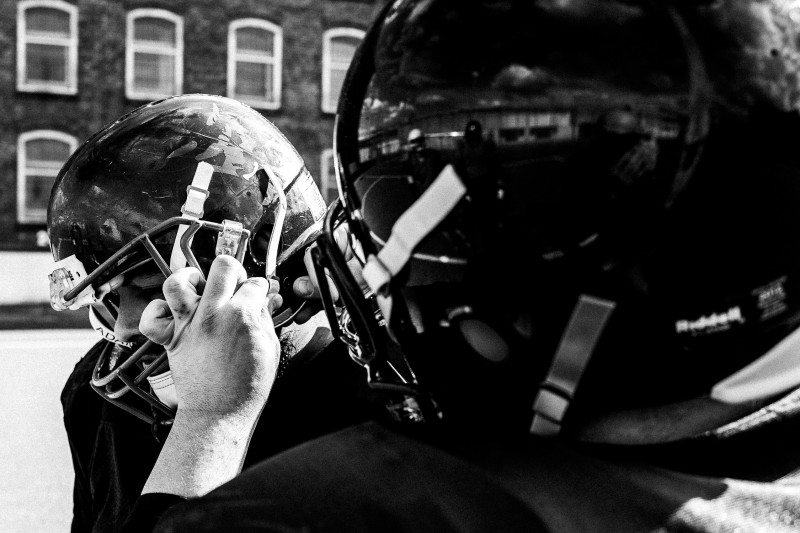
It’s important to me to put the people at the centre, not the reason why they’re in prison. I place characteristics such as loyalty, ambition and emotional depth at the forefront. On the field, many of the young men reveal emotions that they can rarely show in daily prison life: pride, frustration, joy and doubt. I wanted to make this ambivalence visible – without embellishing and with respect.
What meaning does sport have for the rehabilitation process?
Sport places a mirror in front of people because it immediately reveals how someone deals with rules, fallbacks, authority and teamwork. For the rehabilitation process, this means structure, control of aggression and belonging. Sport doesn’t replace therapy, but it creates a space for expression is situations where language is not enough.
What was your photographic approach to the project?
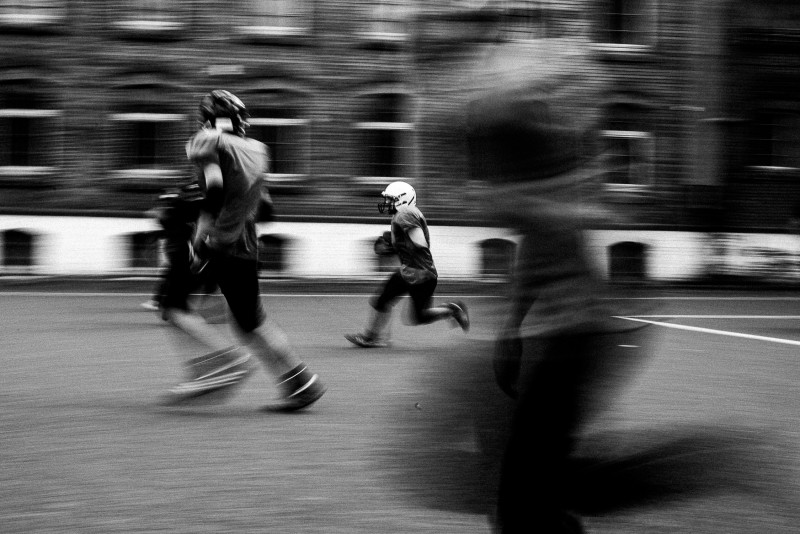
Before beginning, I had talks with prison officers and social workers. I found it important to learn as much as I could about the procedures and local conditions. In addition, all the pictures were reviewed and approved by the prison management. I wanted to tell a story that people don’t normally encounter in their everyday lives. Action and dynamism are essential in a sport like American football. I wanted to show what football means there – not just what it looks like.
What role did the use of black and white play specifically for this project?
There is no distraction caused by colours, no uniforms, no American football glamour like you see in Hollywood movies. The cold walls, the fence and the buildings around the courtyard seem more honest when there’s no colour. Black and white strengthens the timelessness and seriousness of the subject matter, and shifts the focus onto the players.
Eliza TrappEQUIPMENT: Leica M Typ (262), Summilux 50 f/1.4, Leica Q (Typ 116), Summilux 28 f/1.7 Asph
Tom Stoeven+-
The photographer specialises in documentary and editorial-oriented imagery. His work combines a deep social interest with a sensitive, human perspective, particularly in projects that highlight social realities and individual life stories. Part of his work has been published in SWAN magazine. During the Leica Experiential Days 2024 at the Leica Store in Nuremberg Stoeven spoke about his photographic work about star children – a term for children who die before, during or shortly after birth –, as well as sports-based rehabilitation programmes at the Sennestadt and Herford prisons. More