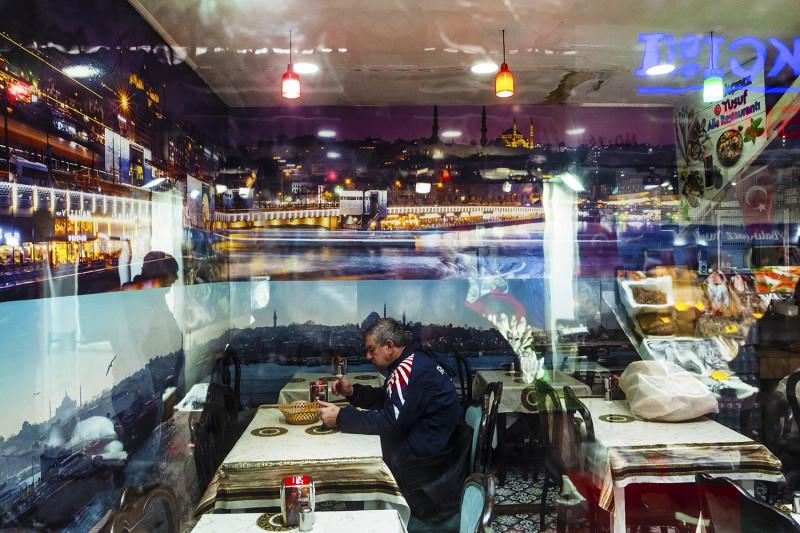
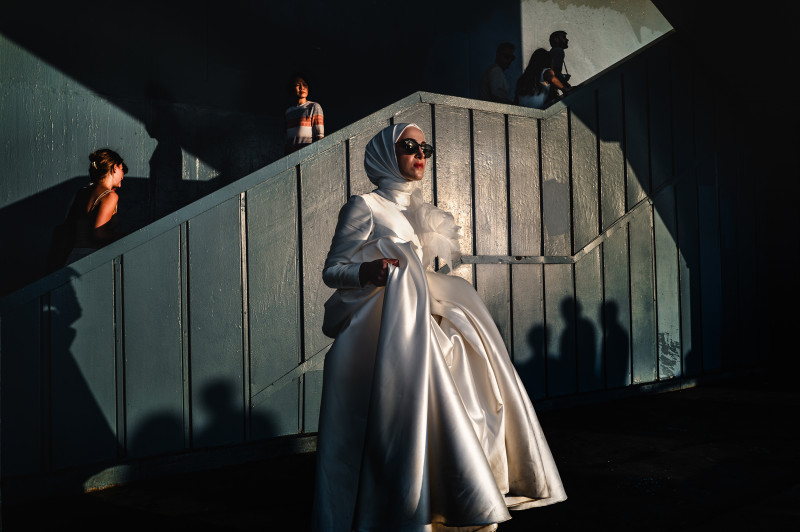
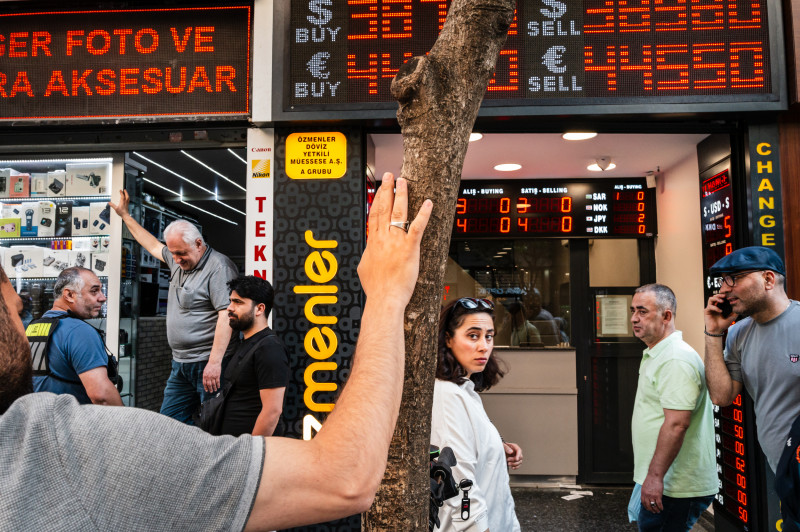
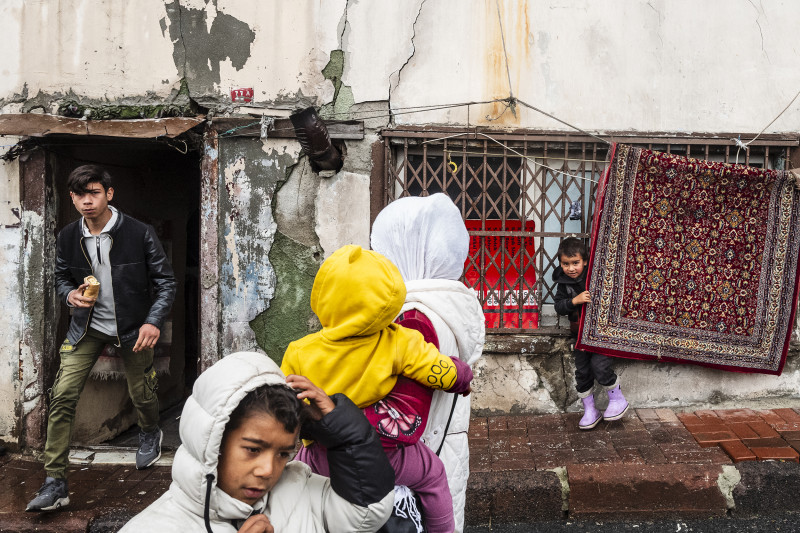
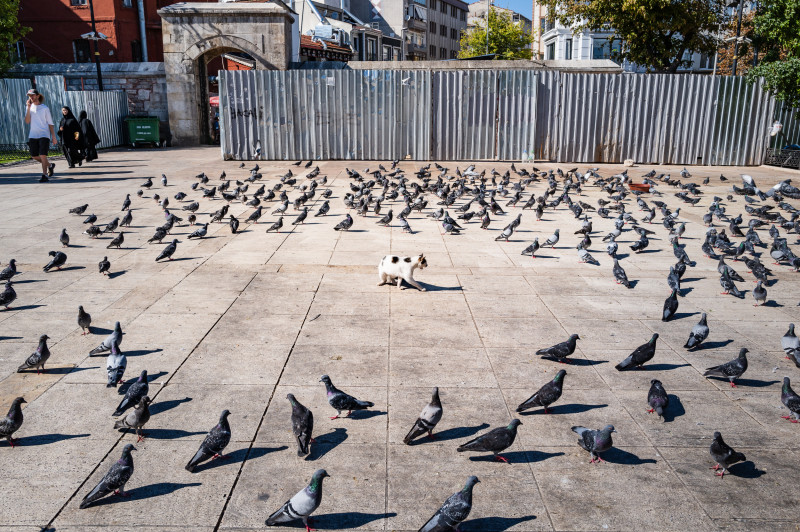
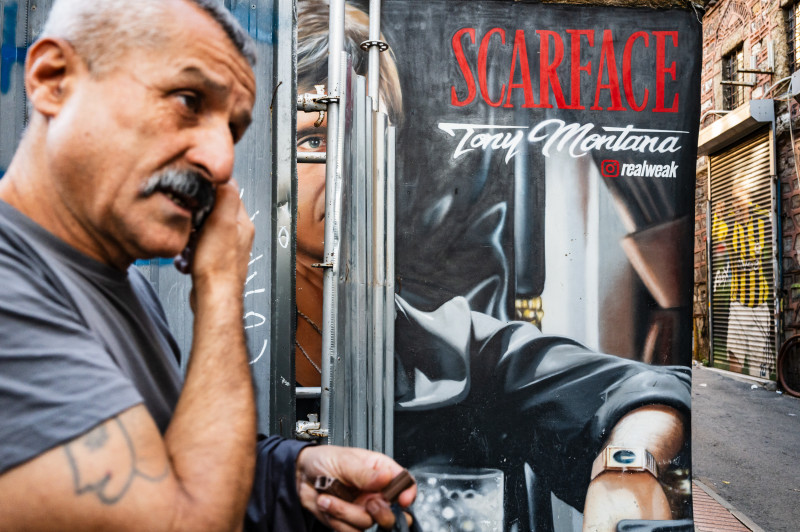
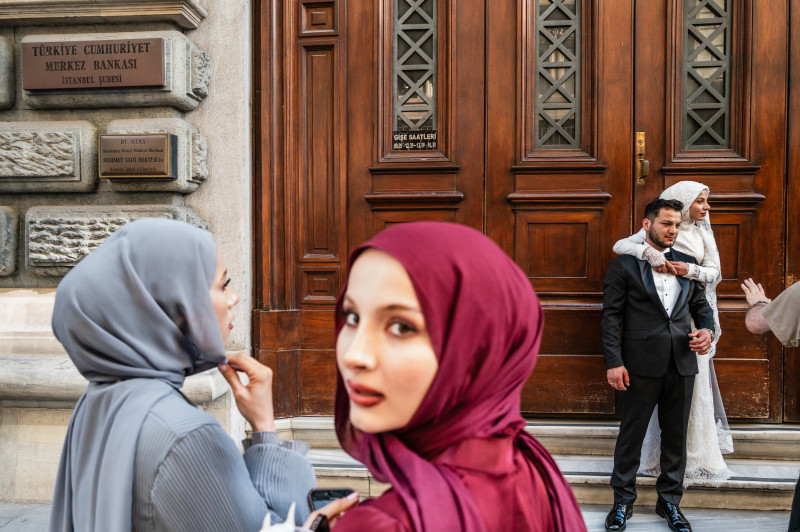
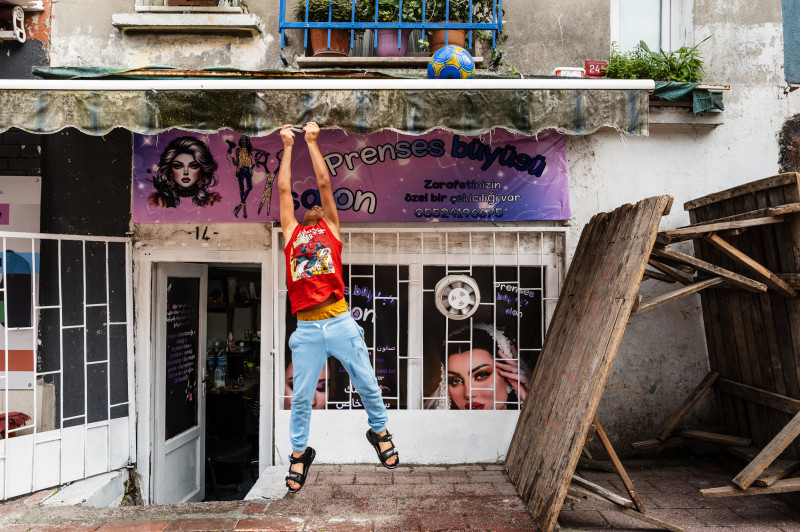
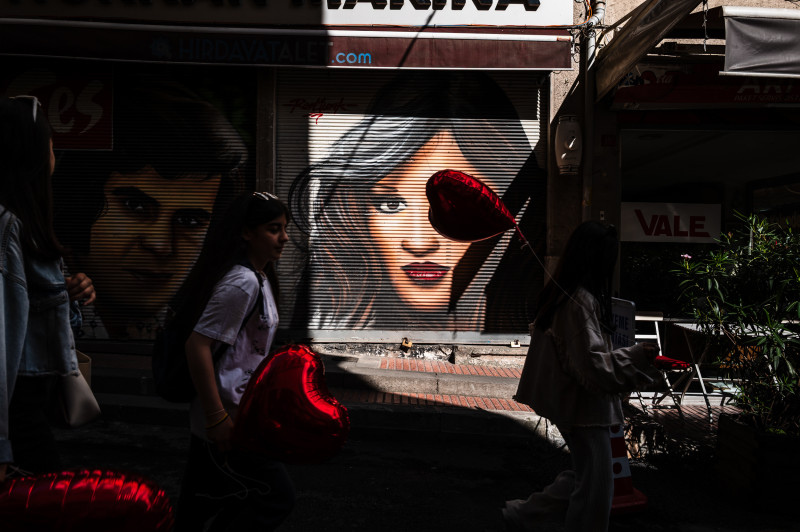
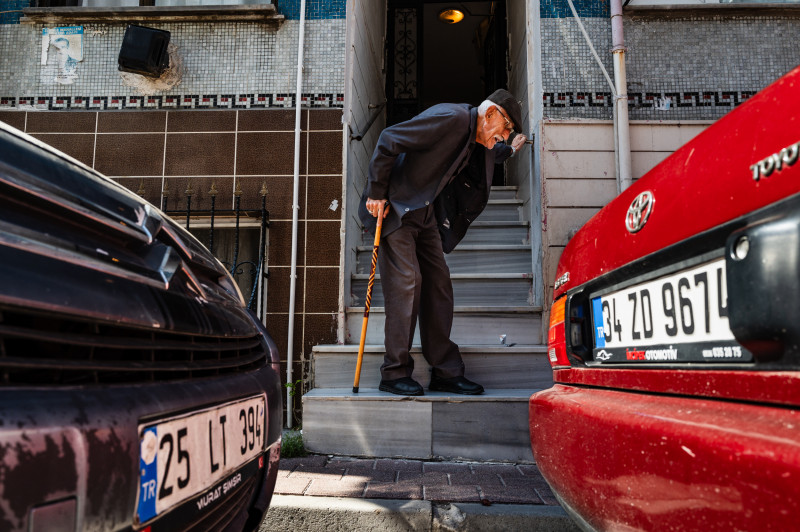
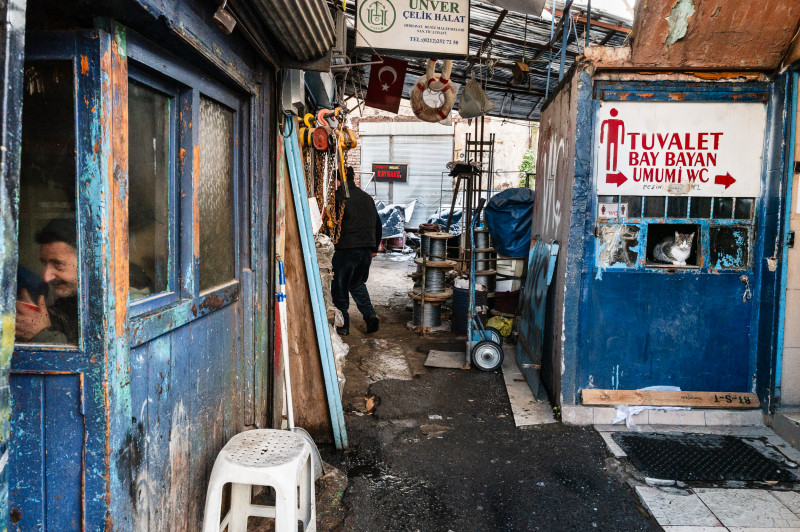
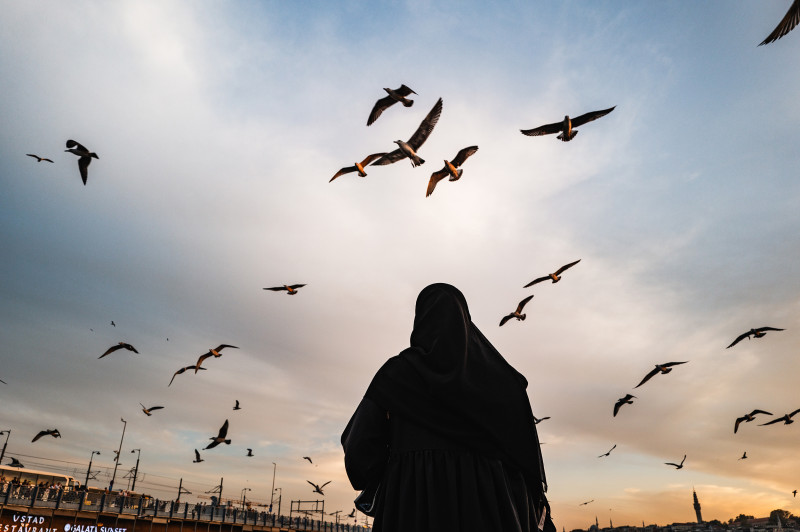
The series by the Italian photographer is a homage to the city of Istanbul and its inhabitants, a powerful, visual spectacle of colour, energy and intensity.
In his photographic series, Istanbul, Italian photographer Stefano Mirabella focusses on a city that oscillates between memory and forgetfulness, the future and modernity, and in doing so reveals a broad diversity of layers and contrasts. His pictures are a dialogue involving light, chaos and quiet poetry.
LFI: What makes the city of Istanbul special to you?
Stefano Mirabella: My gaze on the city was initially inspired by Ara Güler, “the Eye of Istanbul”. Then came Alex Webb and his book Istanbul: City of a Hundred Names, Marc Riboud, and Bruno Barbey. Without the works of these great photographers, I might never have felt the same urge to tell Istanbul’s story myself. I first visited the city many years ago, but at a time when I wasn’t yet ready, photographically speaking. In these past two years, through constant visits and more conscious work, I’ve come to realize that Istanbul is a city perfectly aligned with my way of seeing. The city I’ve come to know is alive and in constant motion – full of contrasts; European yet also Asian and Middle Eastern at the same time.
Its atmosphere is incredible: crossing the Bosphorus by ferry at sunset or stopping in a tiny tea house for a sweet çay are experiences that fill both the heart and the eye. But what makes Istanbul truly special is its people. Their features are often strong and defined, their expressions serious, yet they are warm, generous, and welcoming. Photographing them is a joy: they rarely shy away from the camera, remaining natural and authentic, fully themselves. For a street photographer, that kind of presence is a rare gift.
Your project is preceded by a quote from Elif Shafak: “Istanbul is a city of collective amnesia – it remembers too much and too little at the same time”. What exactly does that mean?
For Shafak, a people who lose their memory, suffering from “collective amnesia”, risk losing themselves, repeating mistakes, and, above all, forgetting the wounds of the past. Today Istanbul is a city racing toward a future of modernity and economic growth. In 2025, it was the most visited city in the world, surpassing Bangkok, New York, and London. Yet this inevitable and relentless rush risks severing forever the connection to a glorious past, rich in history, culture, and humanity.
The profound idea expressed in Elif Shafak’s quote, which inspired me, pushed me to seek out my photographs in Istanbul’s most authentic, lesser-known neighbourhoods, far from the areas crowded with tourists. There, I search for the traces and the people where the city’s past remains visible, alive, and recognizable. There is still much work to do, but my desire is to continue capturing this tension between memory and change, between what endures and what inevitably transforms.
What was your photographic approach and what significance does colour have for you?
I approached Istanbul by listening to it. When I photograph in the streets, I try not to overthink or plan too much, I let myself be guided by sounds, smells, light, and people. Photography, for me, is an act of listening and openness. I move through the city driven by instinct, curiosity, and the desire to discover something new each time. With every trip, I explore a different neighbourhood, trying to understand whether it can offer me new visual or narrative possibilities.
Some of the places I’ve chosen to photograph were suggested by the great photographers who portrayed Istanbul before me. In their books, the names of the areas often appear alongside the images; sometimes, out of curiosity, I’ve gone to visit those same streets to see how time and everyday life have transformed them. For me, colour is a natural consequence of this act of listening. From the very beginning, I had no doubt: Istanbul is colour. It’s energy, light, intensity. Portraying it in black and white would have meant taking away part of its vitality.
People are at the heart of your project. What do they reveal about the city?
People are at the heart of my project on Istanbul. Through them, the city reveals itself in all its complexity – its contrasts, its intensity, and its most authentic truths. I’m not interested in a merely aesthetic or picturesque representation; what I seek is an encounter, an exchange, a fleeting fragment of shared reality. Each time I photograph someone in the streets, I feel that the image that emerges is never entirely mine – it’s the outcome of a brief yet meaningful connection between two worlds that cross paths for an instant. In that sense, my series is more of a dialogue than a portrait: I try to convey not only what I see, but also what I feel. The city lives through its people, in their gestures, their gazes, their movements. Through them, I try to tell not only the story of a place, but also something universal: the human need for belonging, identity, and memory. That, to me, is where photography finds its deepest meaning.
Katja Hübner
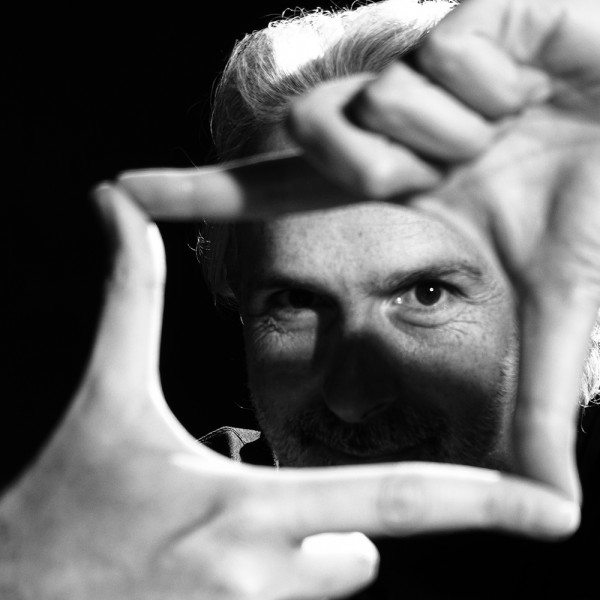
Stefano Mirabella+-
Born in Rome in 1973, the photographer focusses his work on documentation – which has led him to Thailand, Cambodia, Laos, Syria and the occupied Palestinian territory, among others –, places that have become central themes in several of his exhibitions and publications. Since 2012, his primary creative and professional emphasis has been on street photography, a visual language with which he feels deeply connected, and that allows him to explore and interpret reality through his own, personal perspective. He was a member of the Italian street photography collective, Spontanea, and since 2014 is among the winners of the Leica Talent Award. He currently teaches at the Officine Fotografiche in Rome and is a Leica Akademie lecturer. More