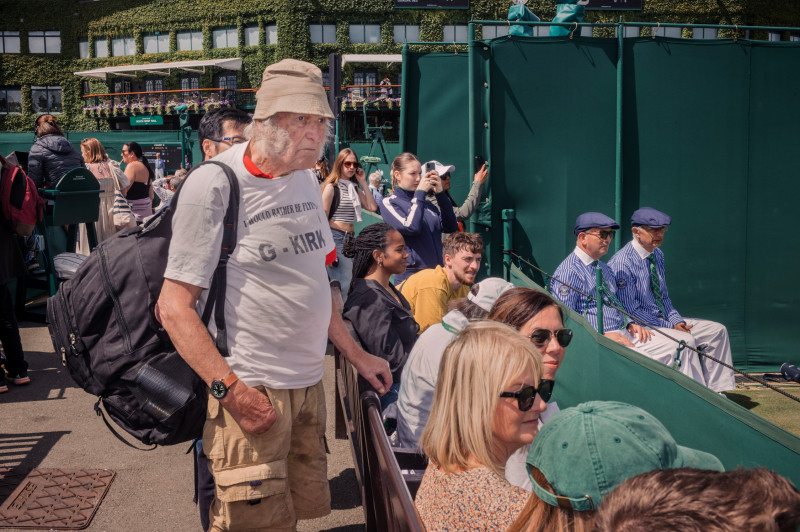
Game, set, match – the British tennis tournament at Wimbledon is primarily all about the sport. The photographer, however, finds just as much excitement not far from the edge of the court.
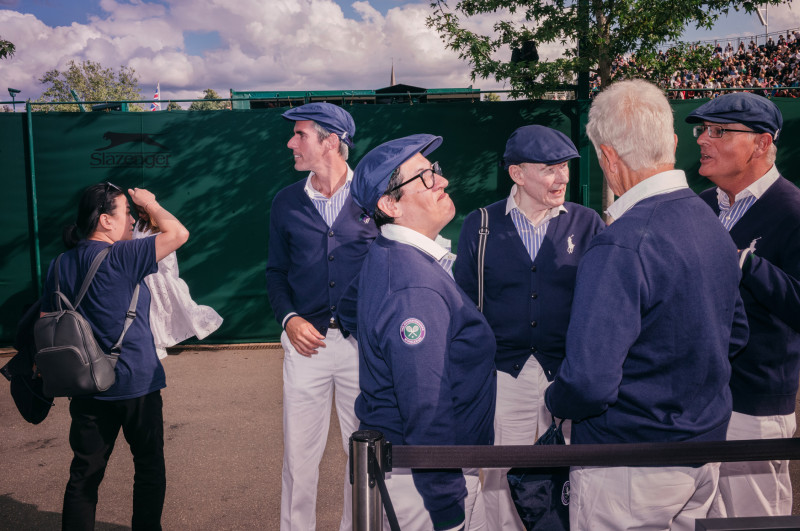
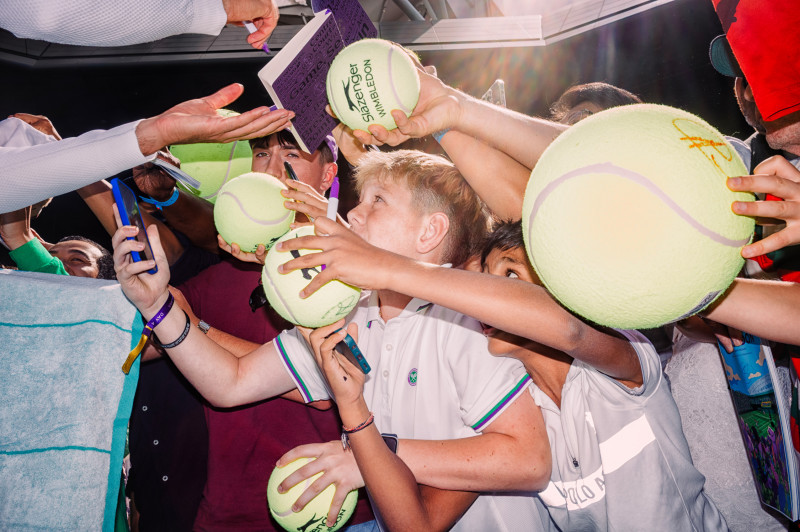
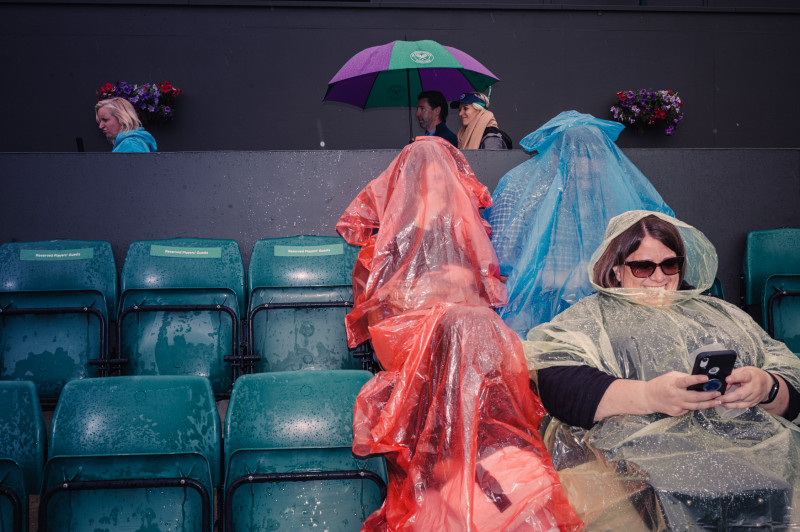
In the summer of 1985, when the 17-year-old Boris Becker won the men’s singles tennis tournament at Wimbledon, Sarah M. Lee – just six years old at the time – was sitting in front of the television with her grandmother, witnessing that special moment in the history of the sport. To this day she remains passionate about the game, but her focus is less on Centre Court and more on whatever is happening outside of the games. “I find people endlessly fascinating, and Wimbledon is wonderful for people watching. The tennis just provides a context!” says the British photographer. Equipped with her Leica, she manages to capture a different perspective on the tournament.
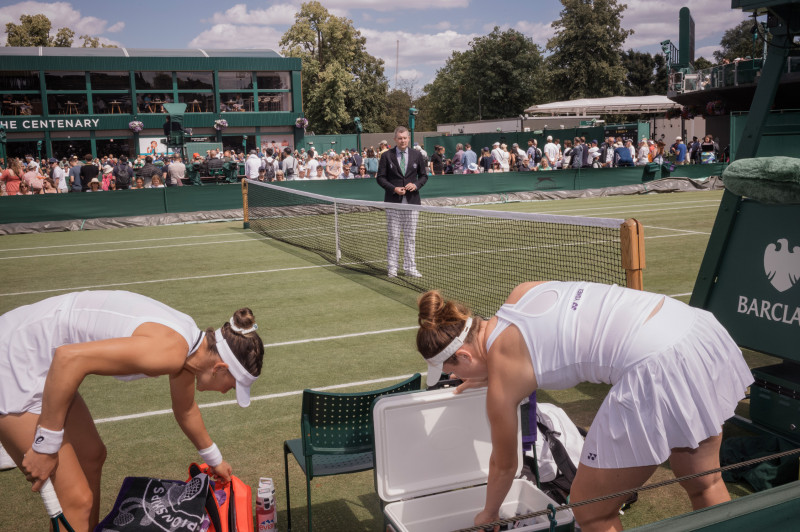
This year alone, 550,000 visitors converged on the All England Lawn Tennis and Croquet Club on Church Road in the south-west of London – a figure never seen before. First held in 1877 for the simple reason of needing to raise money for a new lawn roller, Wimbledon has long since become the most prestigious stage for tennis. It is not only the game that follows clearly defined rules: every flower is planted with precision, every logo is traced by hand with tiny brushes, and every uniform is immaculate. “The meticulous nature of the festival puts it somewhere between a North Korean military parade and Disneyland. In a good way,” says Lee, describing the whole setting. “I’ve always liked the commitment Wimbledon has to its visual identity.”
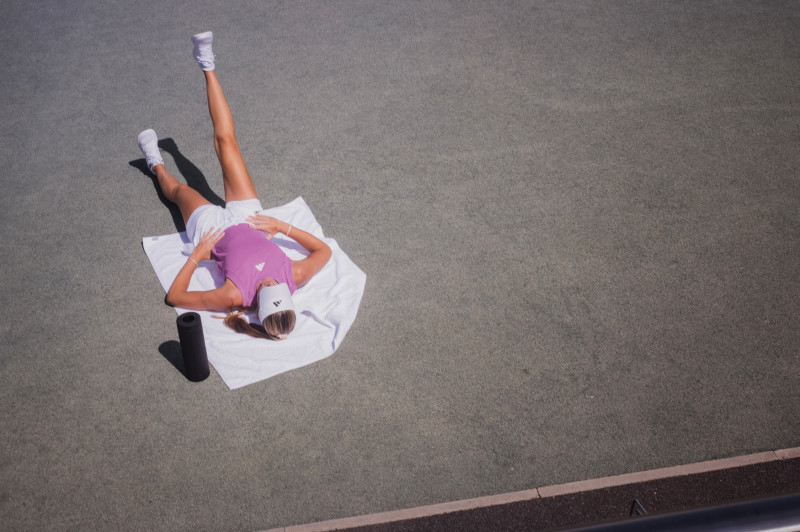
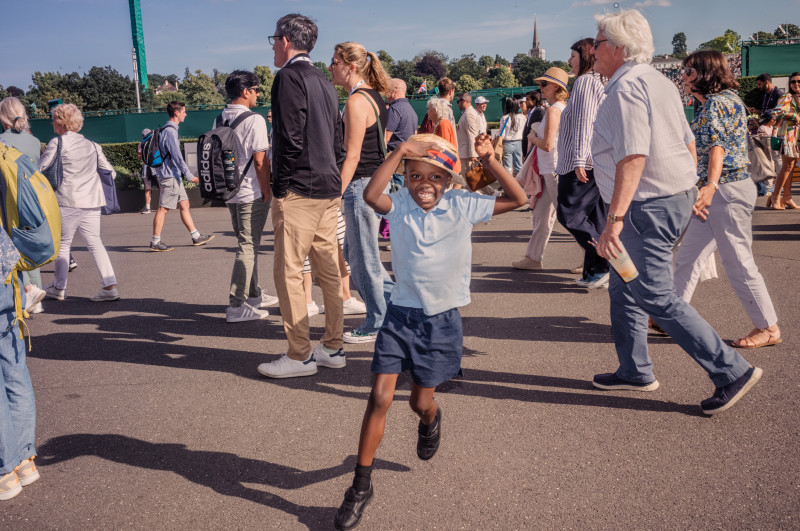
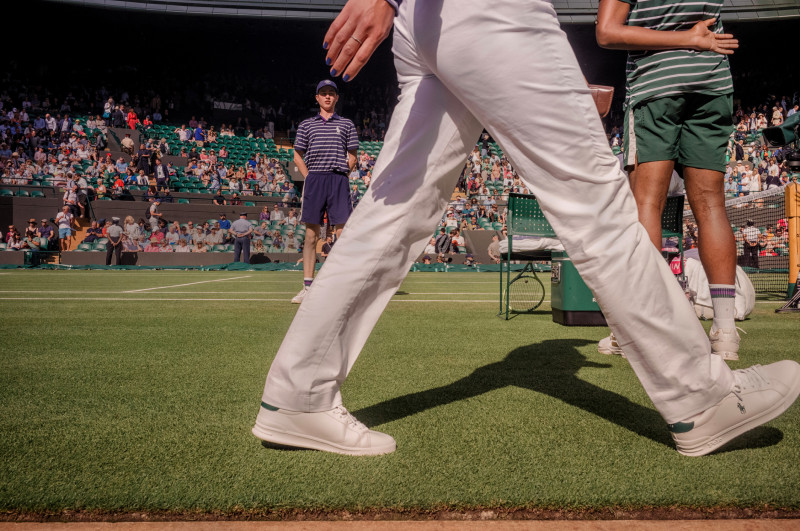
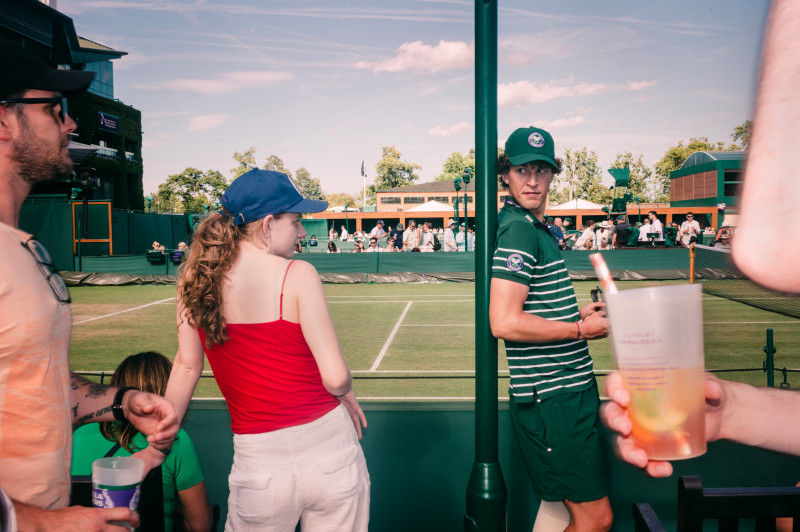
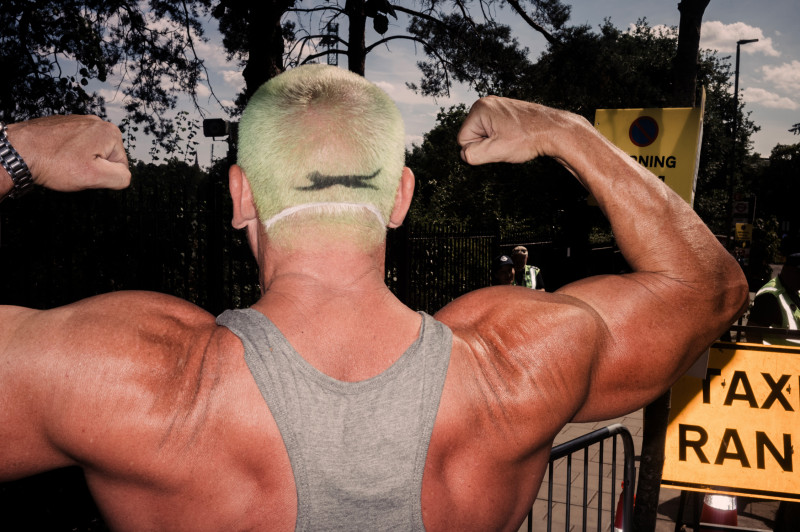
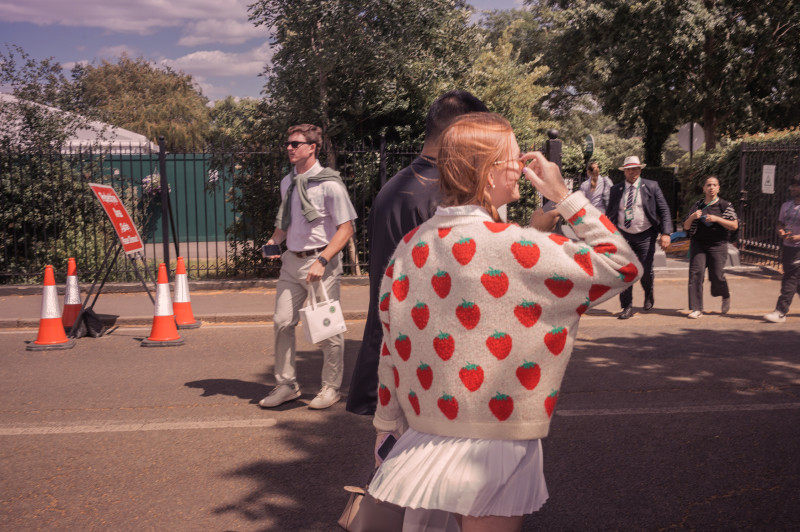
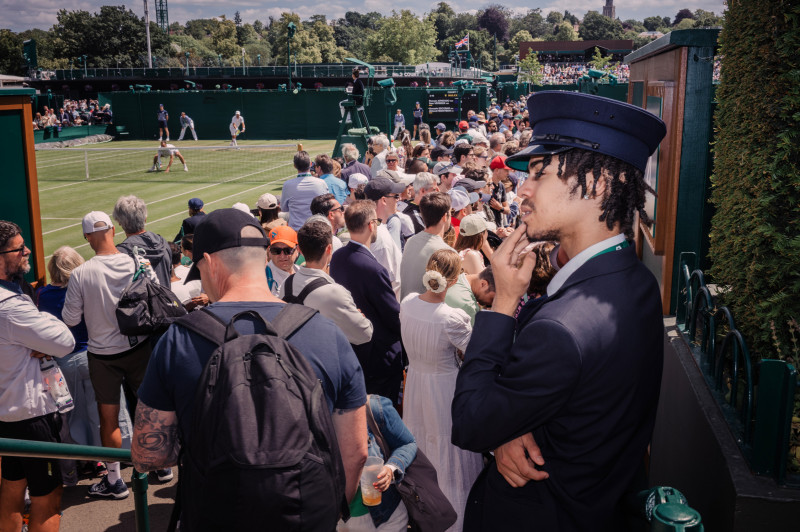
In her All England series, Lee depicts a parallel world with lush green lawns, smart uniforms straight out of a Polo Ralph Lauren catalogue, pulled-up white socks, and strawberry symbols – an allusion to the strawberries and cream traditionally eaten at Wimbledon. Much of it seems like a staged presentation of Britishness, evoking nostalgia for something that probably never existed. For Lee, this has a calming effect: the strictly enforced but completely harmless rules on the grounds provide a welcome contrast to the complex challenges of our present-day world. “Wimbledon is British but not in an exclusive flag-waving way,” Lee muses. “The slight unreality seems to mitigate the possibility for jingoism (…) The flag is green, purple and blue rather than red, white and blue. I love it more every year.” It is also remarkable to note what is missing from her pictures: advertising. Apart from small emblems on clothing, Wimbledon remains largely ad-free. “Sport, like most public events these days, is hugely commercial and with that comes the deafening visual noise of logos and branding. I find that an extremely dispiriting part of modern life,” Lee admits. At the same time, the chaos of the crowd also has its place in this finely orchestrated setting: tennis fans from all over the world, families, queues and emotions. In the humanist tradition, Lee focuses on people and follows the action in the grandstands. She captures the gazes of the spectators, finds repetitions in symbolism and facial expressions – without repeating herself in the process.
For this series, Lee opted for a 35mm Summicron lens on her Leica M11-P. This opens up a wide angle of view and distances her from her normal approach of working with a 50mm lens. In addition, she used a small fill flash to enhance the natural daylight, which gives the series a consistently somewhat hyper-realistic look. “You need to have slightly different reflexes when using a flash and a wider lens. Timings feel different, anticipating the frame is different. I suppose it may be a little like the differences between playing tennis on grass as opposed to clay!” Lee explains. Applying the flash was the biggest challenge because it is not allowed at the edge of the court. Wanting to remain true to her visual language, when photographing the court Lee would use the low sun behind her as a substitute for a flash. This results in colourful images, which highlight the fine line between order and chaos. In her images Lee shows Wimbledon as a place of observation where it is worth letting your gaze wander from time to time.
Pauline KnappschneiderALL IMAGES ON THIS PAGE: © Sarah M. Lee
LFI 8.2025+-
In this issue: A comprehensive retrospective of Gianni Berengo Gardin’s life’s work; insights into the works of this year’s LOBA shortlist and winner;Cédric Gerbehaye with his long-term project Kashmir. Wait & See; a behind-the-scenes look at the world’s most renowned tennis tournament, Wimbledon, through the eyes of Sarah M. Lee; and an extensive black-and-white series on everyday life by skateboarder, musician, and photographer Ray Barbee. More
Sarah M. Lee+-
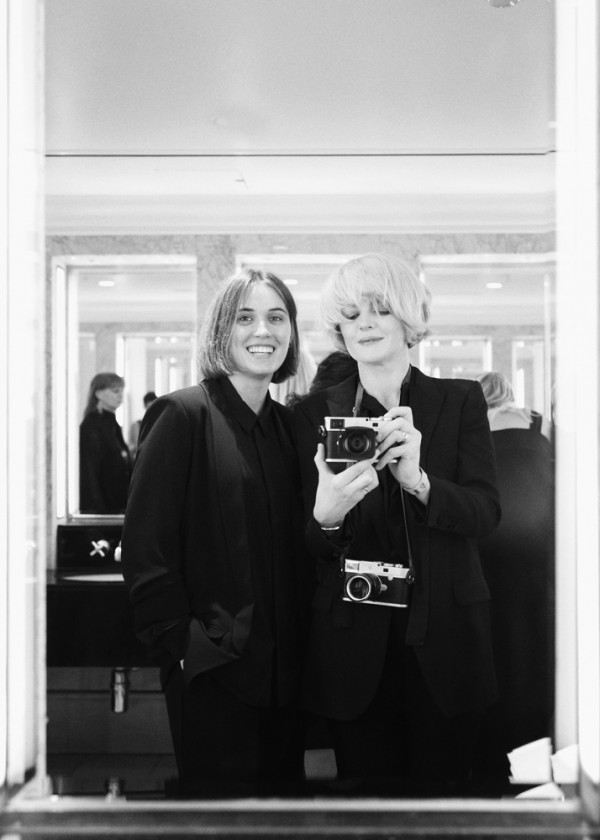
Sarah and her assistent Agne. Sarah studied English Literature at University College London (UCL) in the late 1990s and used the time not spent in libraries to train herself as a photographer.
She was offered a freelance position at the Guardian in 2000, and has continued to work for the Guardian and Observer ever since. Lee specialises in portraiture, features and the Arts but is interested in all photography that focuses on people, and our shared human experience. She lives in London with her husband and their dog. More