The multi-award-winning and internationally renowned Brazilian photographer passed away on May 23, 2025. He was 81 years old.
Sebastião Salgado was among the most significant and influential photographers of our times. As a photojournalist, documentarist and visually striking artist, his work is defined by impressive black and white images, predominantly published in series. He was an ambassador for humanity, a fighter for justice and a resolute activist. His pictures are dedicated above all to the disadvantaged all over the world, to those affected by wars and crises, but also to the forces of nature. Salgado was a cautioning voice and a precise observer; he saw his images as a call to take more responsibility for the world and our fellow human beings. His photographs show people’s misery and suffering, the destruction of social relationships, but also the dignity and pride of every individual. His images were often shocking, but he was also able to convey the magical beauty of the world.
Sebastião Ribeiro Salgado was born on February 8, 1944 in Aimorés, Brazil. He grew up with seven siblings on his parents’ fazenda. He first studied Law, but after a year switched to Economics at the University of São Paulo. Together with his wife, Lélia Deluiz Wanick, he left the country – which was ruled by a military dictatorship – in 1969 and moved to Paris. It was there, in the early seventies, that he took his wife’s Leica and began to work as a freelance photographer. Salgado became world famous after capturing the assassination attempt against Ronald Reagan at the side entrance to the Hilton Hotel in Washington, on March 30, 1981. Over the following years, he became intensively involved with social, political and ecological subjects, which he often combined with overwhelming aesthetics. Salgado worked with agencies such as Sygma and Gamme, and from 1979 to 1994 was a member of the Magnum Photos agency. He travelled extensively, with his most important long-term projects being produced in Africa, Latin America and Asia. His Workers, Exodus and Genesis series are among the most important photographic projects in which he used his visionary power to depict complex global processes.
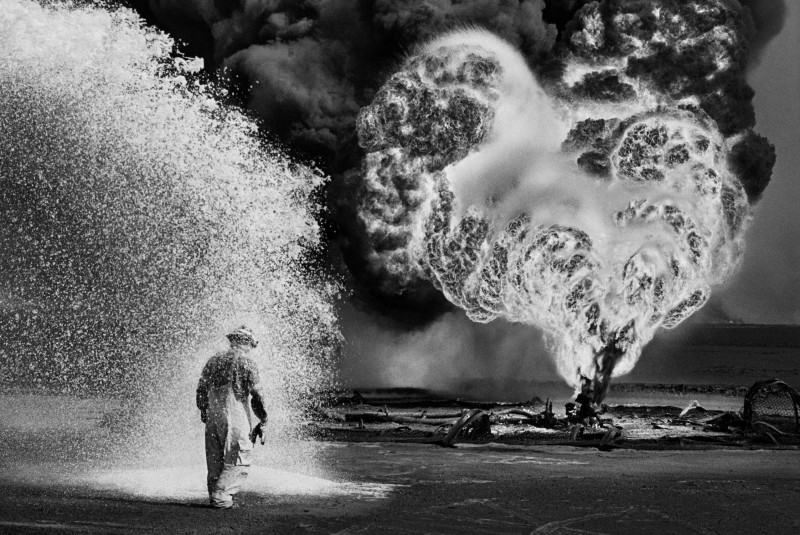
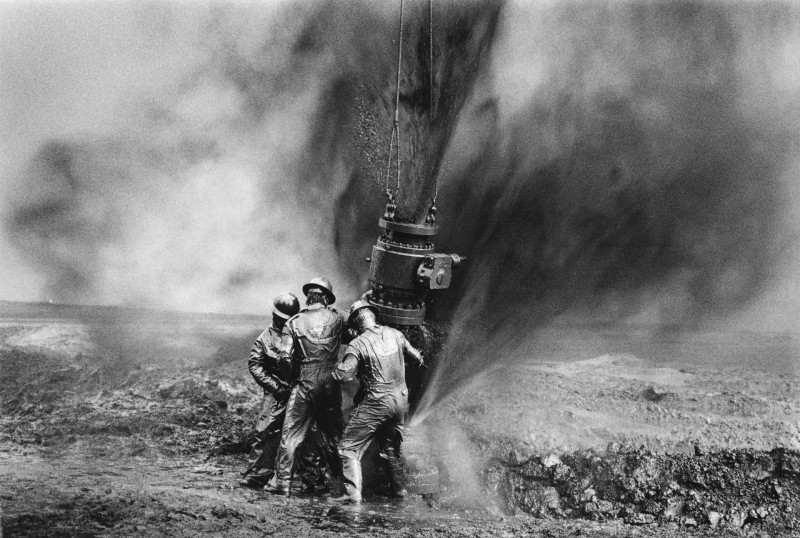
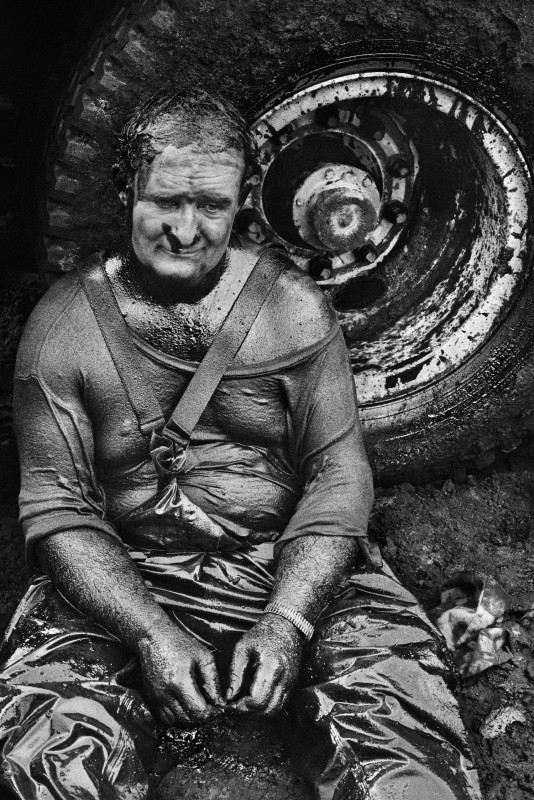
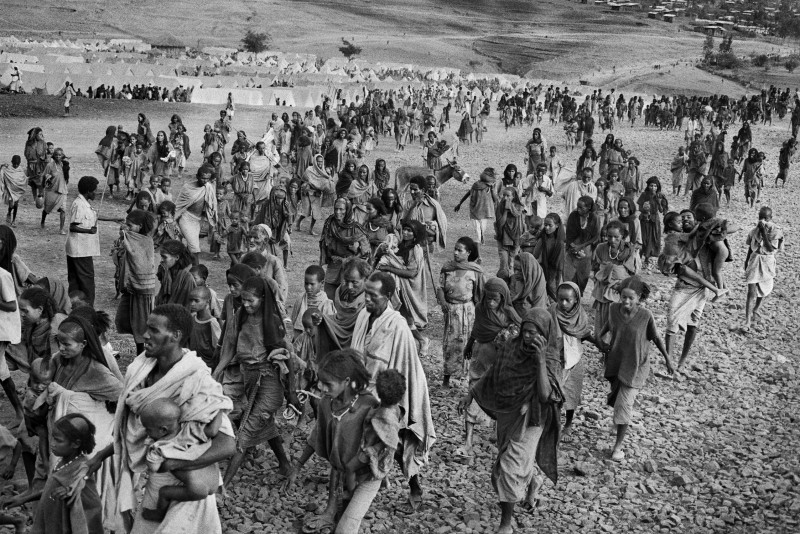
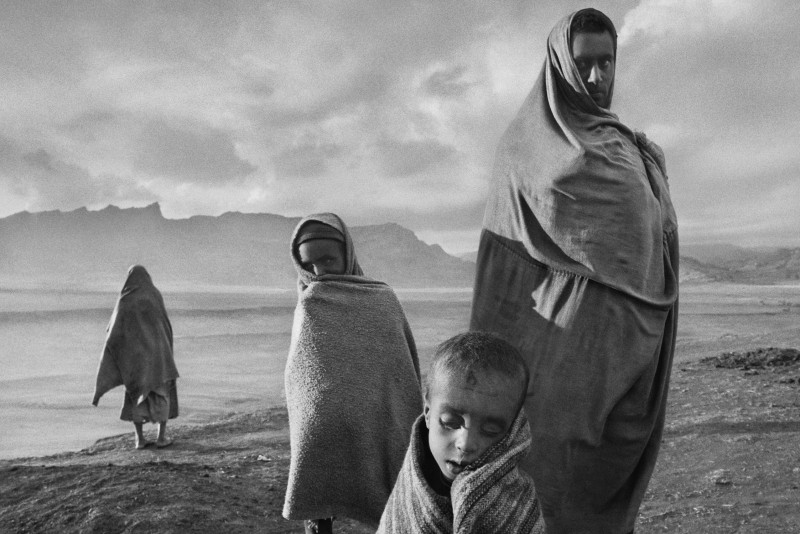
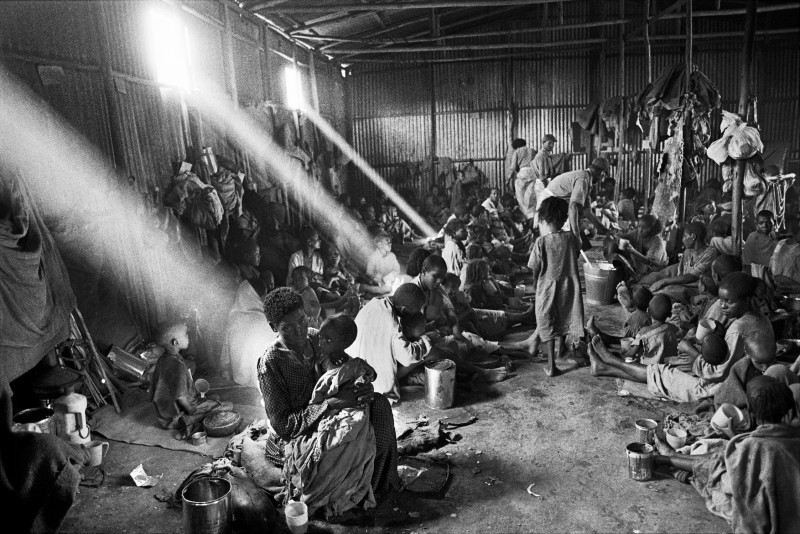
Salgado was a two-time recipient of the Leica Oskar Barnack Award – a unique feat in the award’s forty years history. In 1985 it was for his Ethiopian Hunger series dealing with the shocking consequences of drought in the African country, and in 1992 for his Inferno in Kuwait documenting the burning oilfields following the Second Gulf War. The list of honours the photographer received is a long one: in 2019, Salgado was the first photographer to receive the Peace Prize of the German Book Trade. In his thank-you speech he underlined his mission to “bring light to injustice”.
In more recent decades, environmental issues played an increasingly important role in Salgado’s work. Already back in 1998, the photographer and his wife Lélia had founded the Instituto Terra for the Reforestation of the Brazilian rainforest. Since then, millions of trees have been planted – his Amazônia series testifies to his deep connection to and reverence for nature and the environment. “His lens revealed the world and all its contradictions; his life, the power of transformative action,” the Instituto declares. Salgado’s life was portrayed by his friend and colleague Wim Wenders, working together with Salgado’s son Juliano, in the impressive, Oscar-nominated, 2014 documentary Salt of the Earth.
Sebastião Salgado passed away in Paris after suffering from severe leukaemia, a late complication of malaria he contracted while working in Indonesia in 2010. It was the French Academy of Beaux Arts – of which Salgado had been a member since 2017 – that first announced his death of May 23. The academy honoured him by referring to him as “a great witness of the human condition and the state of the planet”. With Salgado’s passing, the world loses a great photographer and committed humanist. His legacy as a human being and creative artist remains a deeply empathetic appeal for greater compassion and respect for the Earth’s resources.
Ulrich Rüter© Sebastião Salgado, Leica Oskar Barnack Award 1992
© Sebastião Salgado, Leica Oskar Barnack Award 1992
© Sebastião Salgado, Leica Oskar Barnack Award 1992
© Sebastião Salgado, Leica Oskar Barnack Award 1985
© Sebastião Salgado, Leica Oskar Barnack Award 1985
© Sebastião Salgado, Leica Oskar Barnack Award 1985