1/7
1/7
Overfishing in Southeast Asia - An Ecological and Human Drama
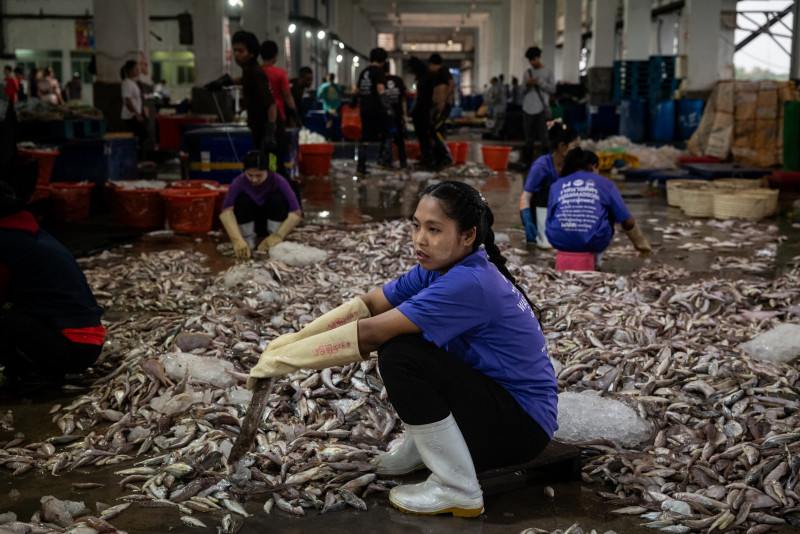
A Burmese dock worker sortes different fish species after a catch from a Thai vessel was unloaded at a landing site in Ranong, Thailand, on Thursday, January 23, 2025

The freelance photographer works for international publications and NGOs, primarily in the Middle East and Asia. She has reported on conflicts such as those in Libya and Syria, on former child soldiers in the Democratic Republic of Congo, and on the refugee crisis in Europe. She has received wide recognition for her work, including the International Photo Award, the Society of Professional Journalists Award and the James Foley Award for Conflict Reporting of the Online News Association. Her work has been exhibited at the Annenberg Space for Photography, at Visa Pour l'Image and at the Foreign Correspondents’ Club in Hong Kong. More
A Burmese dock worker sortes different fish species after a catch from a Thai vessel was unloaded at a landing site in Ranong, Thailand, on Thursday, January 23, 2025
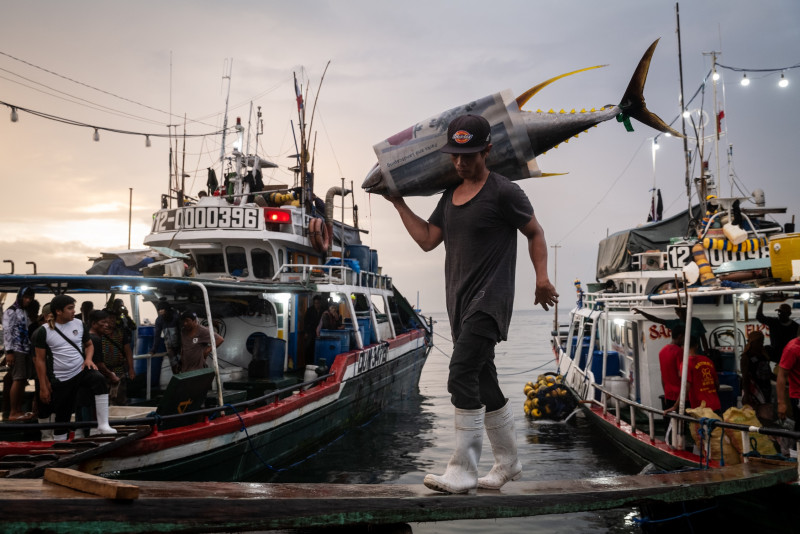
Filipino fishermen unload catches of Yellowfin tuna, Bigeye tuna, and Blue Marlin, after being at sea for approximately one month, at General Santos fish port, the Philippines, on Wednesday, May 21, 2025. General Santos is known as the Philippines’ tuna capital and hub for tuna fishing and exports of the products. The city hosts numerous processing facilities where the fish, primarily tuna, is packaged or canned for sale to the Filipino market and for export worldwide
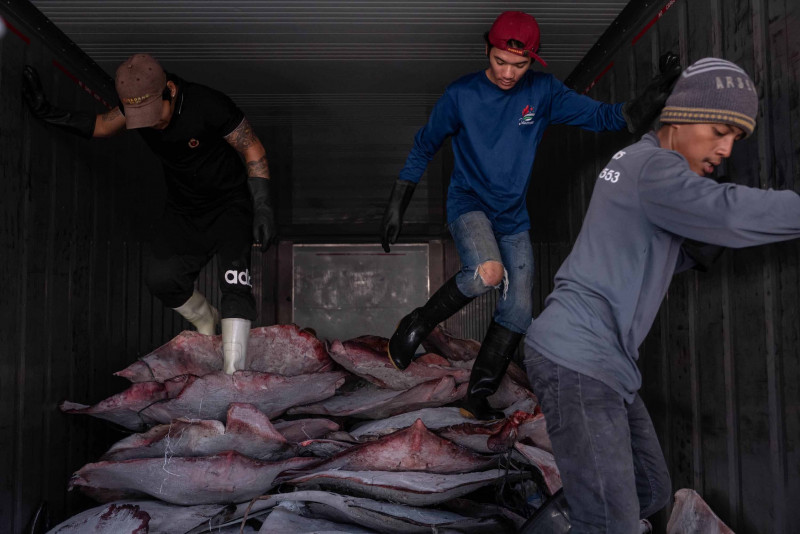
Burmese migrant workers prepare to unload hundreds of stingrays to move them into cold storage, at a facility owned by a family of commercial fishers, in Samut Sakhon, Thailand, on Wednesday, January 15, 2025. According to one of the owners, the imported frozen fish and rays, seen here, are brought in from Indonesia and sold mainly for domestic consumption in Thailand. Much of the seafood Thailand now consumes is being imported due to Thai waters being overfished the decline of fish stocks over the last several decades
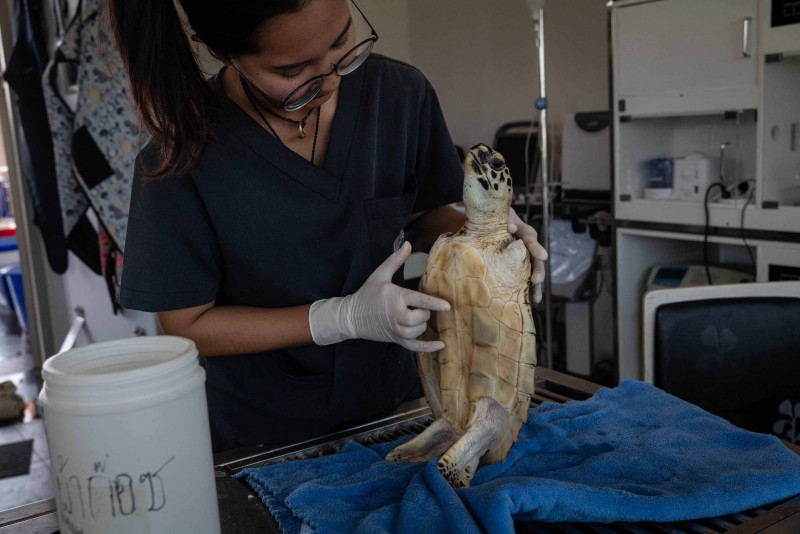
Oranee Jongkolpath, 30, a veterinarian at Thailand's Marine and Coastal Resources Research and Development Center in Rayong province, prepares to clean a hawksbill turtle with a double amputation in Prasae, Thailand, on Saturday, January 18, 2025. The injured turtle was found by fishermen in a garbage patch, and was likely entangled in ghost nets - fishing nets lost or discarded by fishermen - causing severe damage to its two front flippers
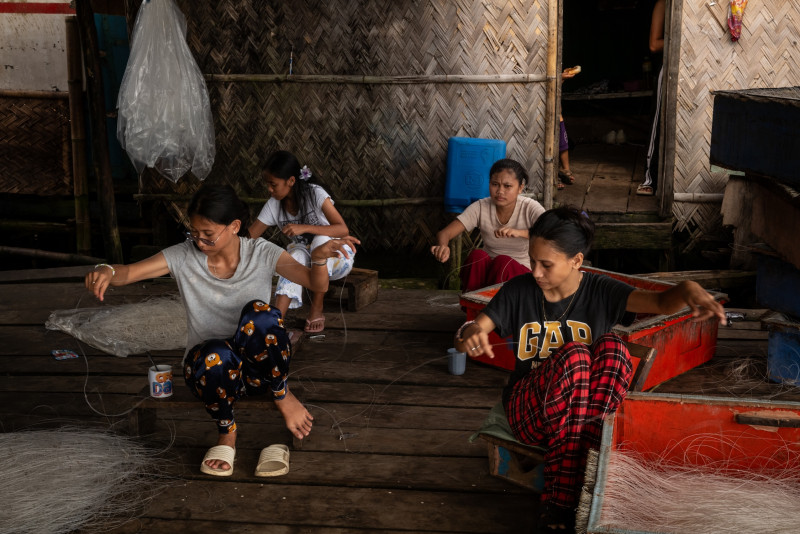
Family members of Filipino fishermen place bait on fishing lines ready to be used, in Quezon, Palawan, the Philippines, on Saturday, May 24, 2025
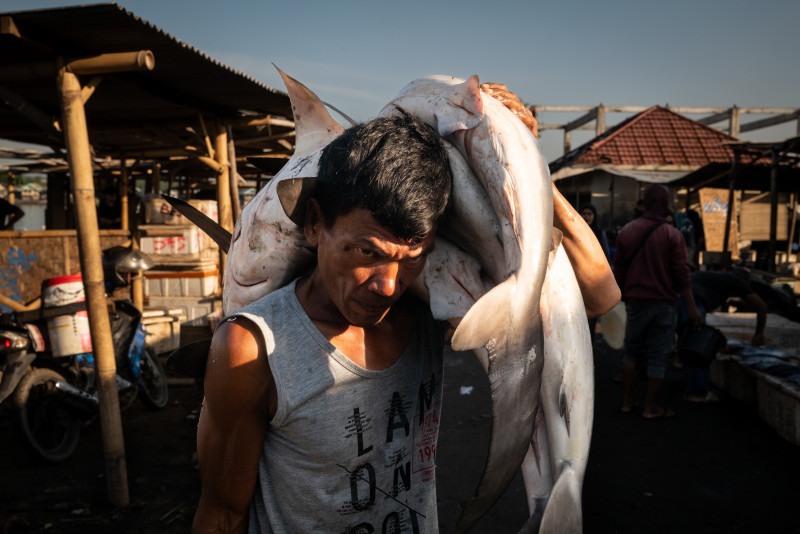
Various species of sharks, some of which are endangered, while others are listed as vulnerable, hauled on shore at dawn by commercial fishermen at the Tanjung Luar port on Monday, June 9, 2025, in East Lombok, Indonesia. Tanjung Luar is one of the largest shark markets in Indonesia and Southeast Asia, from where shark fins are exported to other Asian markets, primarily Hong Kong and China, was bones are used in cosmetic products also sold to China. Shark meat and skins are consumed locally as an important source of protein. In recent years, facing heavy criticism because of the unregulated shark fishing industry, the Indonesian government has sought to bring in stricter controls over commercial hunting of sharks in an attempt to balance the needs of fishermen as well as the need to protect dwindling shark populations
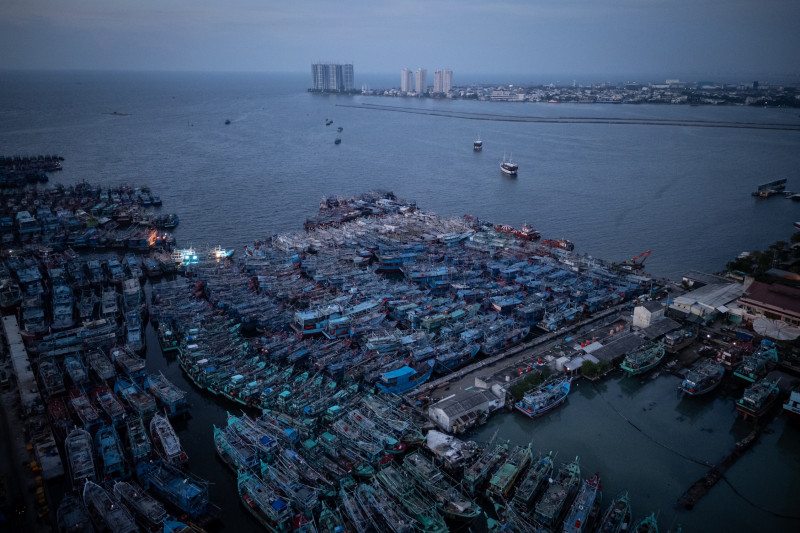
A drone image showing the largest commercial fish port in Indonesia, Muara Angke, where hundreds of commercial fishing vessels are docked, in Jakarta, Indonesia, on Sunday, June 15, 2025