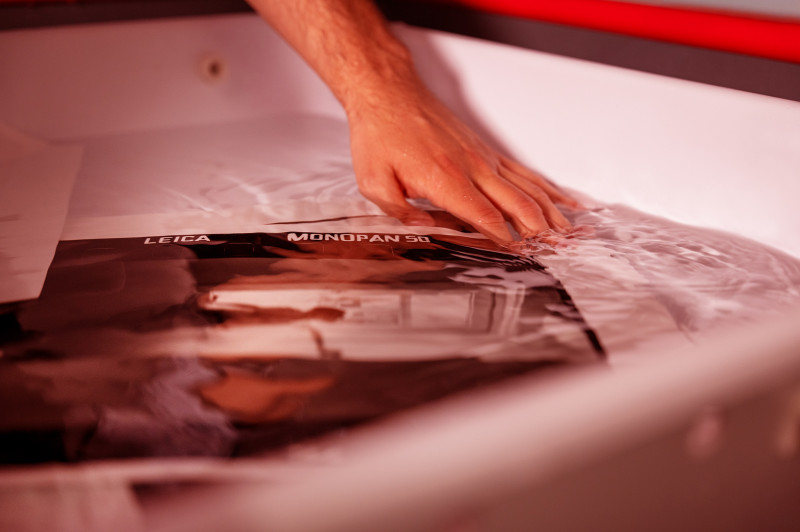
Leica has set up a photo laboratory at its Leitz Park headquarters – a logical consequence considering the immense popularity currently experienced by analogue photography. An interview with Anton Ivanov.
Anton Ivanov, Leica Cultural Communication Manager, has organised the new photo lab and equipped it with the help of local companies. He remembers how his project was warmly welcomed by Supervisory Board Chairman, Dr Andreas Kaufmann, and Karin Rehn-Kaufmann, Chief Representative of Leica Galleries International. We had the opportunity to talk with Ivanov about the historical significance, present and future of the newly established photo lab.
LFI: It has been 90 years since the photo lab at Leitz’s Hausertorwerk building in Wetzlar formed the foundation for the newly created Akademie. Today, there is, once again, a lab at the Leica headquarters in Leitz Park in Wetzlar. What is the intention behind this?
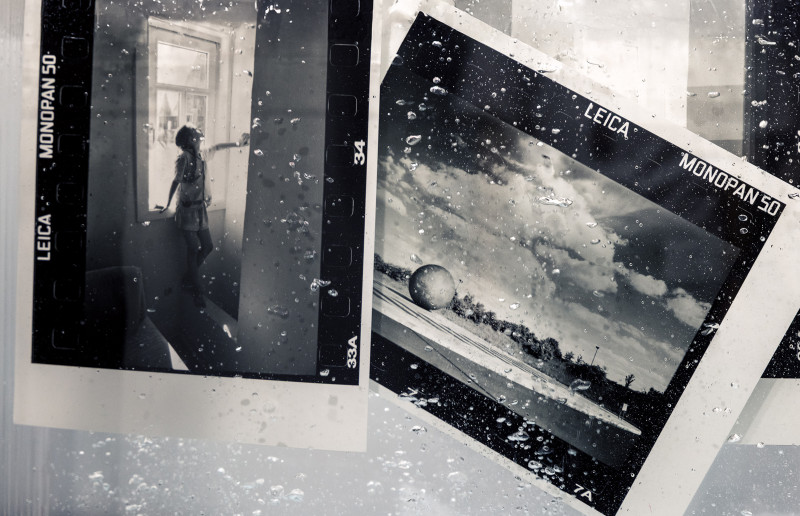
Anton Ivanov: I see the big interest to analogue photography today. New generations trying to shoot on film, some people returning to film photography after decades of digital, many people combining digital and analogue very naturally. There is no competition between digital and analogue: they are instruments for creation, and people choose their tools according to the goal. We produce three analogue cameras (Leica MP, M-A, M6), we have launched a black and white Leica Monopan 50 film, we have an amazing archive of photographs and negatives at Leitz Park at our disposal. When I visited Leitz Park three years ago, and saw the museum, the factory, stores, galleries, archive, and studio, it was immediately obvious to me that a darkroom was missing at this destination for photography enthusiasts. And I was lucky that Dr. Andreas Kaufmann and Karin Rehn-Kaufmann were having similar ideas for a photo lab at the same time.
How would you describe the laboratory? What makes it so special and what was important to you when setting it up?
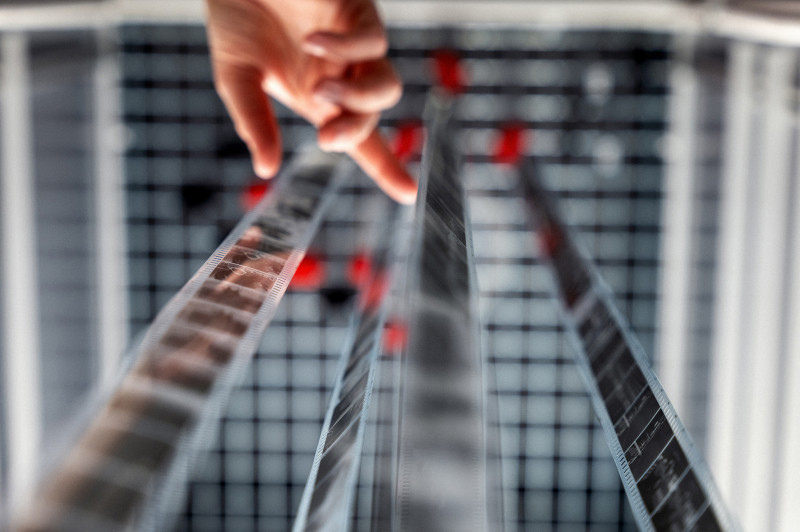
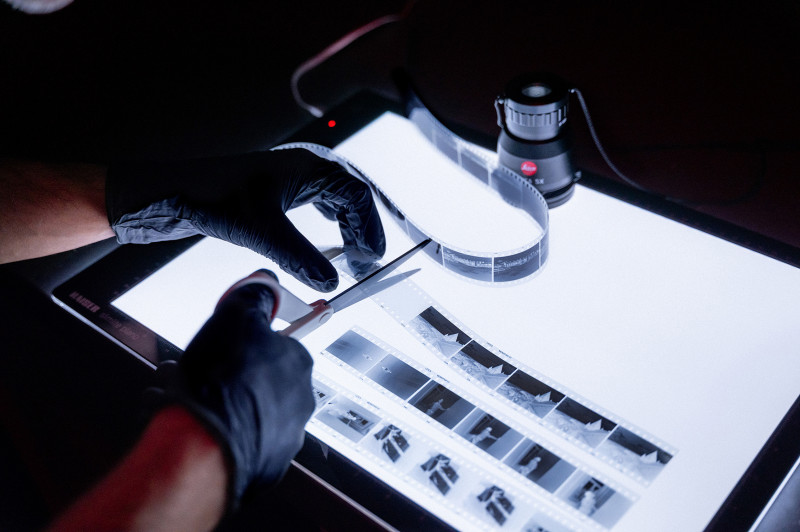
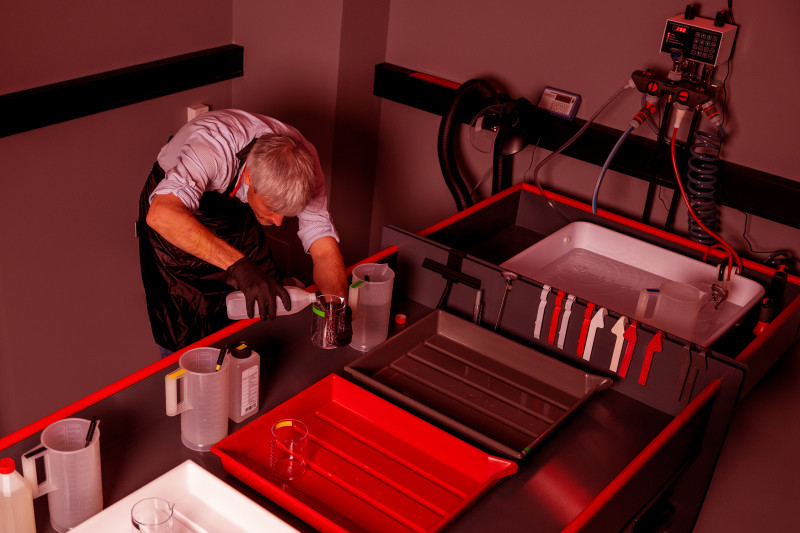
Two things make a darkroom special: equipment and people. I’m too shy to describe myself as a printer and photographer, so, I will say a few words about the equipment. The Leica Darkroom combines a great respect for heritage (we’re using Leitz Focomat enlargers and lenses) with precision modern technologies, such as the Heiland LED Splitgrade system, and traditional analogue processes with high-end archival quality standards. There are two things I’m very proud of: first, a three-meters-long wet table, custom-made by Heiland electronic, which is in the centre of the room. It was a dream to have a wet table with access from different sides, so visitors and workshop participants can easily see all the magic processes with silver-gelatine paper. Second – also custom made by Heiland in Wetzlar – a huge stainless steel drying cabinet suitable for any number of films or 50×60cm baryta papers. And there were plenty of “small” things planned that should not be forgotten, which make the difference between normal work and fine art printing – such as Safelight systems, PaperFlashers, temperature-controlled mixers and archival washers, densitometers, and other high-end calibrated equipment.
You yourself have been taking analogue photographs for a very long time. Was producing this facility in Wetzlar a matter close to your heart?
In 2022 during the launch of the Leica M6, I helped Silvergrain Classics organize a mobile photo lab in the studio, where we developed films and printed photos taken with new M6 cameras. I was surprised that there was no real darkroom in Wetzlar. Heiland electronic GmbH have been producing high-end equipment for developing and printing in Wetzlar for the past 35 years. Plenty of German photography brands are reachable by car from Wetzlar – like Jobo, Kaiser, Adox, Kienzle, Filmomat and many more. Leica caused a revolution in photography, and has been producing perfect lenses and cameras for 100 years. And Leica’s legacy also consists of darkroom enlargers, lenses, accessories, projectors and so on. There was the whole infrastructure around cameras and lenses, not only for taking pictures but also for making the pictures, which means printing on paper with burning, dodging, masking, balancing and tuning. And I’ve heard many good words about the former Leica lab in Solms, which supported exhibitions, the Akademie, and other cultural projects.
The laboratory is not only open to the Akademie; you also support renowned photographers in the darkroom. Jane Evelyn Atwood was the first to visit you. How does this collaboration work and what makes it so special for your guests and for you?
I enjoyed working with Jane Evelyn Atwood very much. She’s a great artist, and it’s an honour to develop and print for her – maybe a once in a lifetime opportunity. Hopefully not. She has a very strong personality and clear idea of her photography. It was a challenge to achieve all the right densities and tonalities in a difficult lighting landscape, and I was very grateful for her intention to make perfect prints without compromises.
Who else has been there and who will be the next guests in the photo laboratory?
John Sypal from Tokyo was the first one with whom we developed and then printed a Monopan film: he has a style that aligns with his workflow and his art. I only assisted a bit and learned a lot about spirit of his photography.
We have agreements with several photographers with regard to future collaborations. I would be happy to meet different artists here in Wetzlar, provide top archival quality and service, and together make fine art silver prints from their original negatives. I am incredibly thankful to Andrea Pacella [VP Global Marketing & Communication at Leica], who made this happened. Stay tuned…
Tobias Habura-SternINTERVIEW: Tobias F. Habura-Stern; PHOTOS: © Leica Camera AG