For
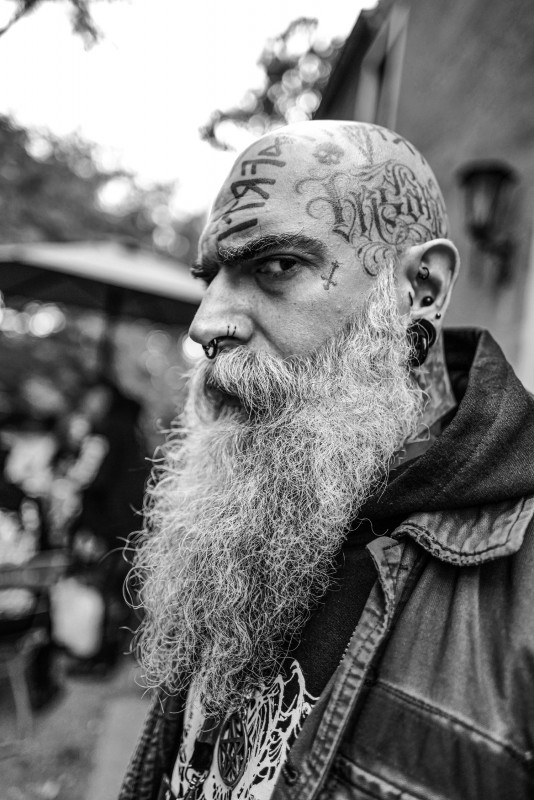
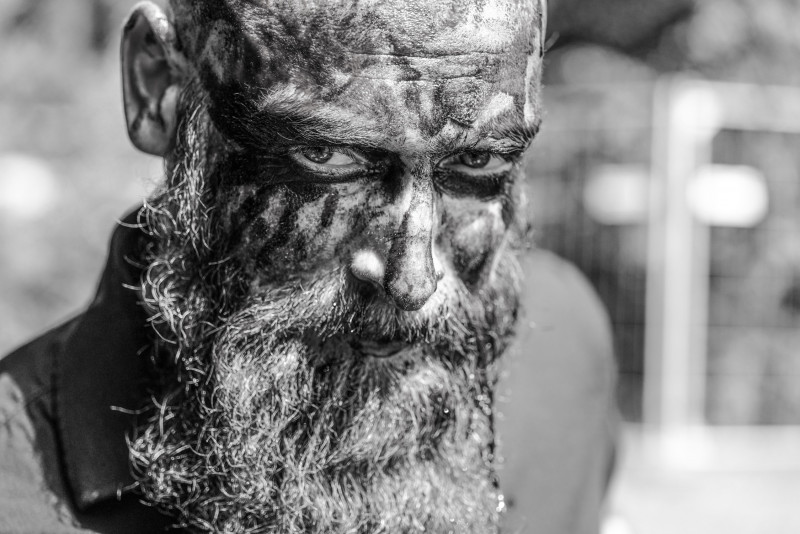
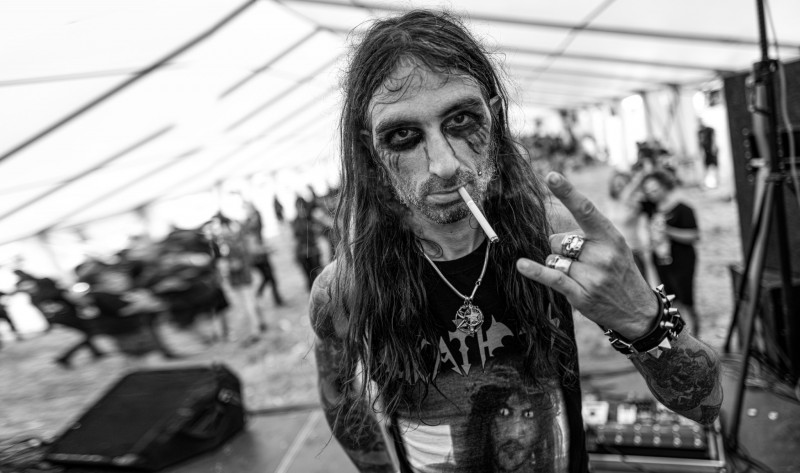
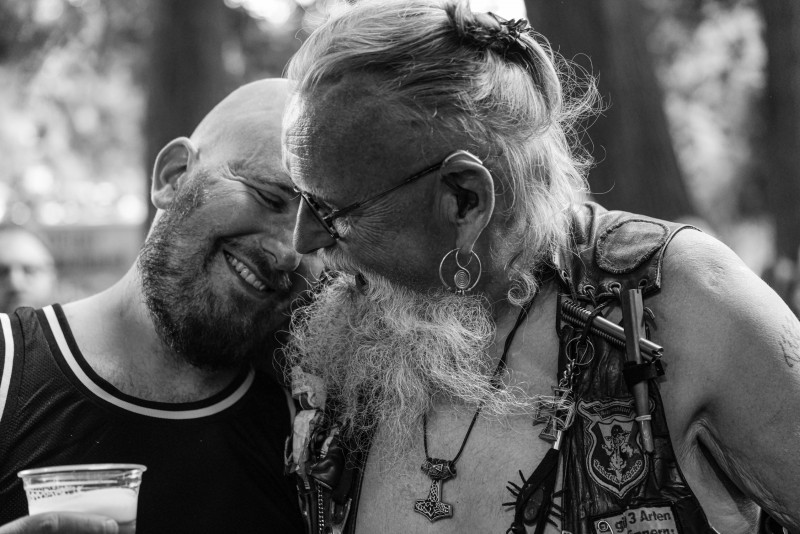
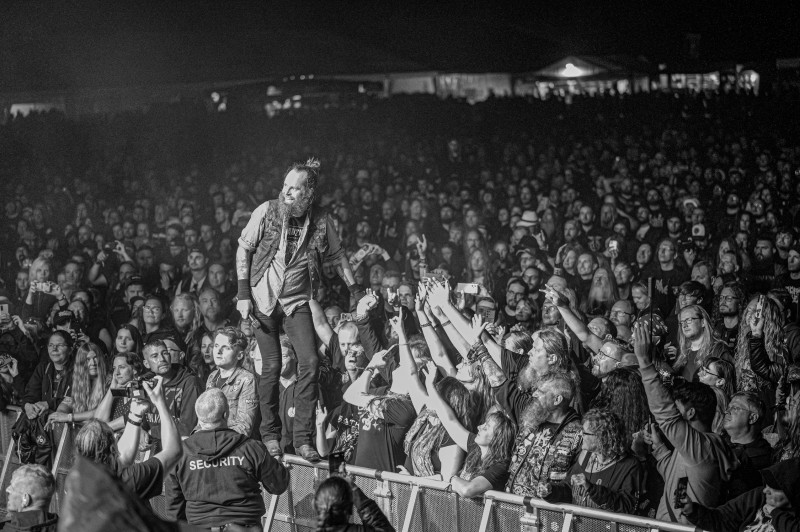
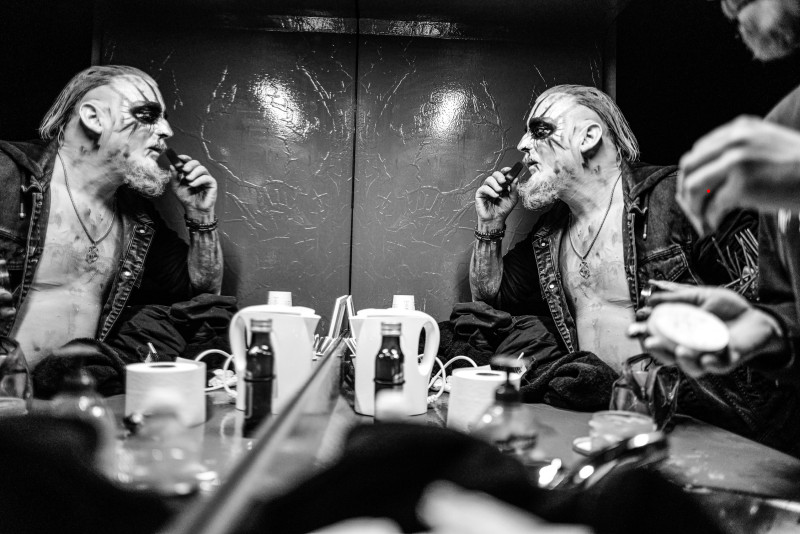
LFI Gallery photographer Klaus Richter, energy-laden shots taken before and after concerts are a way of seeing the music scene from a different, more personal perspective. Richter’s photographic projects often take place backstage – in an intimate place where not all photographers are given access. He reveals what goes on behind the scenes and immerses us in the cultural aspects of metal music – the character of the artists and the charged atmosphere.
LFI: What is it that fascinates you personally about photographing metal events?
Klaus Richter: The unknown exerts a magical attraction for me: the people, the dark and the sinister. This contrast is exactly why I find black metal fascinating. From a photographic point of view, however, black metal poses real challenges: cramped clubs, red spotlights, thick fog and musicians who are moving constantly.
How did your interest in rock and metal culture develop?
I grew up near Düsseldorf – which was and remains a hotspot for good music and a playground for various musicians. I’ve been hanging out in small clubs such as Creamcheese, Revolution and Ratinger Hof since the late sixties. Driven by Jimi Hendrix, Frank Zappa and Kraftwerk, I experienced exciting visual impressions here in Düsseldorf. I photographed numerous bands in black and white. I saw the Sex Pistols, The Clash, The Stranglers and The Damned in London, Dublin and Amsterdam – loud and full of artistic energy. A short time later, when metal was still in its infancy with Black Sabbath and Motörhead, I decided to devote myself to the ethnic music of various small regions.
What impressions have you collected within the rock and metal scenes, since the sixties and over the following decades?
The sixties were defined by peaceful, transcendental hippy music as well as by the hard rock that influenced me. In 2005 I found my way back to metal – now shriller, more brutal and louder, but still full of fascinating visual stimuli. The audiences remain peaceful, albeit dressed predominantly in black. Leather, studs and martial accessories have replaced the colourful batik shirts, but the intensity remains the same.
How did the idea to make a comprehensive book project about the metal scene come about?
The idea for this new work came about at the time when all events were cancelled during the covid pandemic. Instead of travelling across the country to visit stages, we went on a journey through time, revisiting the previous ten years. We sorted and catalogued thousands of photos, reminiscing about memories, impressions and stories. Originally planned as two themed books, they became four volumes, which together form a cube measuring 25 x 25 x 25 cm. Each volume comprises 666 illustrated pages, printed in high-quality digital print on slightly matt paper and with sturdy thread binding. The faux leather cover with a silver skull grants each book the perfect aura.
What challenges does working in this energy-laden atmosphere bring, and what role does your Leica play in the process?
At the decisive moment, the camera has to work immediately, and I have to be able to react quickly I start by studying the performers closely, to gain foresight before taking a series of photos. My favourite camera is the reliable Q2. The big advantage is that it doesn’t intimidate the artists. They let me get within a few centimetres of them. As the front man of Ellende once said, “I don’t know any other photographer who can get that close to me.” With my SL2 and SL3, I’m either in front of or to the side of the stage. I’d describe myself more as a photo hunter than a photo grapher. I’m a silent observer who waits for the right moment.