A new book offers insight into the Belgian Leica photographer’s impressive oeuvre: six decades of engaged photography, following the humanist tradition.
His long career as a photojournalist has involved travelling all over the world. In the coming days, the Belgian photographer will be 78 years old. A comprehensive photo book was published already last year, marking his first major retrospective, at the Musée de la Photographie in Charleroi, Belgium. The title, Sidelines, says it all – because Vink never tried to be at the centre of conflicts and crises, but instead focused on the consequences of the devastation. He never saw himself as a war reporter, but chose to photograph the everyday lives of his contemporaries who were suffering from the aftermath of wars and humanitarian disasters. As he says, his work is all about belonging, about home, but also about loss and desolation. “I don’t see myself as an adventurer, but the attraction was greater than the fear.”
The most important starting points, and the regions he repeatedly returned to, were his homeland of Belgium, and Cambodia. His passion for journalism was triggered in Brussels. This was where his father ran the Het Laatste Nieuws newspaper. “It was, indeed, where I caught the bug,” he says, after experiencing the atmosphere of the editorial offices and the printer. A second source of inspiration played a role: in the family cellar, there were piles of issues of LIFE magazine, which impressed him and cemented his decision to become a photographer. When he was 18, he was sitting with Michel Vanden Eeckhoudt at the edge of the Francorchamps and Zolder race tracks, taking pictures of sports cars racing by. These became his first published pictures. However, the photographer considers that it all really began when he was working with director Christian Caujolle, as a founding member of the Agence VU. Above all, Vink’s collaboration with Parisian newspaper Libération opened up new perspectives. His reportage Water in the Sahel, which won the Eugene Smith Award in 1986, gained him international renown. In 1997, he became a full member of Magnum Photos, until leaving the agency twenty years later. During those years, he continued to develop his multi-layered body of work, which repeatedly revolves around the resilience and cultural identity of peoples and communities.
Vink photographed all across the globe. Despite, or maybe because of his extensive travelling, he was later overcome by a feeling of superficiality. He longed for a place to settle, and so Cambodia became his home of choice for sixteen years, starting in the year 2000. “I wanted to watch how a country grows and develops, and everything that this involves,” he remembers. “In sixteen years, Cambodia did what it took us in the West fifty years to do. Economically anyway, because it paid an enormous social price, as social inequality mushroomed.”
Vink returned to Belgium ten years ago. The selections he has chosen for the eight chapters of black and white images in this photo book reveal the photographer’s impressive ability to combine his curiosity and empathy with the dignity and determination of those portrayed. “Sidelines is also a description of my own journey, showing the chain of decisions, as well as the slip-ups, missed opportunities and lazy choices. Sidelines is about what is left after deliberate choices to photograph or not to photograph have been made, and about what could not be photographed,“ Vink explains, before continuing. “The sidelines I see are found on the boundary between peace and chaos, between silence and noise, between safety and danger, between certainty and doubt. You’re playing or watching; you’re participating or not; you comply with different rules, depending on which side you’re on.“
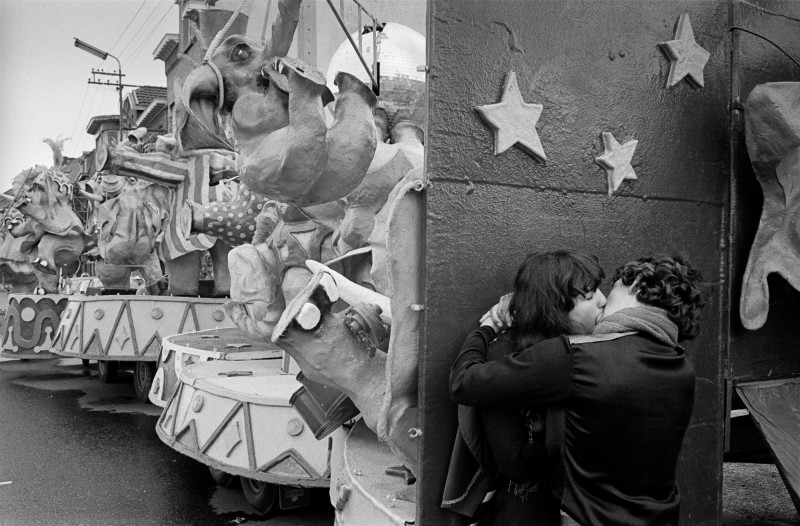
Ulrich RüterKissing youths, during the annual festival. Fleurus, Belgium 11.04.1982
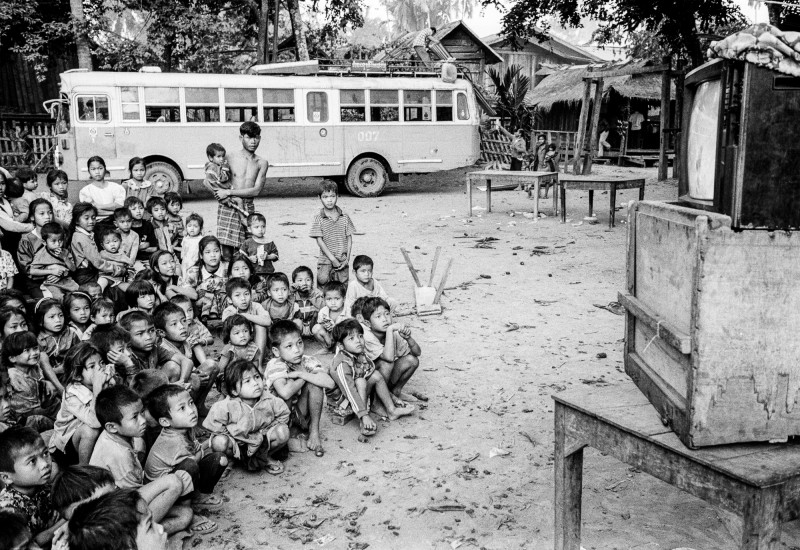
6:30 a.m., near the pagoda, during the Boun Khun Khao festival. The television, powered by a generator, has been showing videos made in Thailand all night long. The bus to Pakxé is waiting to leave. Ban Saming, Laos 23.01.1997
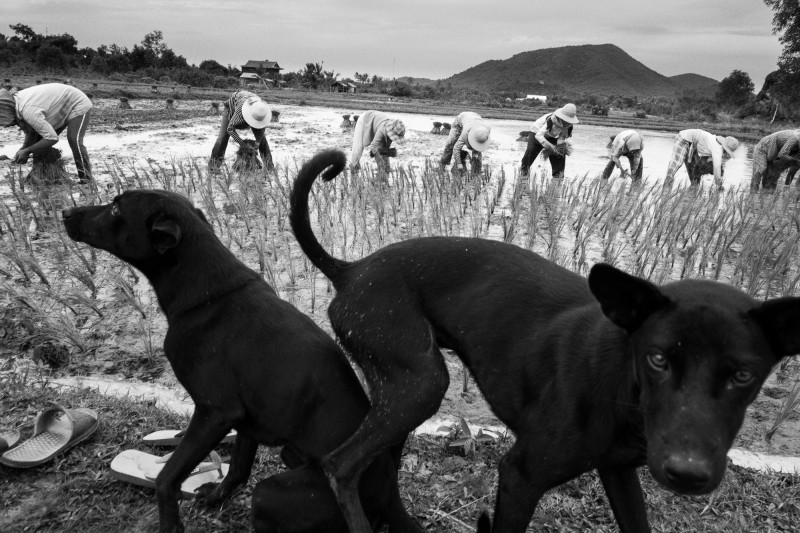
Farmers, very few of them from the younger generation, transplant rice seedlings. Damnak Chang’aeur (Kep), Cambodia, 09.07.2016
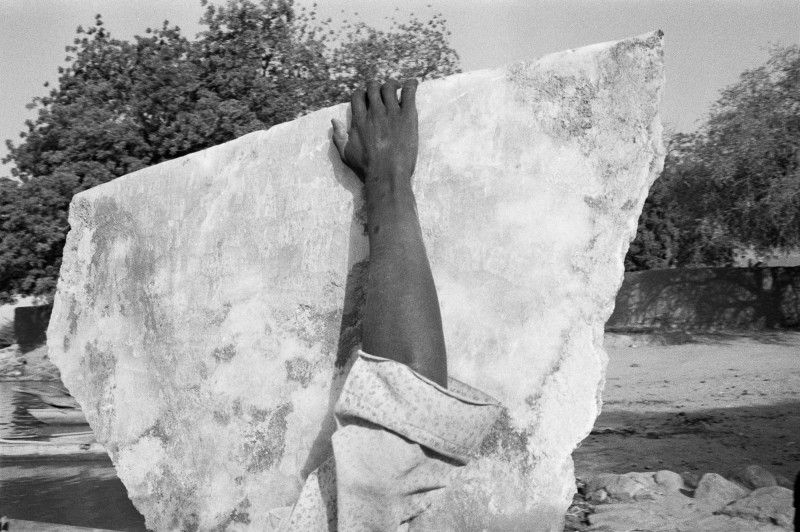
Carrying salt slabs to market. Ayorou, Niger 14.12.1985
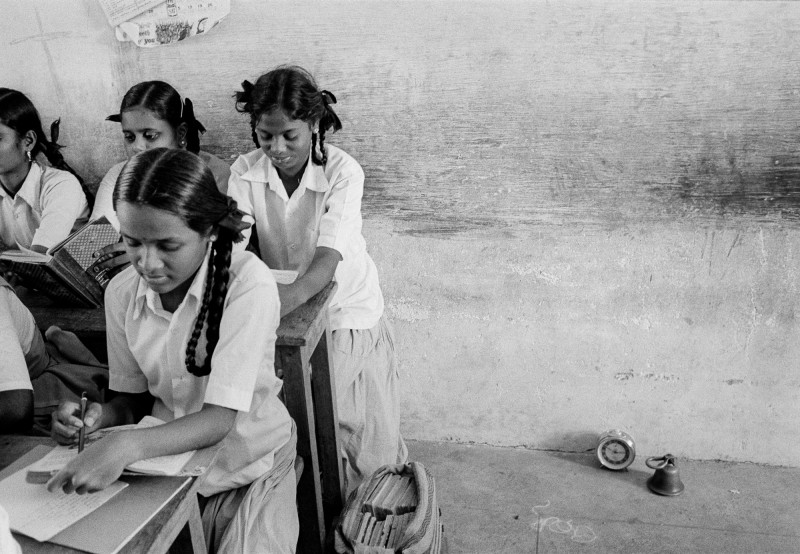
Sri Lankan refugees. A few refugees are allowed to follow classes in the Indian school nearby. Madurai (Tamil Nadu), India, 26.11.1987
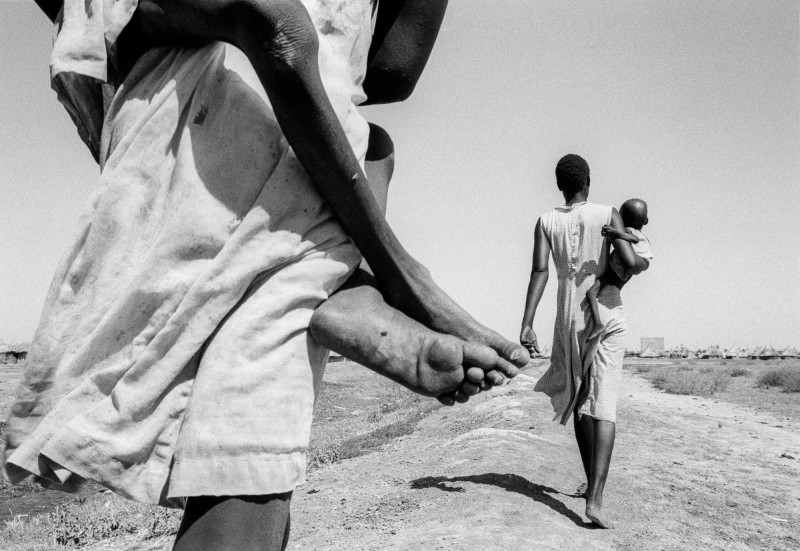
South Sudanese displaced. Most of the malnourished children are too weak to walk the 300m to the feeding centre and have to be carried there. Kosti, Sudan, 23.10.1988
Burial of a victim of the previous day’s shootings, during the revolution which toppled Nicolae Ceaușescu. Bucharest, Romania, 29.12.1989
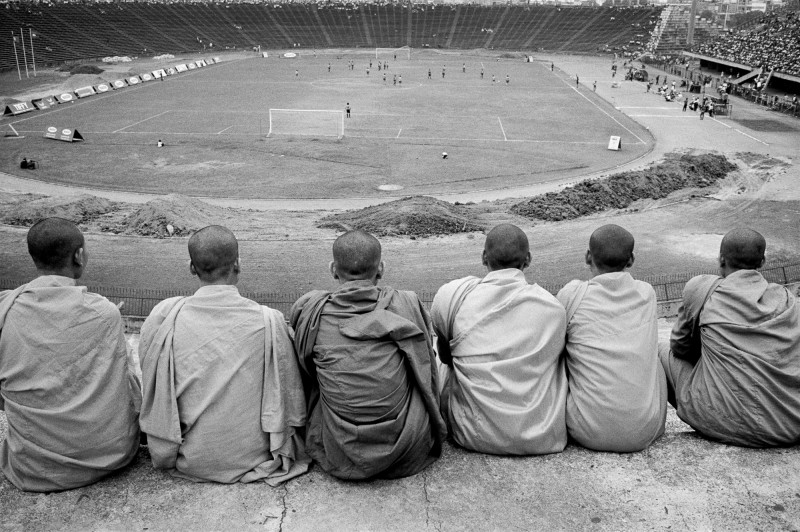
Monks watching the finals of the Cambodian Football League between Kampong Cham and Siem Reap (0-1). Phnom Penh, Cambodia, 11.12.1999
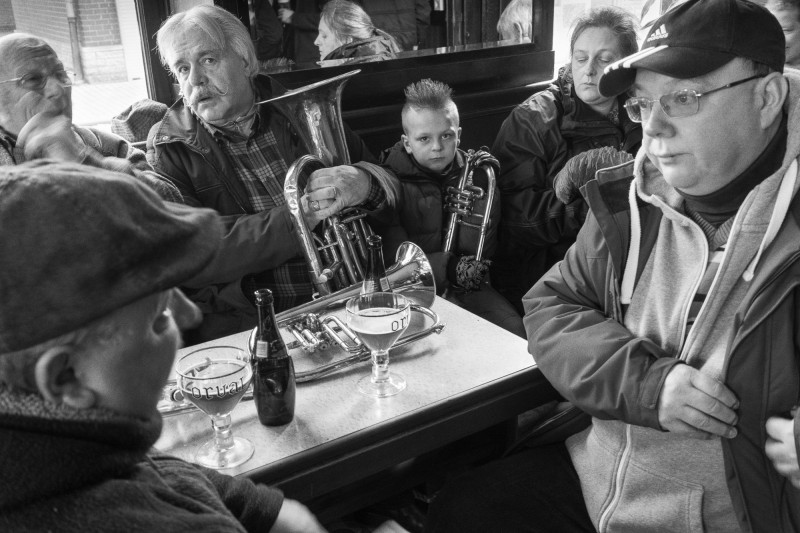
Musicians waiting in a café for the start of the parade, during the first day of carnival. Binche (Hainaut), Belgium, 15.02.2015
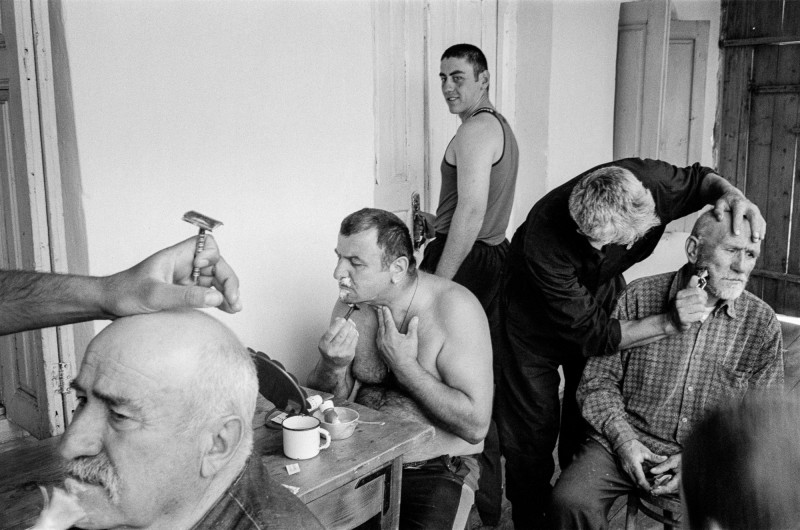
Men shaving during Ormotsi, commemorating the 40th day of mourning 100-year-old Mr Mosse Nigaradze. Ushguli (Svaneti), Georgia 20.07.2000
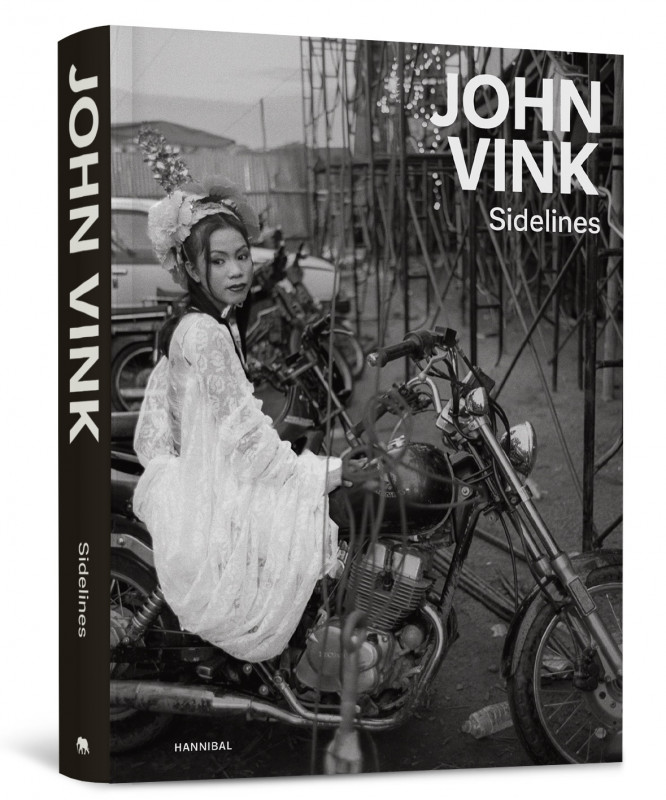
John Wink: Sidelines+-
With a text contributed by Rik Van Puymbroeck
304 pages, 155 black and white images
23 × 17 cm, English, Dutch, French
Hannibal Books
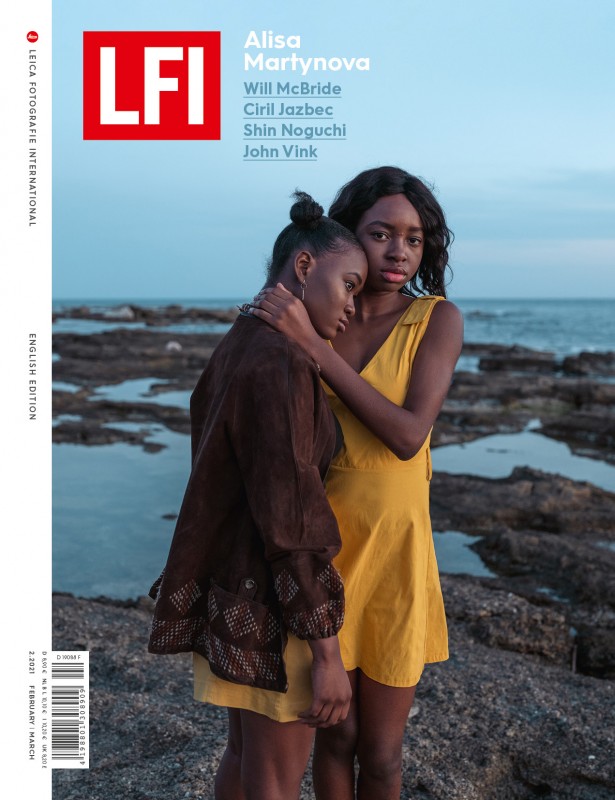
LFI 2.2021+-
Find a comprehensive portfolio by John Vink about the cycle of rice in LFI 2.2021. More
John Vink+-
The Belgian photographer was born on February 3, 1948, in Ixelles/Elsene in the Brussels region. In 1968, he began to study Photography at the École de la Cambre in Brussels (former Institut supérieur des Arts décoratifs, founded by Henry van der Velde in 1925). In 1971, he began to work as a freelance photojournalist. In 1985, he began his collaboration with the French newspaper, Libération. Vink was a founding member of the Agence VU; a full member of Magnum Photos from 1997 to 2017; and later, of the MAPS agency. Many of his works are long-term projects, focusing on social projects in developing countries and the situation of refugees. He lived in Cambodia from 2000 to 2016, and now works as a freelance photographer in Brussels. More