
In Conversation: Jessie Brinkman Evans and Steve McCurry
In Conversation: Jessie Brinkman Evans and Steve McCurry
August 18, 2025
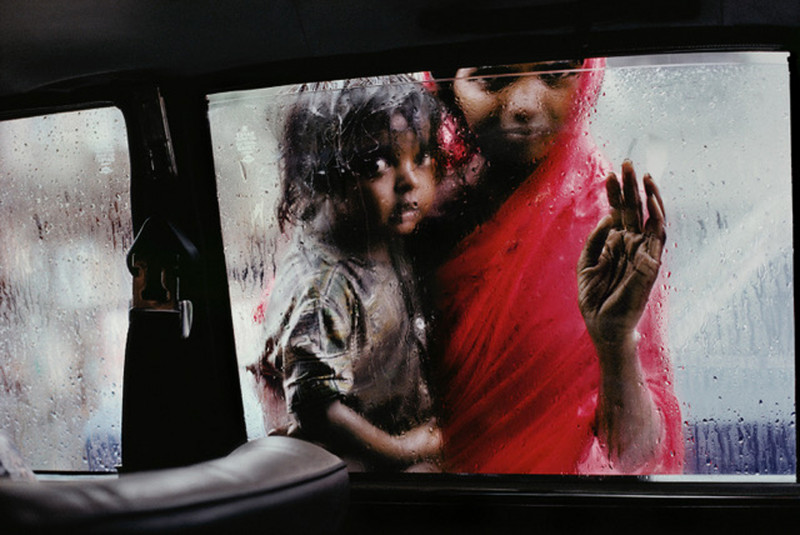
Mother and Child at Car Window (Bombay, Indien, 1993) © Steve McCurry
As part of the jubilee celebrations, the Leica Gallery in Melbourne is arranging two outstanding talents in a visual dialogue: the works of Steve McCurry and Jessie Brinkman Evans come together in a striking exhibition. On display are expressive portraits, special lighting moods and the fascinating interplay between people and nature.
Jessie Brinkman Evans: “I remember that I was studying in my late teenage years when I first explored Steve McCurry’s work, so it’s quite surreal to be writing about it today. Apart from the obvious beauty of the compositions, lighting and colours, his work has an innate ability to document human interaction. This ability connects us all in a way that can only come from a genuine curiosity about culture, language and humanity. While I was finding my own way as a photographer, this was a constant source of inspiration and a reminder that picture-taking is a dance between the people or landscape in front of me and the light that surrounds them.
My favourite McCurry pictures is Mother and Child at Car Window (Bombay, India, 1993). The separation through the car window, the mother’s emotion and the child’s innocence, bridge the gap between their experience and ours. The water on the window, the mother’s hand and the brief glimpse into her eyes through the cracked glass – all of this comes together and tells a story that people all over the world can relate to.
My photography deals with the relationship between culture and place within the Arctic communities of Greenland, with a focus on people whose lives are closely linked to the land. In general my photographic emphasis lies on light and space – in particular in capturing the Arctic’s unique colour scheme. Even though this colour palette is significantly different to McCurry’s, we are connected by our common curiosity about people. I believe we both want to explore how people are interwoven with each other and with their surroundings. The thread running through both our work is the search for commonalities between people – and the attempt to capture the essence of the human experience through photography.”
Jessie Brinkman Evans: “I remember that I was studying in my late teenage years when I first explored Steve McCurry’s work, so it’s quite surreal to be writing about it today. Apart from the obvious beauty of the compositions, lighting and colours, his work has an innate ability to document human interaction. This ability connects us all in a way that can only come from a genuine curiosity about culture, language and humanity. While I was finding my own way as a photographer, this was a constant source of inspiration and a reminder that picture-taking is a dance between the people or landscape in front of me and the light that surrounds them.
My favourite McCurry pictures is Mother and Child at Car Window (Bombay, India, 1993). The separation through the car window, the mother’s emotion and the child’s innocence, bridge the gap between their experience and ours. The water on the window, the mother’s hand and the brief glimpse into her eyes through the cracked glass – all of this comes together and tells a story that people all over the world can relate to.
My photography deals with the relationship between culture and place within the Arctic communities of Greenland, with a focus on people whose lives are closely linked to the land. In general my photographic emphasis lies on light and space – in particular in capturing the Arctic’s unique colour scheme. Even though this colour palette is significantly different to McCurry’s, we are connected by our common curiosity about people. I believe we both want to explore how people are interwoven with each other and with their surroundings. The thread running through both our work is the search for commonalities between people – and the attempt to capture the essence of the human experience through photography.”
Text: © Jessie Brinkman Evans; Image: © Steve McCurry/Magnum Photos
In Conversation+-

The exhibition will be on view from the 1st of August until the 31st of October at theLeica Gallery Melbourne.
Jessie Brinkman Evans+-

Jessie Brinkman Evans has roots in Southern California and Australia, and lives today between Melbourne (Australia) and St. John’s (Canada). She is known for focusing on the intersections between culture and the meaning of life. She works primarily in a documentary style, with a particular emphasis on light and colour – both technically and aesthetically. She has been documenting the Arctic regularly for some time. She has also worked as a stills and set photographer. In 2023, Brinkman Evans presented her first solo exhibition at the No Vacancy Gallery in Melbourne.
Steve McCurry+-
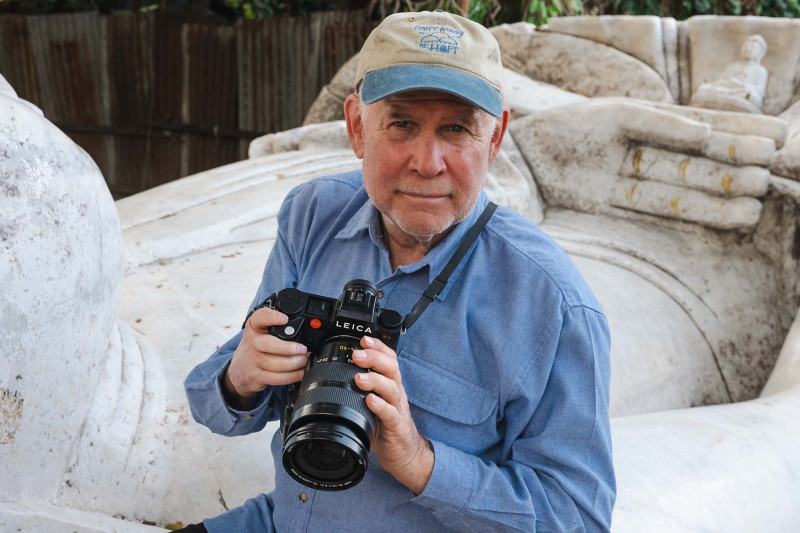
Born in Philadelphia (USA) in 1950, Steve McCurry studied Film and Theatre Art at Pennsylvania State University. The photographer and photojournalist is best known for his iconic portrait Afghan Girl (1984), which appeared on the cover of National Geographic. He has been a member of the renowned Magnum Photo agency since 1986. He has received numerous awards for his work, including four times, first place in the World Press Photo Contest. McCurry has published over 20 photo books of his work.
Mother and Child at Car Window (Bombay, Indien, 1993) © Steve McCurry