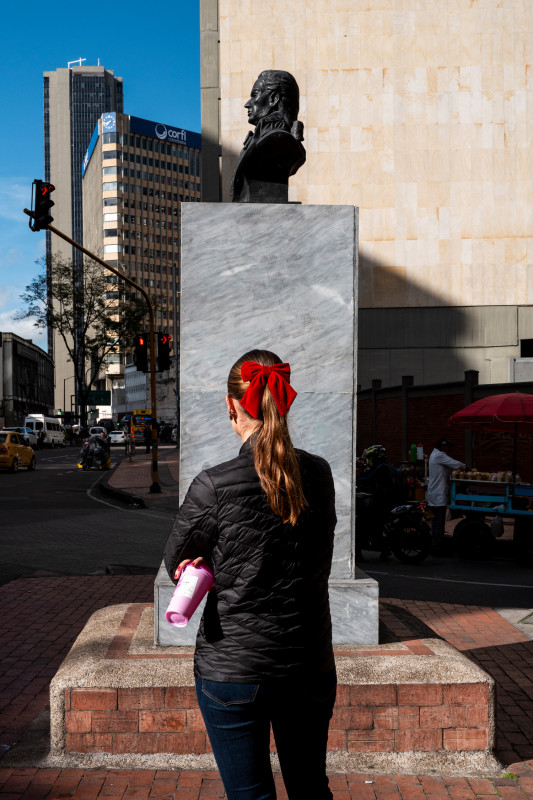
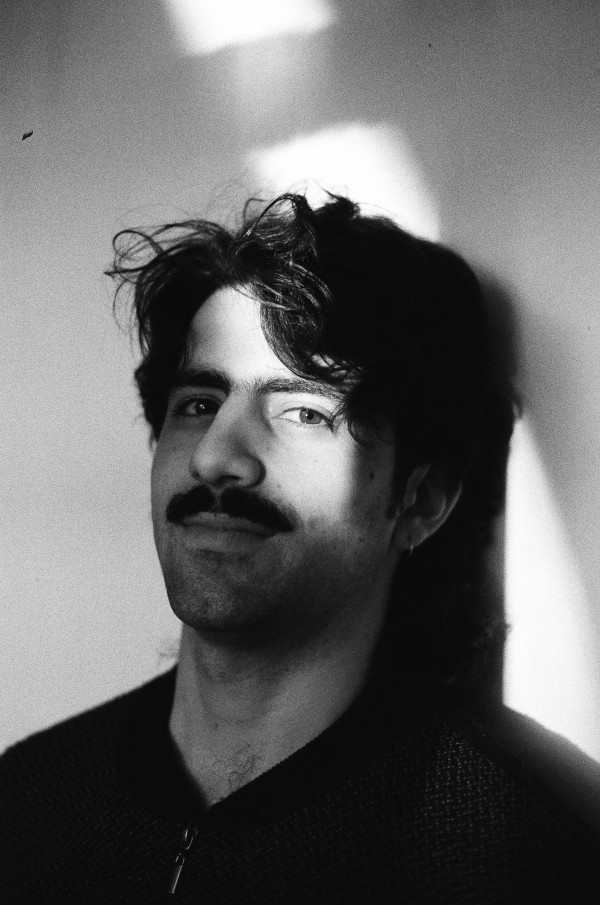
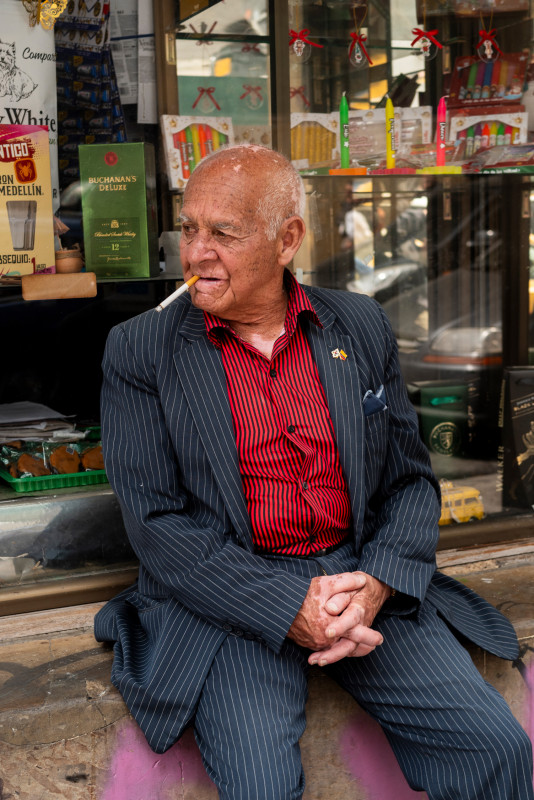
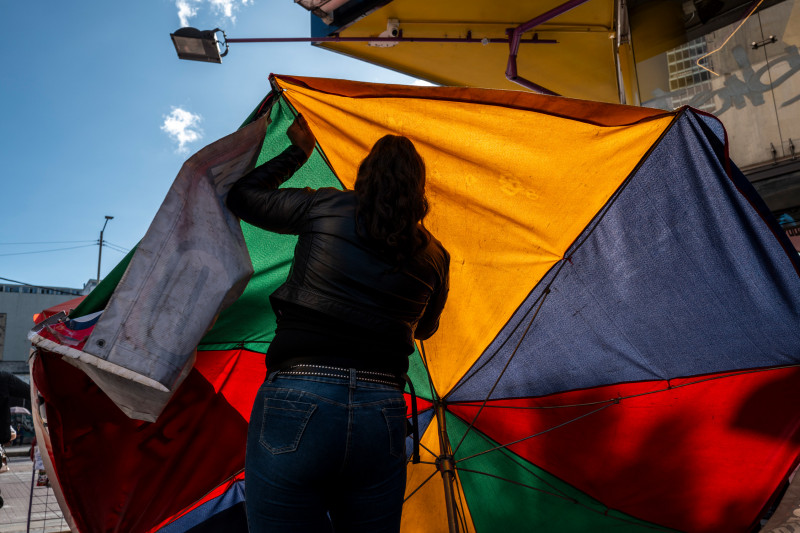
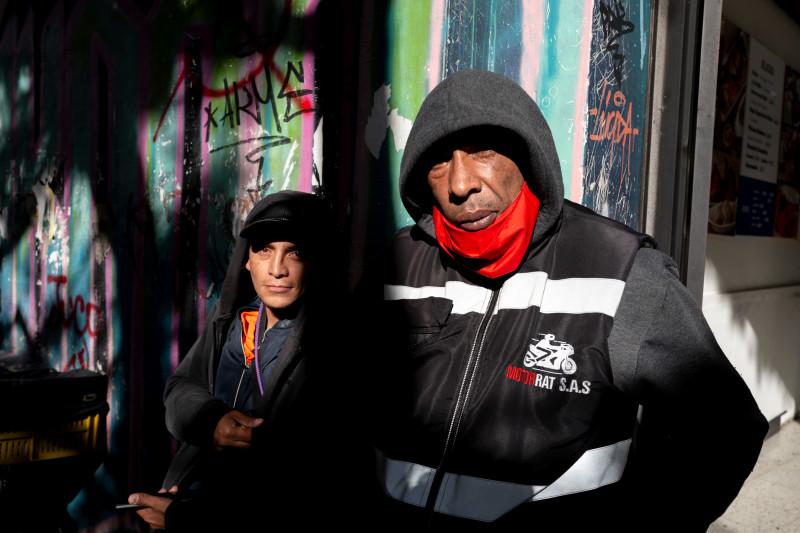
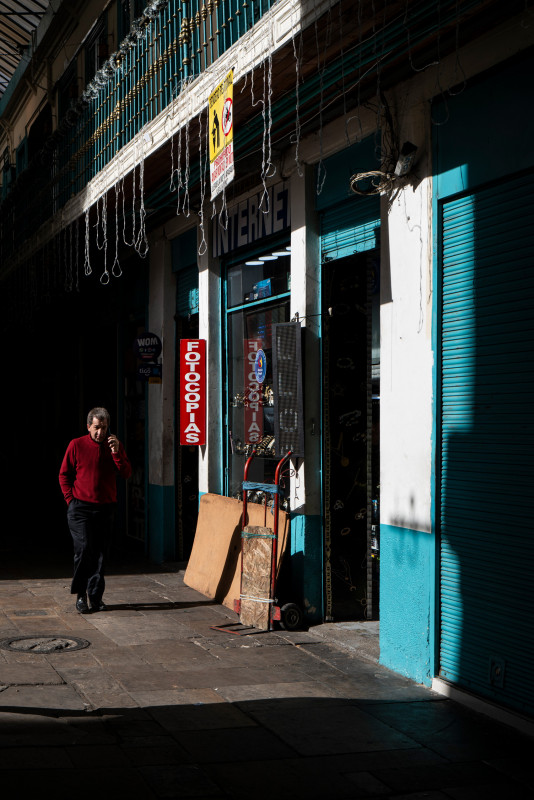
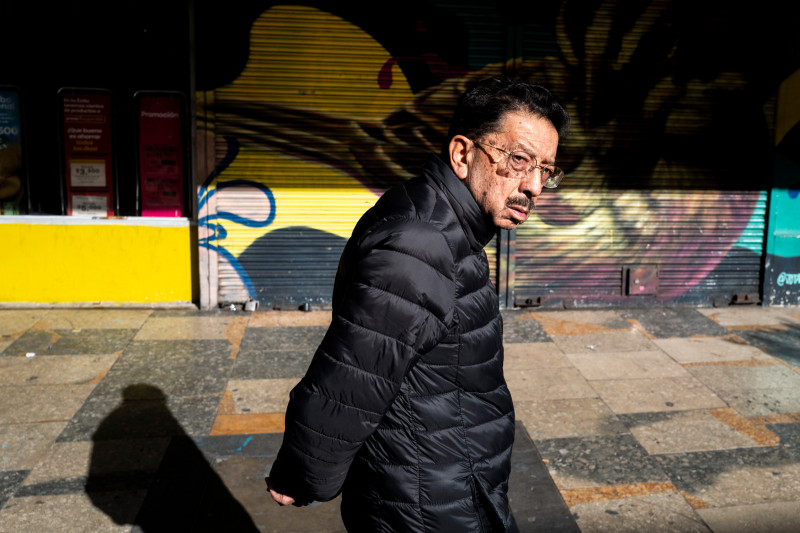
The Colombian photographer reveals his view of Bogotá, a city pulsating in a state of constant change. To do so, he uses his camera as an instrument for inner and outer exploration.
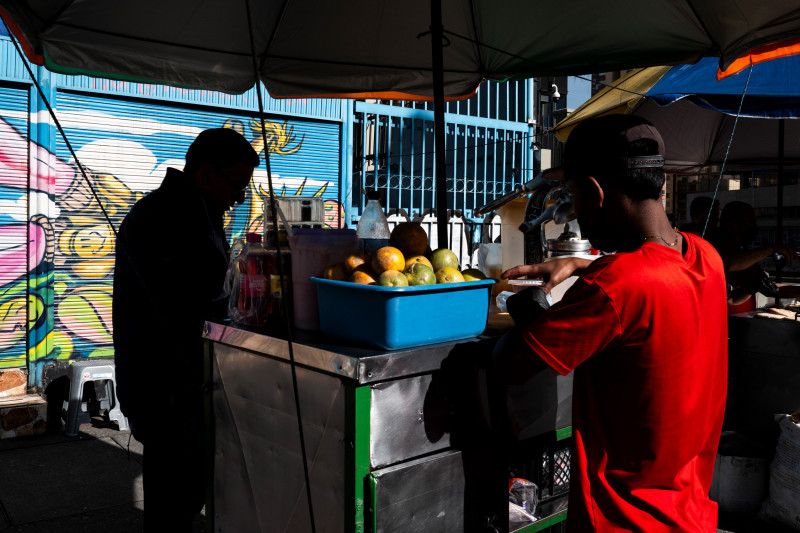
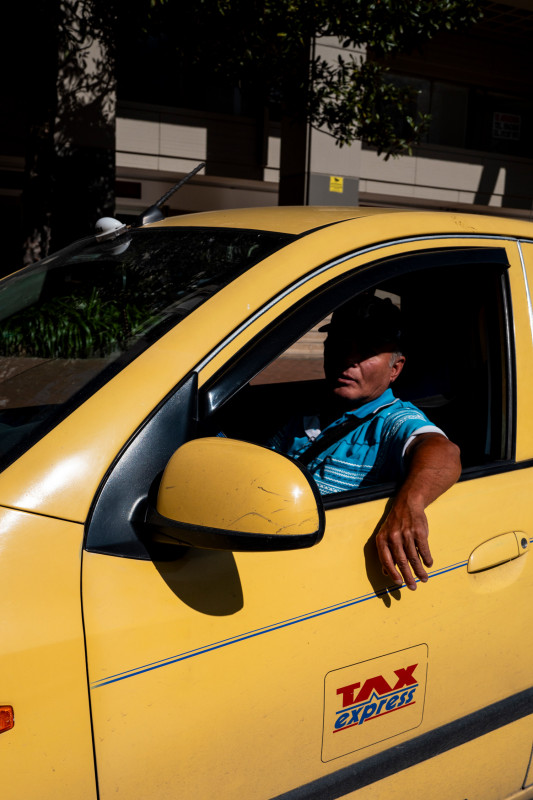
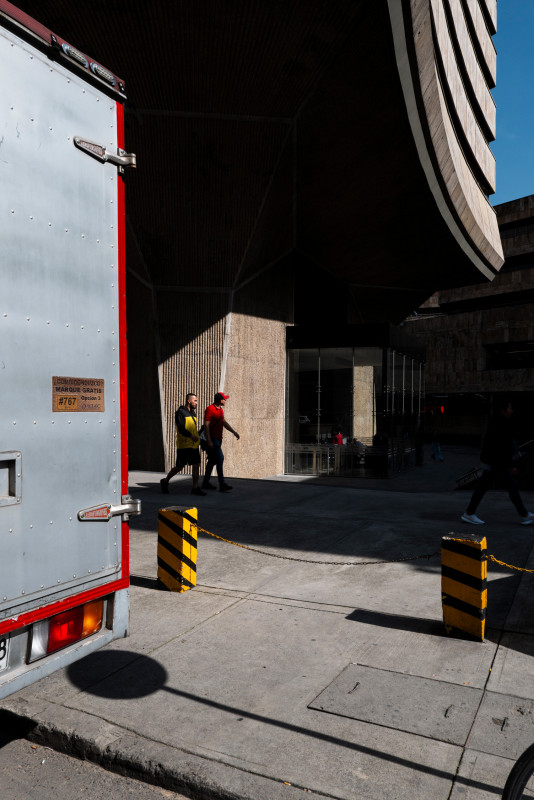
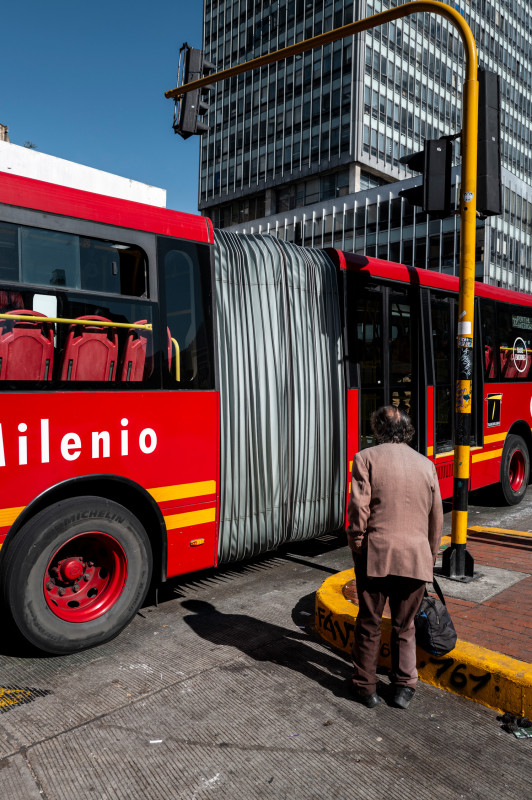
In his home town of Bogotá, Gregorio Díaz finds his motifs on the streets. His work speaks of a vibrant urban organism, but also of his own artistic quest, which constantly yields new perspectives. With his precisely composed images, Díaz paints a picture of the capital that challenges conventional notions. At the same time, his sophisticated interplay of light and shadow highlights the contrasts in this mega metropolis.
LFI: What do you consider most characteristic of Bogotá’s urban identity?
Gregorio Díaz: Bogotá is defined by its contrasts, they coexist in tension and shape its identity.
How do these social and cultural dynamics between Bogotá’s nine million residents shape everyday life?
Bogotá is a complex social map and it all collides in public spaces. There’s a tension that shapes the rhythm of the streets, the way people move around and the way we relate with each other. It’s a city built by migrations from within Colombia, in which there is a huge inequality. Even though it’s a rough city you still find tenderness and a constant cultural appropriation which makes this city one full of contrasts and life. We also live by the promise of progress and development, so there’s a sense that this is a city constantly under construction.
What aspects of street life in Bogotá do you find most compelling to observe?
The way people decorate facades and how they appropriate the streets… The way street vendors arrange objects and colours in their own compositions makes the urban space anything but neutral. It’s also really compelling to see the streets awakening early in the morning, to watch the city slowly come to life…
How do you continue to find inspiration in a place you’ve known for so many years?
I find inspiration whenever I encounter new artwork, films, or photographers that move me, thus my way of seeing is renewed. These discoveries spark my curiosity and allow me to walk the streets with a different perspective. I also try to revisit my archive and look for the less obvious images… those I once overlooked. I often get surprised by old fixations, which I didn’t fully acknowledge before, and which then become new ways of engaging with my work.
What are you trying to capture or communicate through your images?
A sense of time and place. An emotional and poetic response to reality and everyday life.
Can you describe your working process when photographing in the city?
I let myself wonder and get surprised by the street. For me, photographing the streets began as a creative need. I wanted to create images and the easiest way to do so was to engage the streets and document life in my city. Then it slowly became a therapeutic act in which I try to make sense of my surroundings and how I understand reality. In my work, there’s a constant come and go between documentation and abstraction.
What role do you believe photographers play in shaping how others perceive Bogotá?
They can do so by challenging clichés and pointing out details which often go unnoticed, and can thus offer more variable interpretations of Bogotá.
Pauline Knappschneider
LFI 1.2026+-
In this issue, Severin Jakob takes you on a documentary journey into Swiss space research. Also: impressions by the visual artist Alessia Rollo of the rites and customs of southern Italy; Roland Schmid accompanied East European societies for 40 years; Gregorio Díaz shows the graphic elements of the streets of Bogotá and Mexico City; and the photographer Stephen Shames, who makes injustice, poverty, and racism visible in his work. More
Gregorio Díaz+-
Born in Bogotá, Colombia in 1996, Diaz’s work explores the interface between memory, art and contemporary identities. His Leica serves as a tool for investigation and presentation. His focus lies on street photography, as well as architecture and art photography. The photographer also gives space for audiovisual elements to flow into his work. Díaz has exhibited at the Museum of Modern Art in Bogotá, among others. More