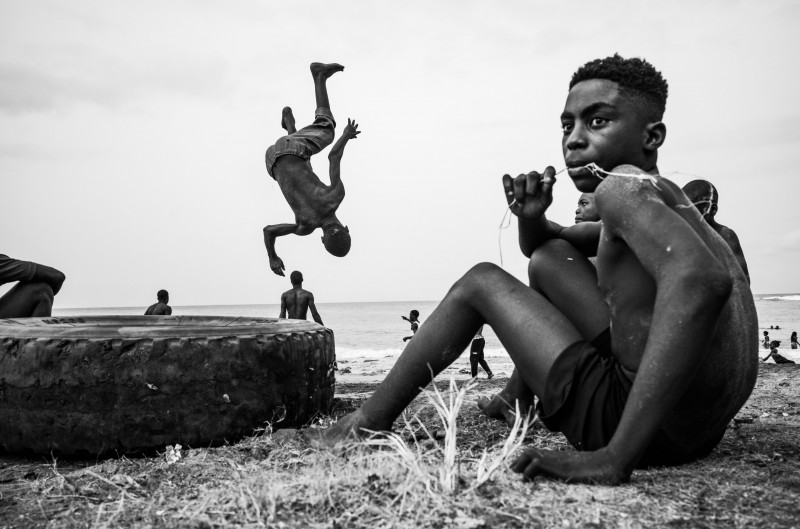
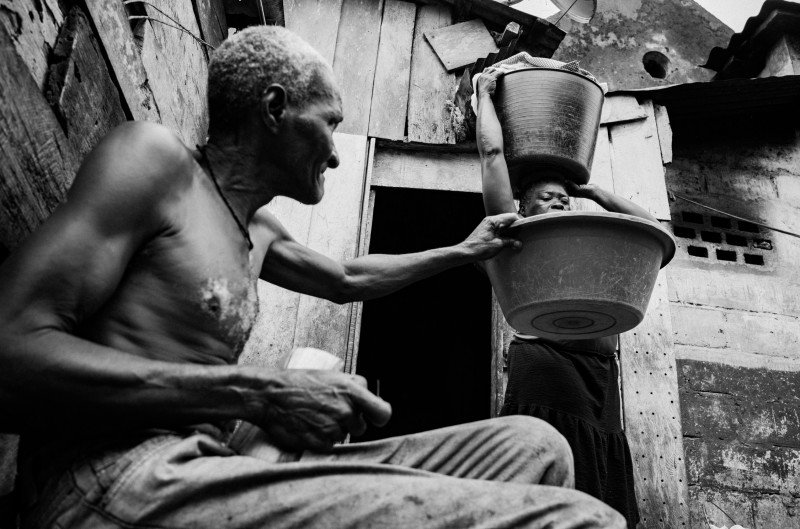
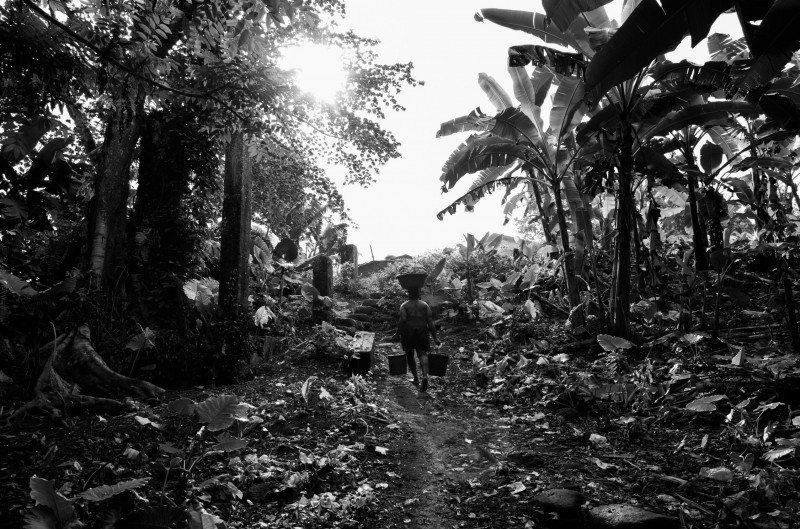
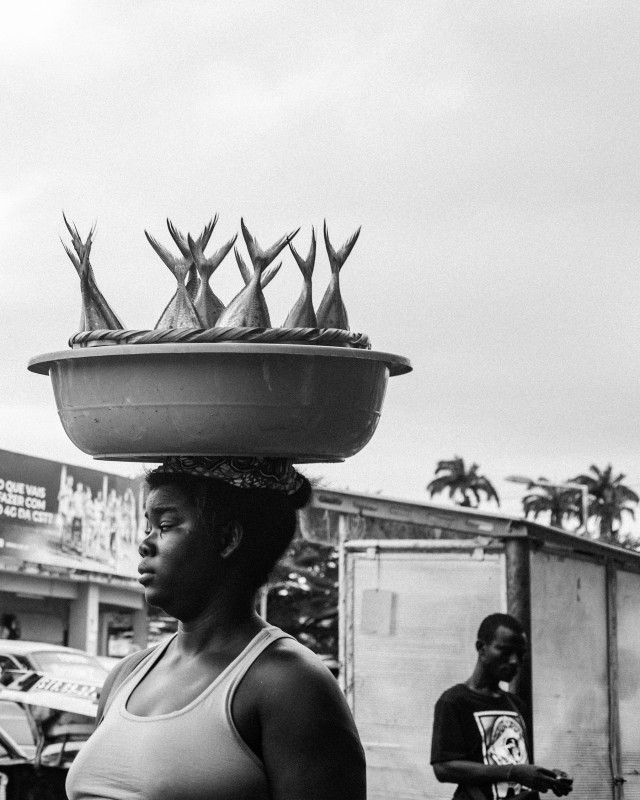
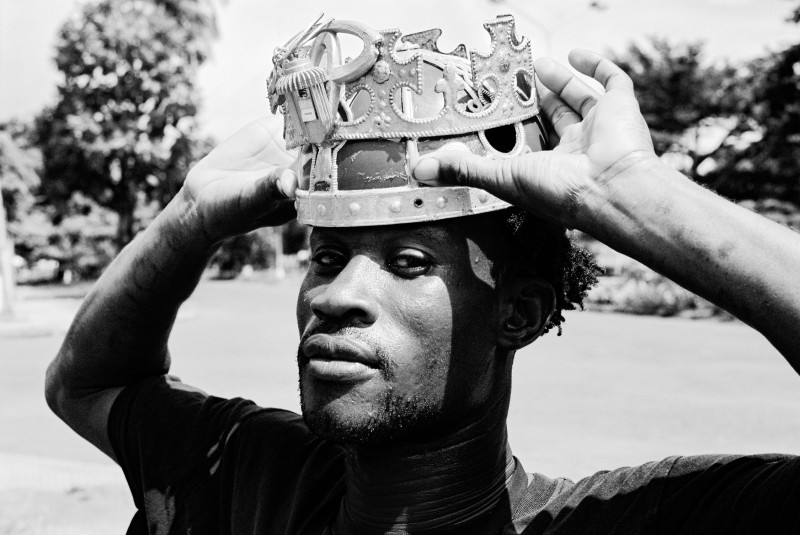
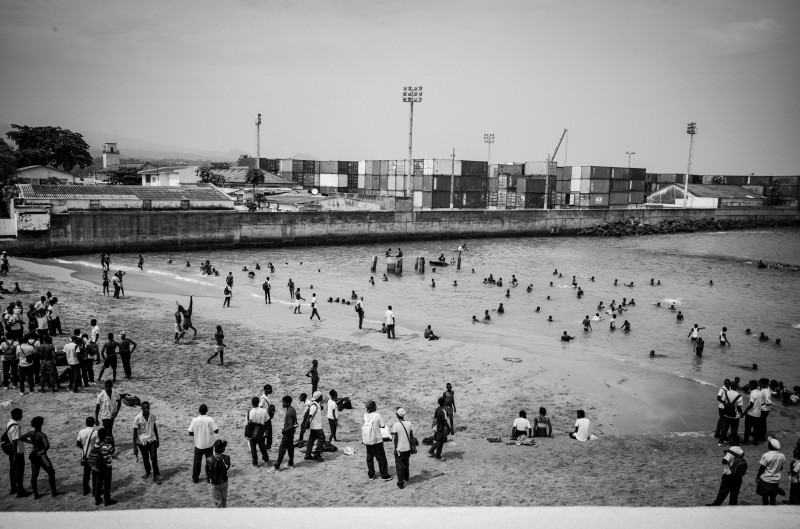
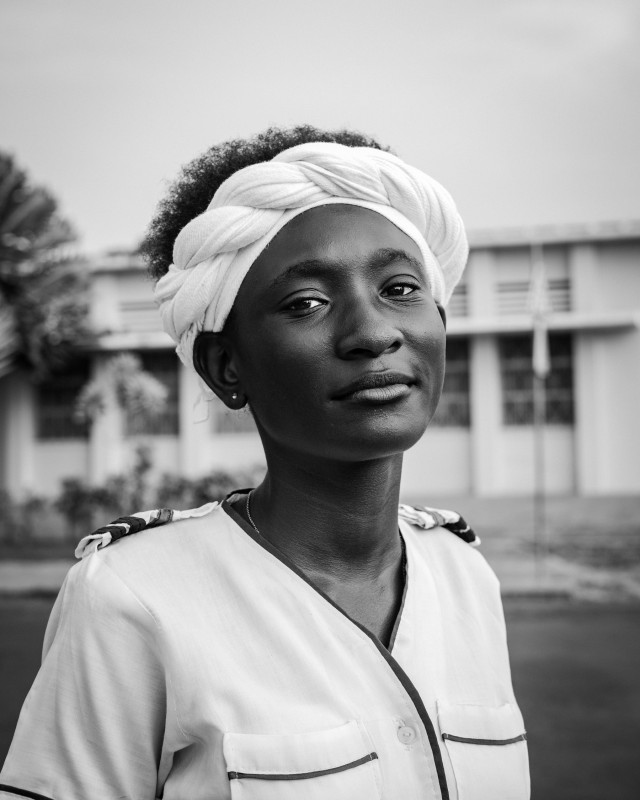
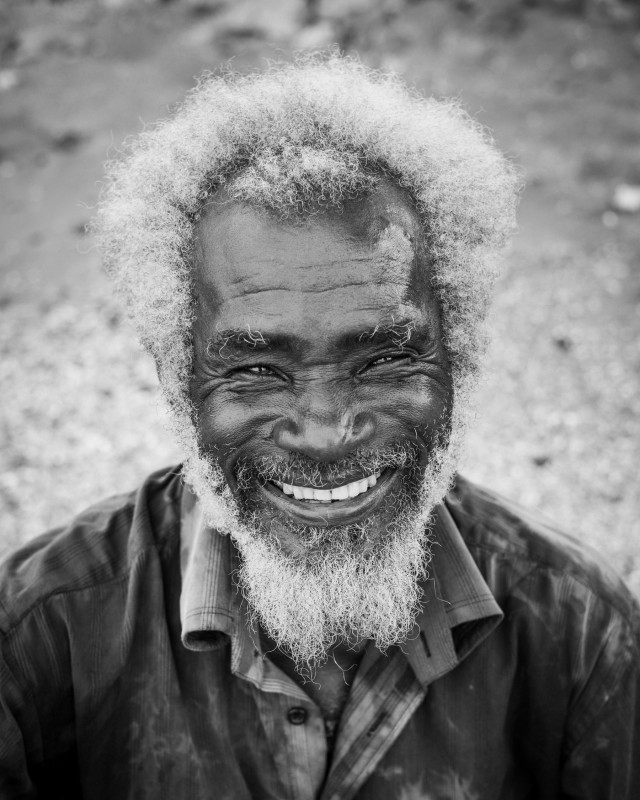
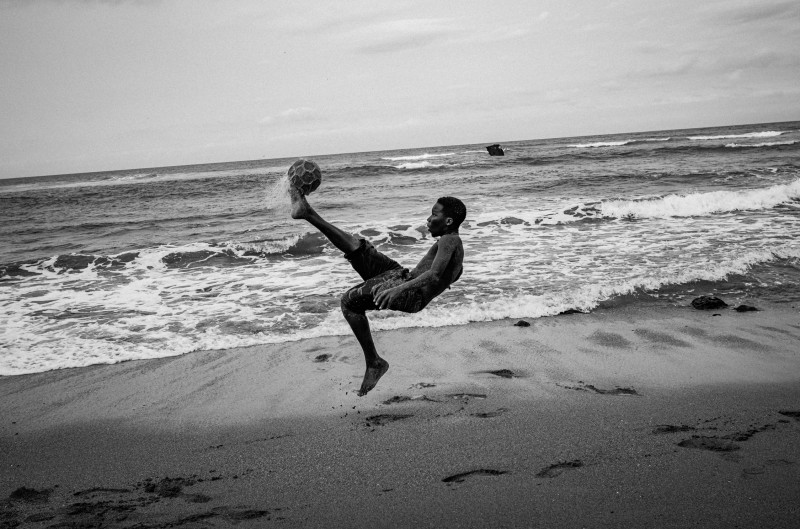
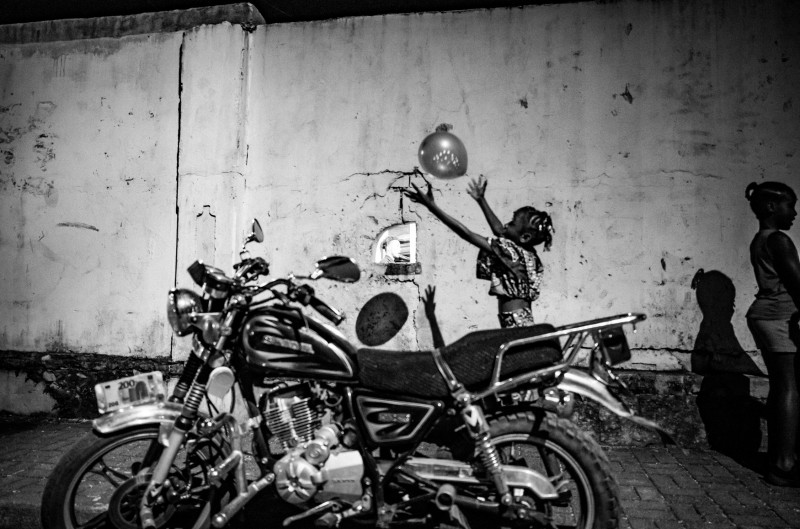
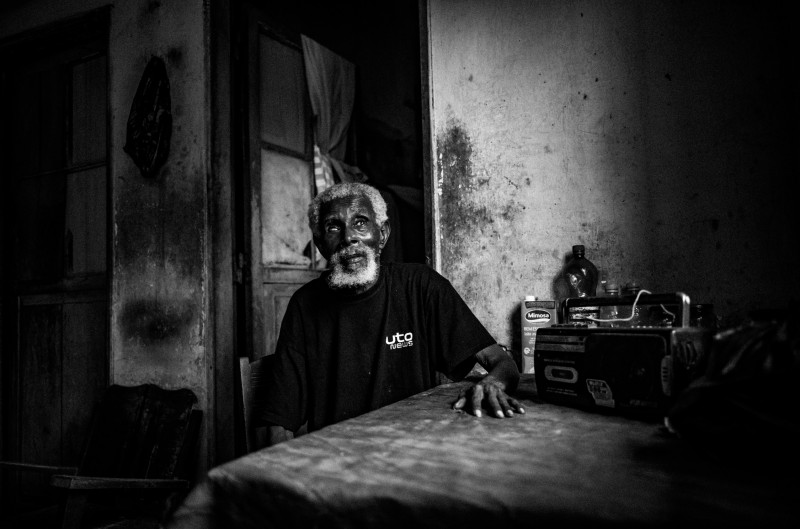
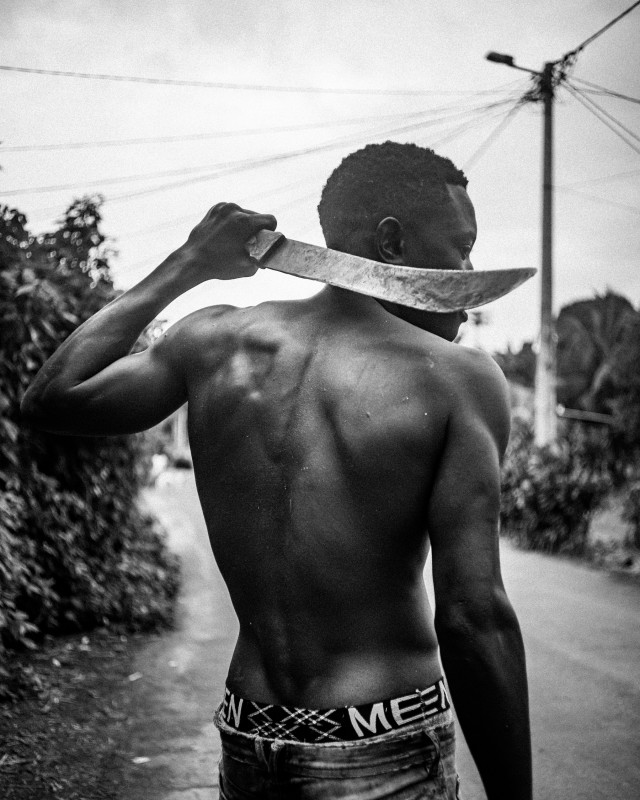
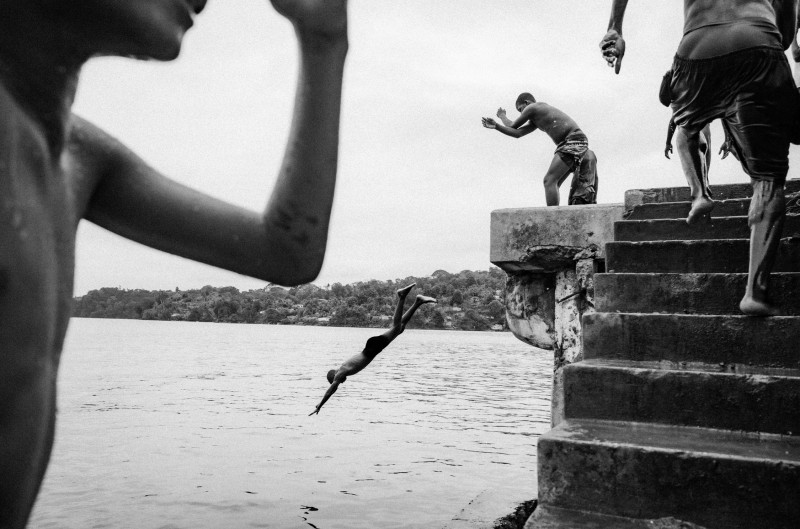
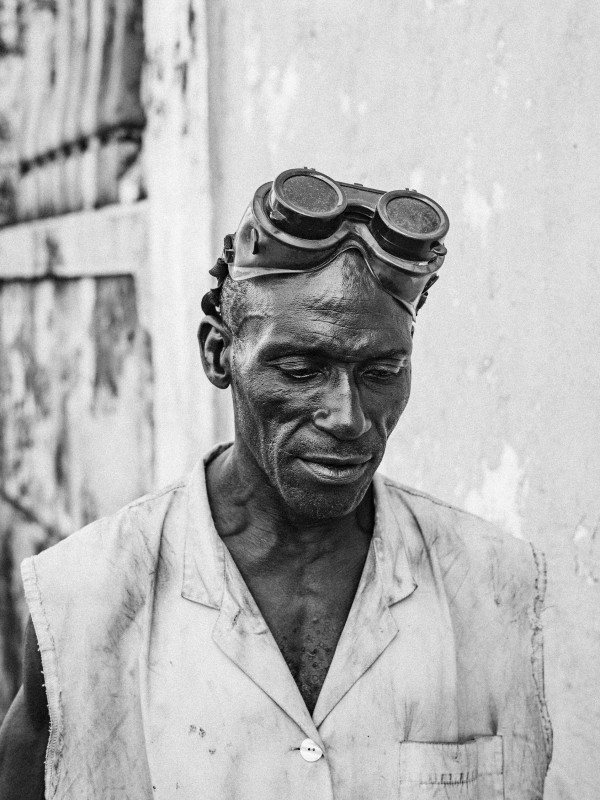
The photographer spent time on the island of São Tomé, in Central Africa. In this warm, sun-flooded location near the equator, he captured intimate moments and meaningful stories – always in the company of a quiet companion: the bright light.
The black and white images in Vollmann’s Independent of the Light series, show the lives of people on the island of São Tomé, from an accessible everyday perspective. In doing so, the photographer reflects on his own position and creates a symbiosis made up of voices, light and movement.
LFI: How did your Independent of the Light series comes about?
Felix Vollmann: Independent of the Light came about during a longer stay on São Tomé. I spent a number of months there, mostly out on the streets among the people. I allowed myself to be carried by the daily rhythm, without an aim, without a plan. For me, it wasn’t about looking for something, but about being open for whatever might happen.
The streets are full of voices, movements, light, dust and heat – an uninterrupted flow of impressions. I watched, listened and let myself be carried along. Sometimes there were conversations, other times just a brief glance, a respectful exchange. It was less of a documentary assignment than a state; an effort to be part of the surroundings, rather than just observing from the outside. I wanted to find pictures that don’t just show, but allow the viewer to feel. Moments in which something universal is revealed: closeness, pride, history, vulnerability. To me it was about giving visibility to life in all its quiet intensity.
Where did the title Independent of the Light come from?The title is deliberately poetic – a small, almost ironic contradiction. The sun in São Tomé often stands high and seems merciless; shade is hard to find. Many would avoid this strong light, but I wanted to deal with it. Instead of controlling it, it was simply allowed to be. It wasn’t meant to be the theme, but rather a quiet companion, because the people themselves are the light.
I consider the light in this series like a breathing body – sometimes harsh and demanding, other times soft and quiet. It says nothing about itself, but about whatever it touches: faces, materials, walls, water, dust. Independent of the Light can be read in two ways – poetically and technically.
What incited you to document daily life for people on São Tomé, and what do you find so special about the setting?
I was on São Tomé on assignment for the United Nations (UNO), in collaboration with the São Tomean government, to make a documentary film about Terra Prometida. It was a project about resettling former residents of the so-called Rocas, settlements defined by colonialism in which descendants of slaves once lived. With the agreement of the residents, a new village was created over a five-year period. São Tomé is rich in history, which weighs heavily but is also full of life. I was fascinated by how people there bring dignity and humour to their daily lives. Everyday life is characterised by an energy full of laughter, midday heat, conversations on the roadside and small rituals. The island forces you to slow down, listen and observe. I learned that true understanding between cultures comes not only through words, but through natural encounters.
As a white European, knowing about the country’s deep colonial history and the still-existing racism (also worldwide), it is of great importance to me to question my stance in my work, and to be aware of the privileges I enjoy.
What do you consider particularly relevant when documenting social settings photographically?
I consider honesty, closeness, presence, respect and understanding are all decisive. Photography is less of a technical approach than a form of mindfulness. I look for moments when people reveal themselves unconsciously, for themselves rather than for the camera. When the moment arises, I capture it, but only when the situation feels right. When I work outside Germany in particular, I’m aware of how important it is to know where I come from, who I am, and what a European-centred eye I have. I am a guest in another society and can never feel the same as the people I photograph. Their stories remain with them. This awareness is fundamental for my work.
Photography can be a weapon if it denigrates people, but it can equally be an open hand that greets, involves, understands, respects and acknowledges. I want to work at eye level, trying to reflect the diverse positions, with understanding and gratitude rather than superiority. Wherever that might be in the world. Even outside my front door. When someone sees my pictures and says, “I didn’t know that, it moves me”, then it’s all worth it.
What equipment did you use and how did it support the project?
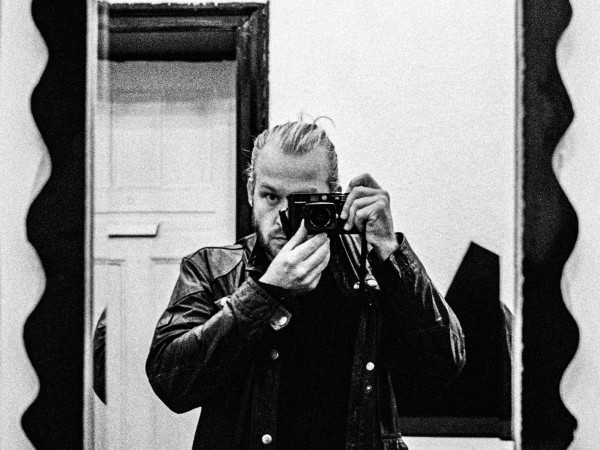
I worked with a Leica M10 Monochrom and a Leica M6. Both cameras require concentration, calm and presence. They don’t relieve you of anything, they demand that you engage with them, listen to them, understand them.
They allow me to move amid people without being noticed. Monochrome reduces everything to form, structure and movement – every detail becomes significant: skin, dust, light, shadow. The M6 reminds me of the patience needed for photography. The M6 helps me make the invisible visible.
Eliza TrappEQUIPMENT: Leica M10 and M6, Summicron-M 28 f/2 Asph, Summaron 35 f/3.5, Summilux-M 50 f/4 Asph
Exhibition+-
As of November 14, Vollmann’s work can be found in a group exhibition at the Kommunalen Gallery at Fehrbelliner Square in Berlin.
Felix Vollmann+-
Vollmann has been working as a photographer and film maker (Director of Photography, DoP) since 2012. He currently lives and works in Berlin. He has worked with governments in Europe (Germany), Africa (Burkina Faso, Comoros, Kenya, São Tomé and Príncipe, South Africa, Mozambique), Asia (China, Vietnam) and the Caribbean (Belize). His photography deals with depicting people in the settings that shape their everyday lives – in urban areas and on the street. He combines portrait and street photography to document social landscapes. More