LFI: What do westerns mean to you?
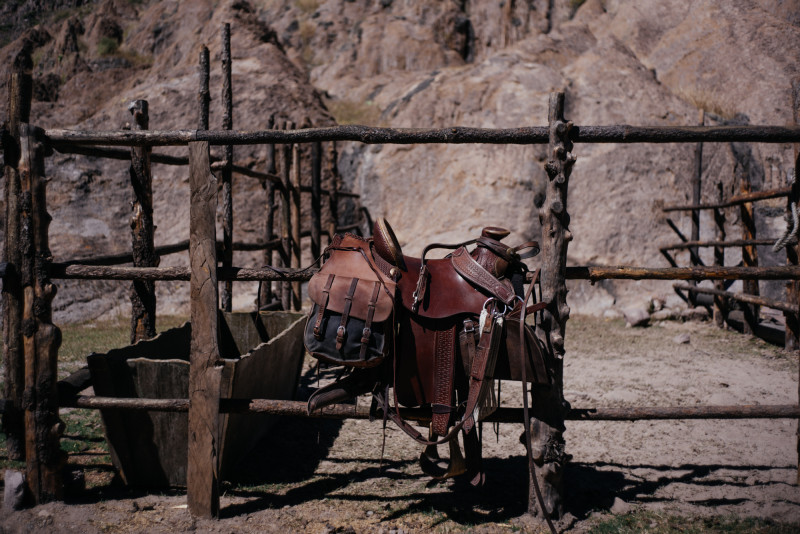
I’m a cinephile, and I’ve always been a fan of westerns. From John Wayne to Sergio Leone, I’ve loved them all. When I heard that this project was being filmed in Mexico, I knew it was an opportunity of a lifetime. I was thrilled to immerse myself in that universe and time period, and to document this massive project. The film was shot in Durango, one of the most legendary set locations, on John Wayne’s film ranch.
How did this project come about?
I received a call from a producer friend with whom I’ve collaborated in the past. Despite my current role as a cinematographer, she proposed I be the unit still photographer for this project. I had previous experience as the USP on other film sets, and this opportunity to work on a grand western with Hollywood stars like Viggo Mortensen truly motivated me to take on this challenging role.
How important is behind-the-scenes for a film shoot; what challenges are there?
Behind-the-scenes photography on a film shoot is crucial for documenting the creative process, engaging with the audience, and contributing to a film’s marketing and branding. As a photographer, capturing the atmosphere, crew, and the creative journey without disrupting the production is a delicate balance. Challenges include managing visibility and invisibility, dealing with lighting limitations, working swiftly in a fast-paced environment, navigating restricted access to angles, and managing the pressure to deliver high-quality images under tight deadlines. Despite these challenges, unit stills photography offers a unique chance to witness and preserve the enchanting magic of film-making.
Moving images meet static images – what does working on a film set look like?
Working on a film set can be incredibly stressful, with many people crammed into tight spaces under a strict schedule. My role as a USP is quite interesting because I manage my workload and can move freely both on and off the set. The most crucial quality of a USP is being invisible, ensuring that I never interfere with the production. I constantly strive to capture everyone’s work and the cast’s interpretation while remaining unnoticed.
What was your photographic approach?
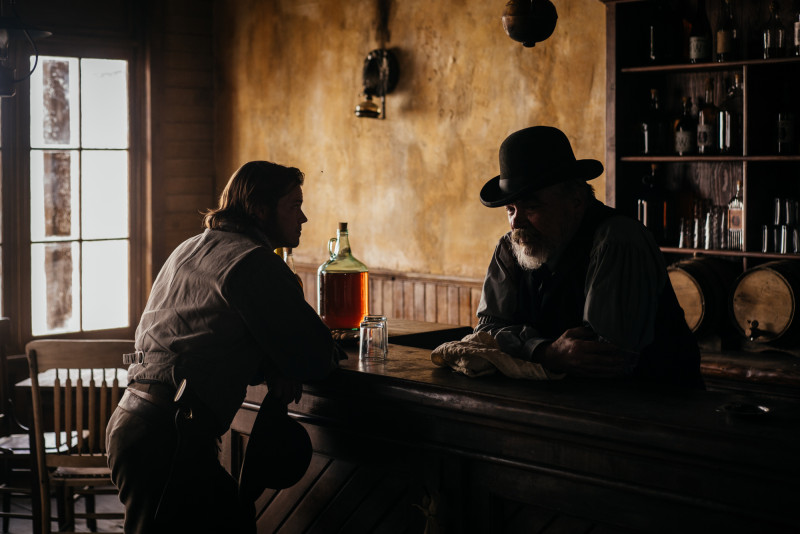
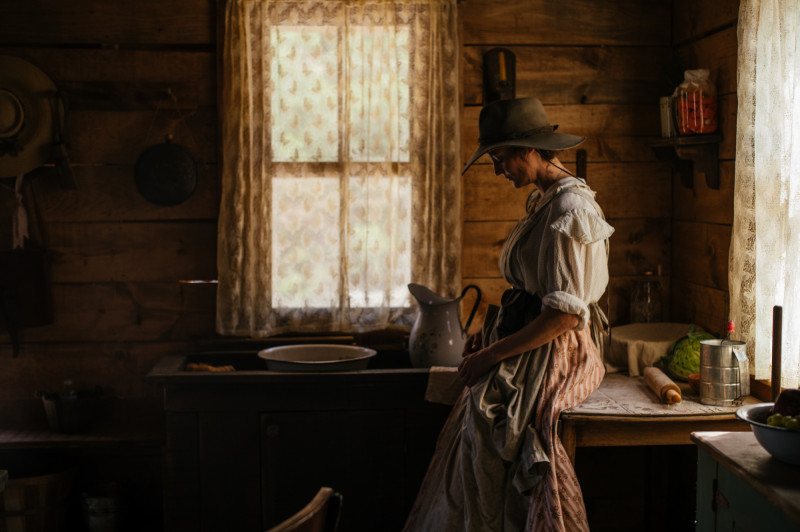
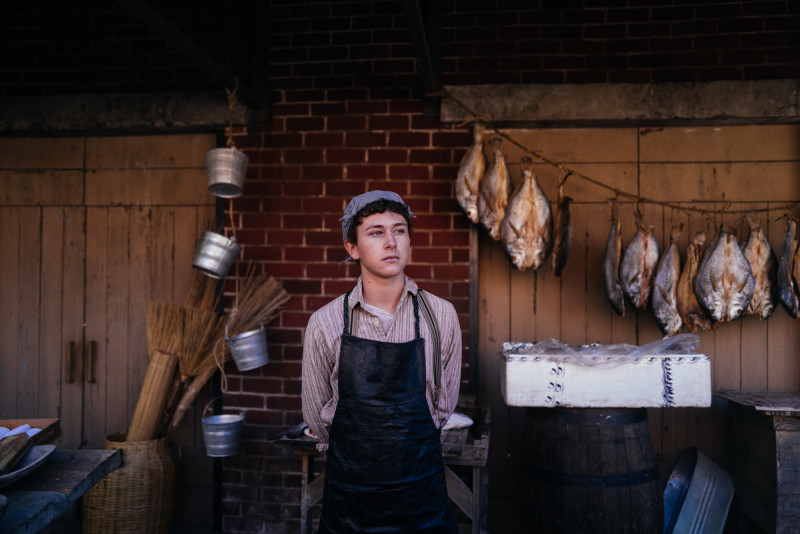
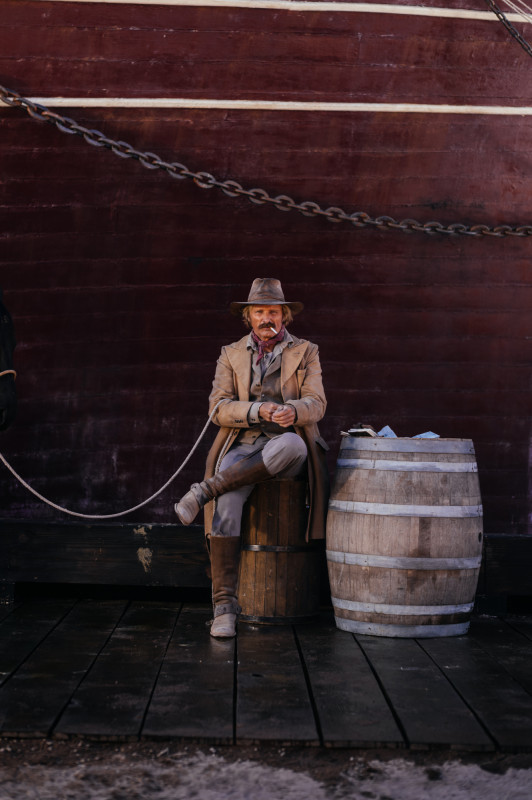
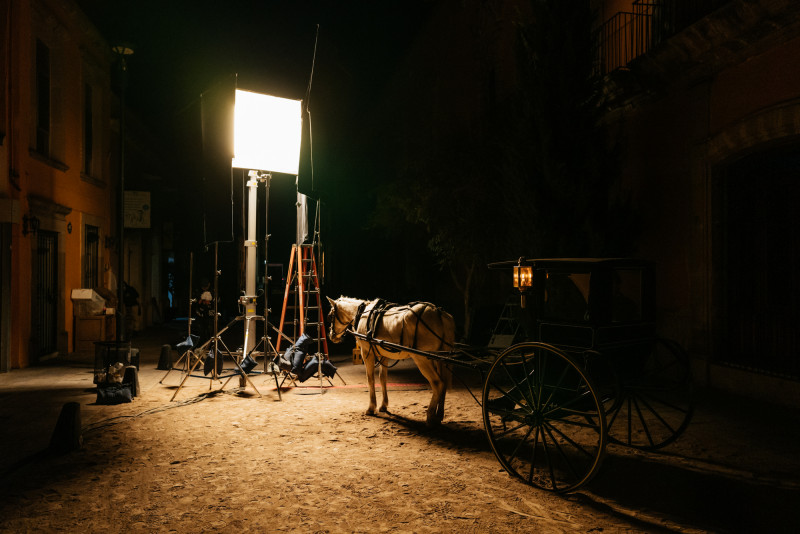
I worked in parallel with Marcel Zyskynd, who was the cinematographer of the film. I focused my photography on his lightning style and framing. My job was to follow his artistic and cinematic vision but to portray it in still photography. I attempted to encapsulate the essence of each scene in a single still frame.
What significance do light and shadow have for your pictures?
Light and shadows are the fundamental elements of my photography. I constantly seek out intriguing framing and explore how the subjects interact with the space and atmosphere. It’s in these interactions that light and shadow play a crucial role, infusing the image with its essence and vitality.
How did the camera work for your project?
I had the chance to try the Leica M11 with a 50mm Summilux Asph lens. I also had a Q2 for capturing wider shots. The M11 was an incredible tool, thanks to its hybrid shutter mode. I usually kept it on the electronic shutter, which made it incredibly silent on set. The 60 megapixels rendered amazingly, and I had the flexibility to crop any images if necessary. Of course, I was a bit reckless to use full manual lenses, but after several years of using the M system, it wasn’t as challenging as it seemed. The M and Q were incredibly practical, compact, and lightweight, which enabled me to move swiftly and discreetly on set.
What is the requirement for a behind-the-scenes image; what should the viewer experience?
In my opinion, the most crucial characteristic of a BTS image is its ability to transport the viewer to the set and allow them to witness the entire production process. It captures a scene or moment behind the film, showcasing how the director and actors move around the set, making it feel real, unlike a movie still.
EQUIPMENT: Leica Q with Summilux 28 f/1.7 Asph, Leica M11, Summilux-M 50 f/1.4 Asph
Daniel Anguiano+-
...is a Mexican film maker who also works as a camera man. Beyond filming, he cultivates his passion for photography and explores personal and everyday themes through his lens. He sees photography not only as an artistic medium, but also as a tool to express his unique view of the world and capture emotional moments. In 2024, he exhibited his series In Praise of Light and Shadow at the Leica Gallery in Mexico City. More