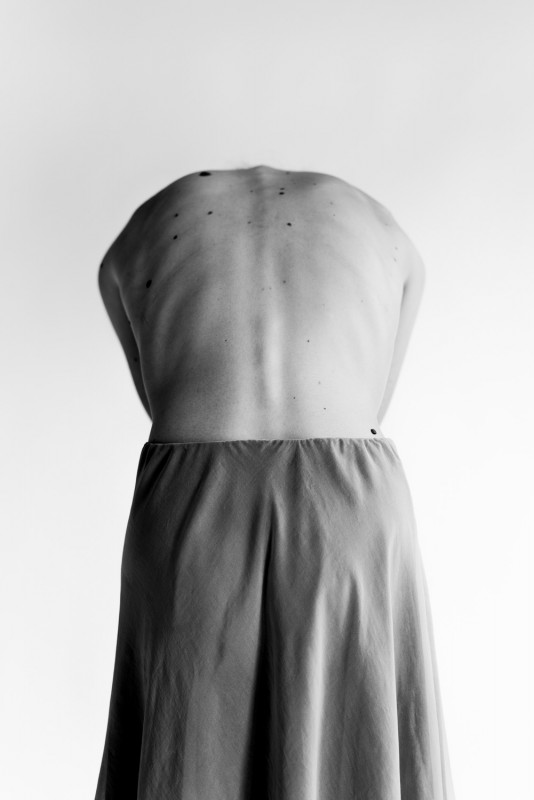
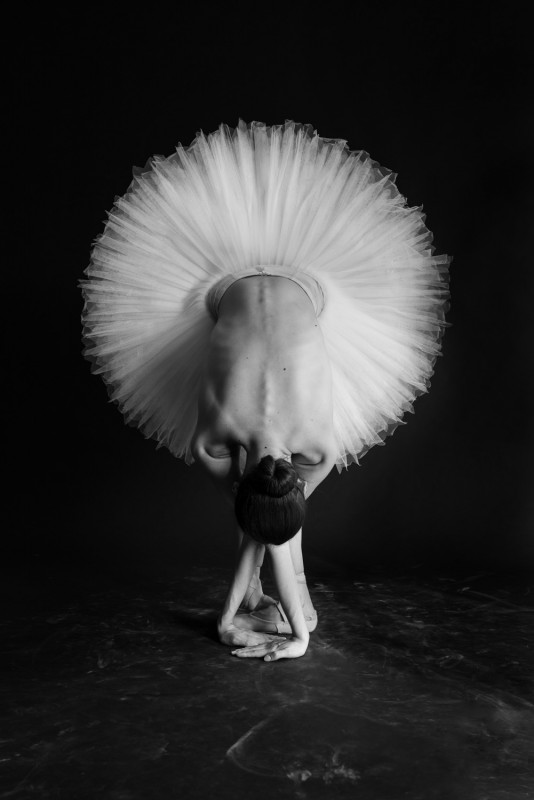
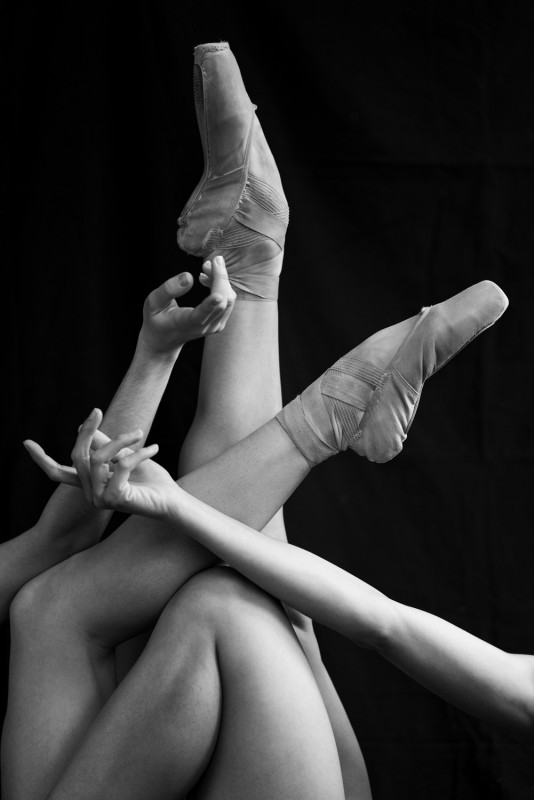
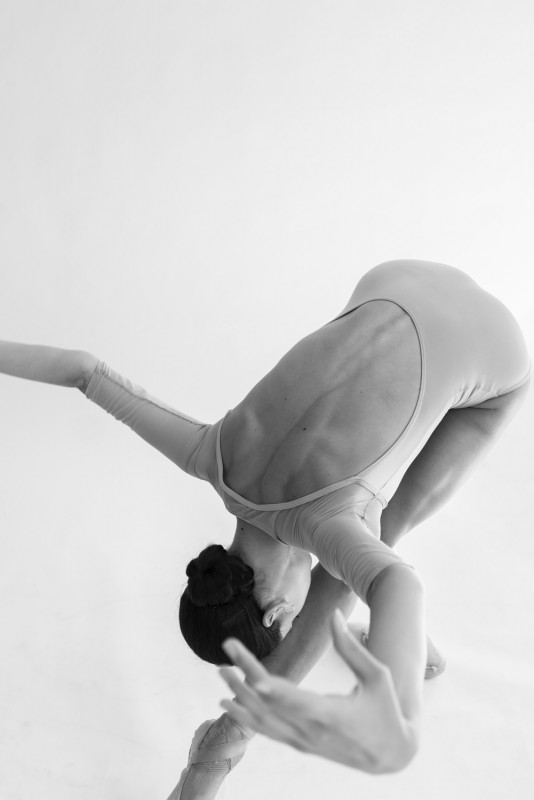
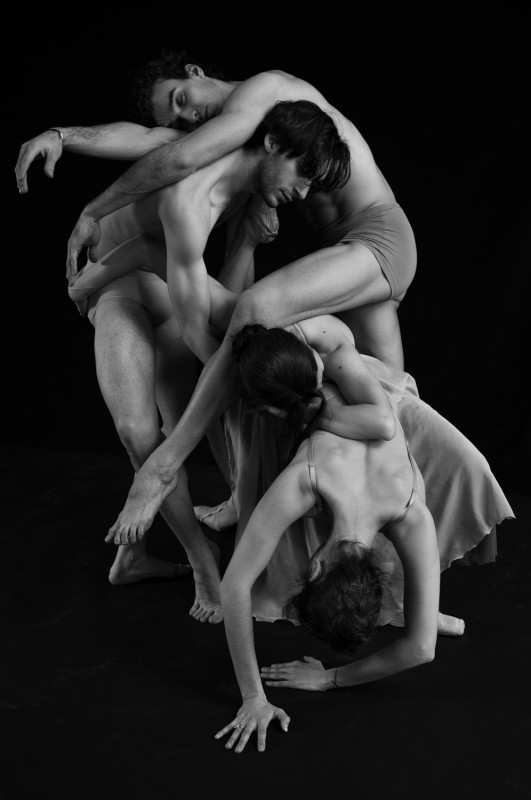
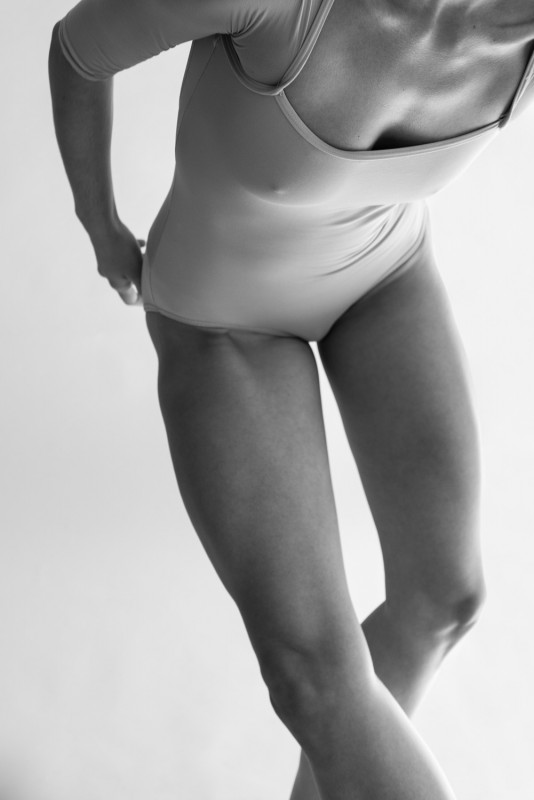
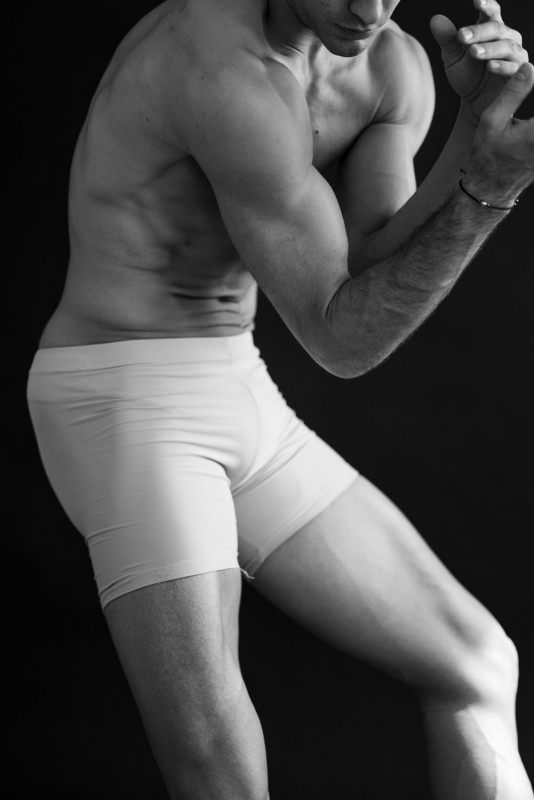
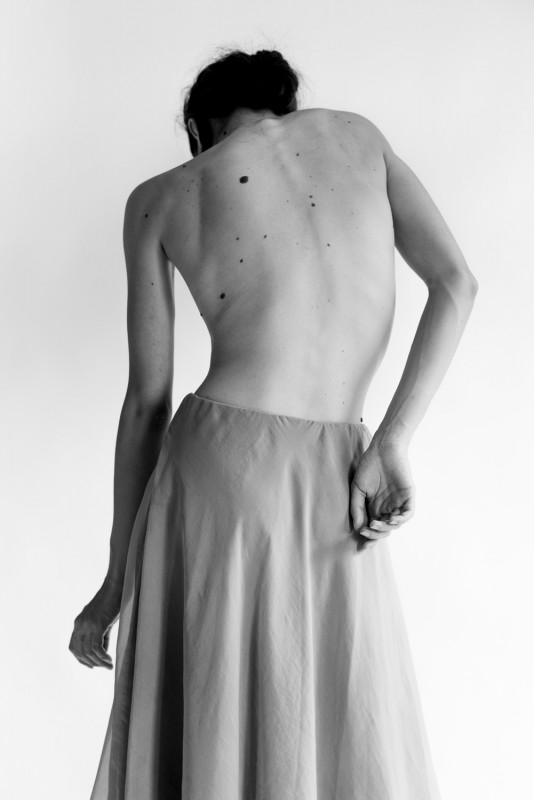
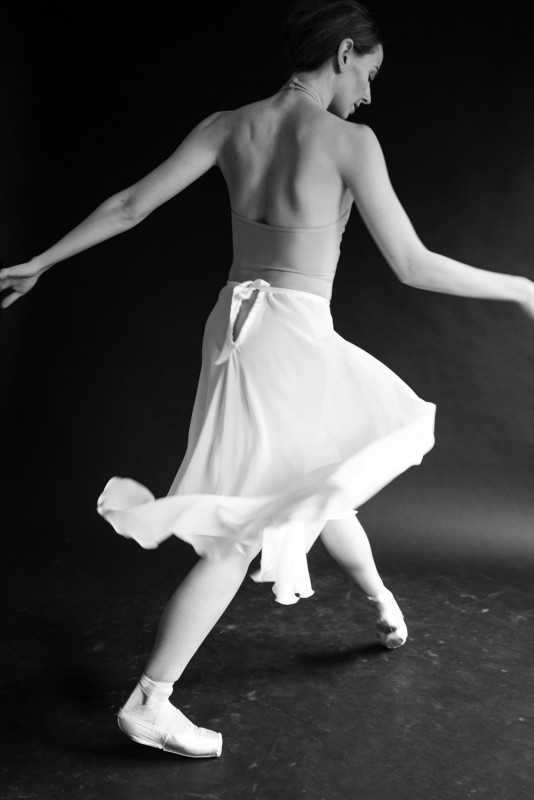
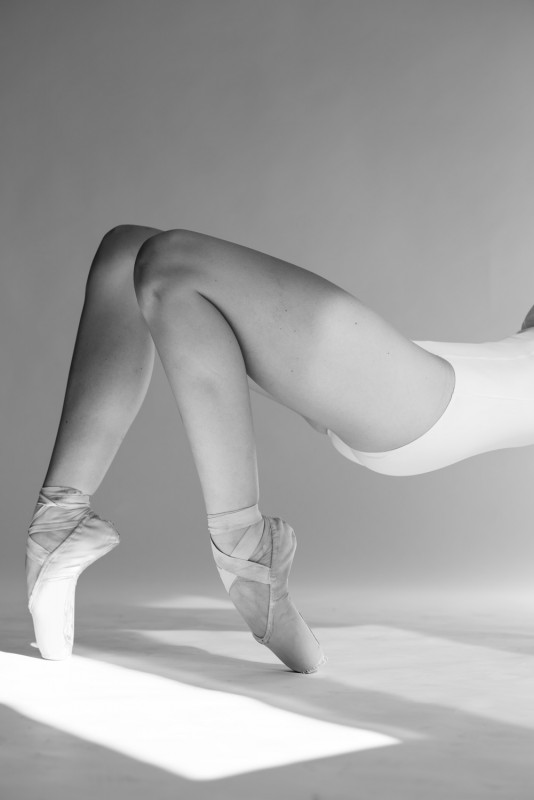
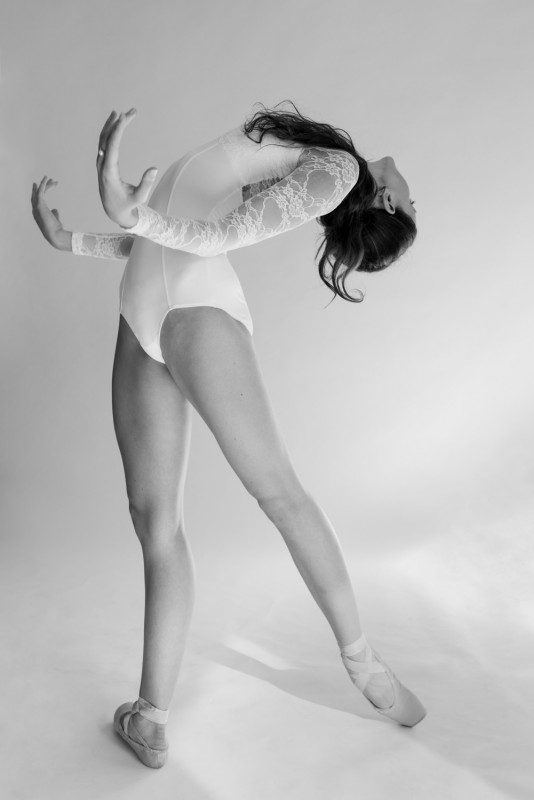
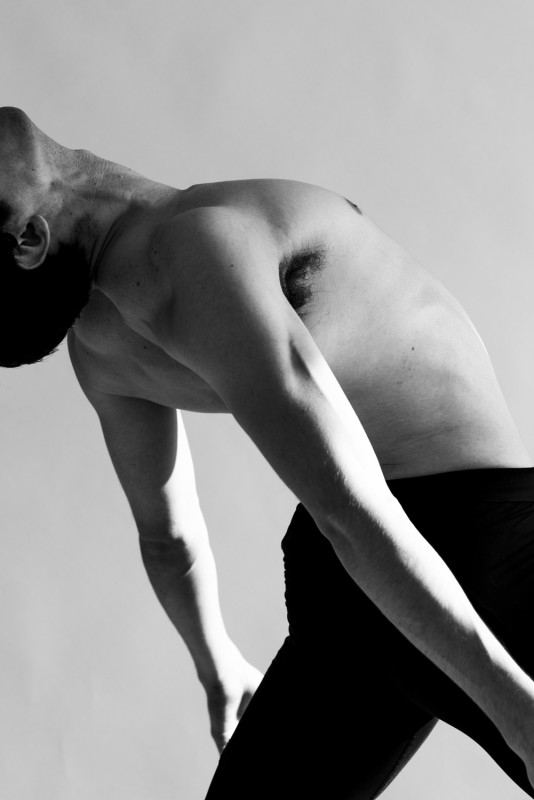
For this series, the German photographer turned his focus to the art of dance and the Stuttgart Ballet ensemble. His images illuminate what takes place in the space between the movements, and they pay tribute to the capacity of the human body.
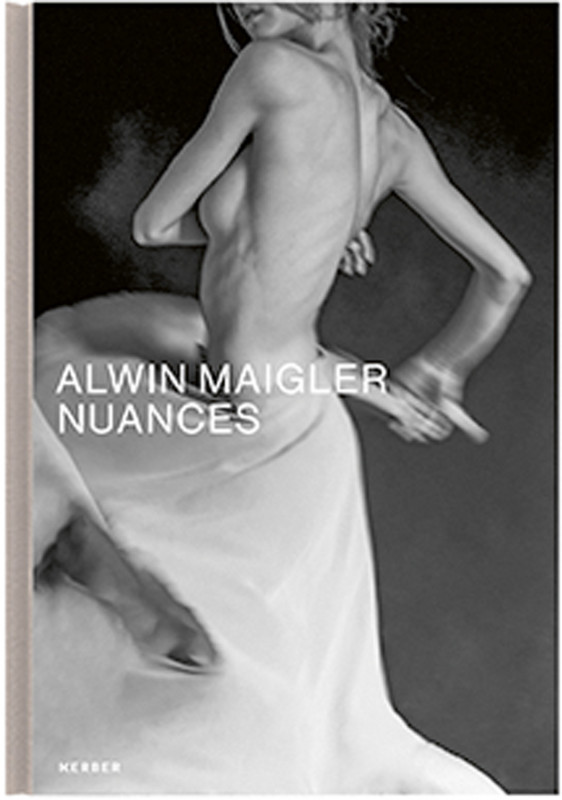
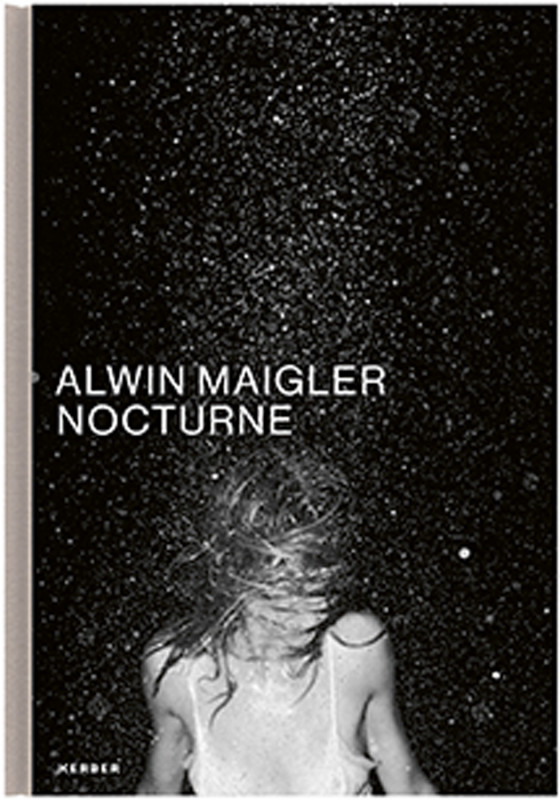
Alwin Maigler photographs movements rather than people, as seen in the Nuances series shown here, and the Nocturne series found at lfi-online.de. When he first began to focus his work on the spaces and moments between movements, he was confronted with the paradox of portraying a transient medium such as dance, using a static medium like photography. “I turned this paradox into the subject of my research.”
Maigler began working on the series in 2022, during the pandemic. While life had mostly come to a standstill, he decided to move on with his idea of portraying creatives and cultural professionals. He connected with the Stuttgart Ballet ensemble, among others. In retrospect, the enforced break proved to be a lucky opportunity because under normal conditions it would have been almost impossible to fit in hour-long photo shoots during the ensemble’s busy working day. Maigler invited dancers to his studio, where they performed in front of a white or black background. “A black background underlines contrasts, while white accentuates tenderness and lightness. The decision when to use a black backdrop or a white one was made spontaneously,” Maigler remembers.
When taking the photographs, Maigler focussed on the sculptural quality of the bodies. “Colour, backgrounds and faces – these are distractions from the essential. All these elements fall away, so as to get to the core of the issue. It’s all about dance, which is defined by bodies and movement.” When composing his images, Maigler followed a reduced purist, and natural approach, working predominantly with natural daylight flooding the studio from a window on the right. “For a couple of motifs, I did use a mixture of flash and available light or constant light, combined with longer shutter speeds, to be able to capture certain dynamic movements,” he explains. To assure flexible reactions, he sometimes held the flash in his hand rather than putting it on a tripod.
His own actions were calm, though on occasion dynamic, depending on the movements of the dancers. “I didn’t work with poses, but from within the movement itself, which makes me different from other photographers,” he emphasises.
In addition to the movements, Maigler focussed on the dancers’ physicality and the figures. “By deliberately leaving out the faces in most of the pictures, a certain kind of alienation occurs that gives the figurative aspect of the body more strength. Consequently, you concentrate more on what’s happening in the image. What’s more, I wanted to break away from stereotypical and habitual ways of seeing, and not just depict aesthetic bodies. That’s why, for example, I also show a male torso in a vulnerable pose.” He attached value to a balanced gender ratio as another important aspect: “The work is desexualised”, which clearly distances him from any suspicion of voyeurism. Compared to his Nocturne series, Maigler has reduced his photographic signature and personal style for Nuances, in order to maximise the stage for these movements. “It’s capturing the moment in the space-time continuum that produces the magic.” Working in collaboration with photo technician Mario P. Rodrigues, Maigler produced his 1/1 editions of each photo in an analogue, historical carbon double-transfer process on 600 gsm paper. “Everything is done by hand, from the extraction of the pigments to the retouching with a brush.” In this manner, he brings to life what Walter Benjamin focussed on in his 1936 essay, The Work of Art in the Age of its Reproducibility, namely the aura of a work defined by its uniqueness. “At the molecular level it wouldn’t even be possible to reproduce the prints.” Maigler’s pictures want us to gather in front of them, to dance towards them in real life, as a statement in our visually inflated days.
Carla Susanne ErdmannEQUIPMENT: Leica M11 Monochrom, Leica SL2, Apo-Summicron-M 35 f/2 Asph, Apo-Summicron-M 90 f/2 Asph
Alwin Maigler: Nuances+-
184 pages, 112 duplex-images
22 × 33 cm, English
Kerber
Alwin Maigler: Nocturne+-
216 pages, 163 duplex-images
22 × 33 cm, English
Kerber
LFI 2.2025+-
This story is taken from LFI magazine 2.2025. In this issue: Selected Leica Galleries worldwide celebrate Leica’s 100th anniversary with a special concept: in twelve exhibitions, a young talent pairs with a Leica Hall of Fame winner. Details in this issue. Also: Nicolò Filippo Rosso documents Sudanese refugees in Chad, Alice Pallot warns of algae infestation impacts, Leica Classic Marvin E. Newman showcases early color photography, and Alwin Maigler honors the human body in dance. More
Alwin Maigler+-
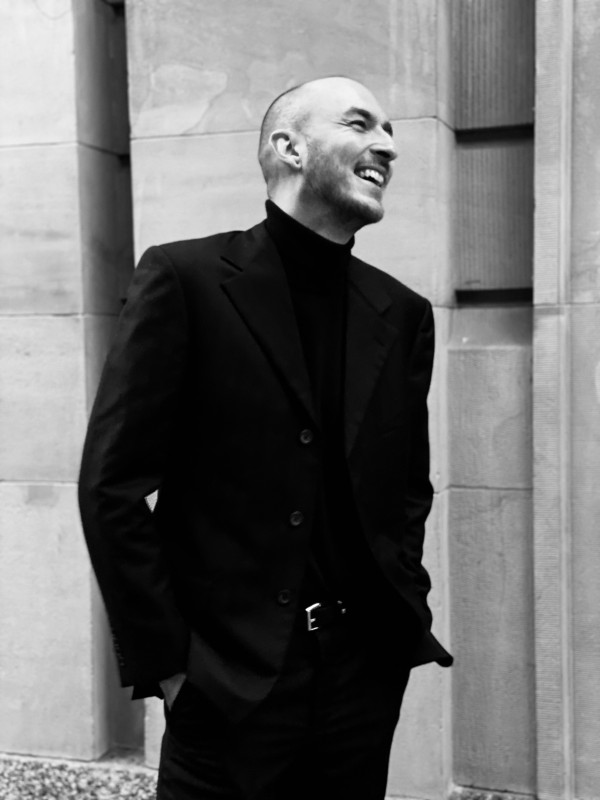
Born in 1996, Maigler is self-taught and works in portraiture, fashion and art. In 2021 he became the youngest professional in the history of the BFF (Professional Association of Freelance Photographers). He was appointed to the German Society for Photography in 2023 and is about to graduate in Communications Design from the State Academy of Fine Arts in Stuttgart. His work is exhibited and purchased internationally. More