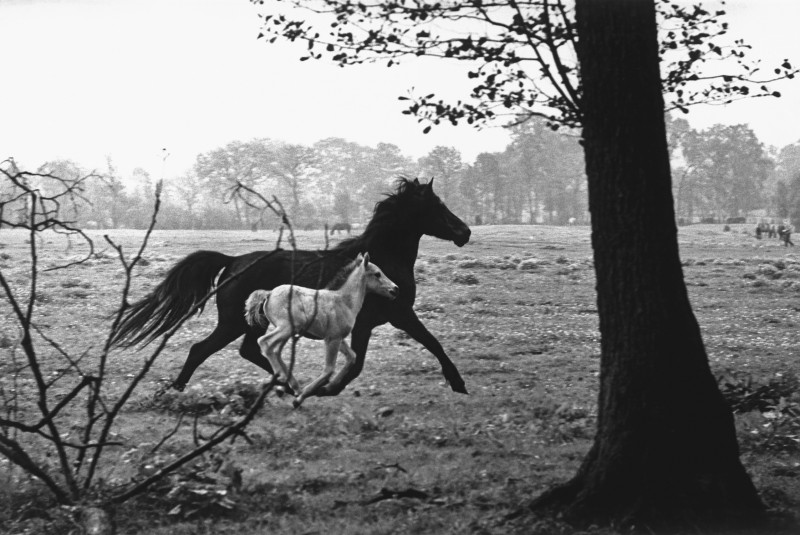
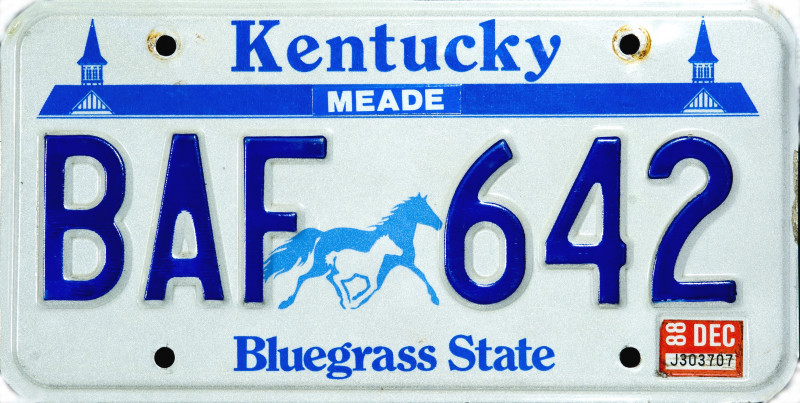
One particular image was to make him famous even while still a student. Mare with Foal has long been an iconic photograph. Although photojournalist produced thousands upon thousands of pictures during his long career, his name is still primarily associated with this early, unique snapshot.
One morning in May 1963, the photographer was on hand with his Leica M3 near Dülmen in Westphalia, when a herd of wild horses was being rounded up, to capture the one-year-old stallions for a coming auction. An hour earlier, the photographer had been wandering around the area and spotted a mare grazing with her foal. “Sheltered by a tree, I photographed the two from a safe distance at the edge of the forest, without them noticing me,” the photographer recalls.
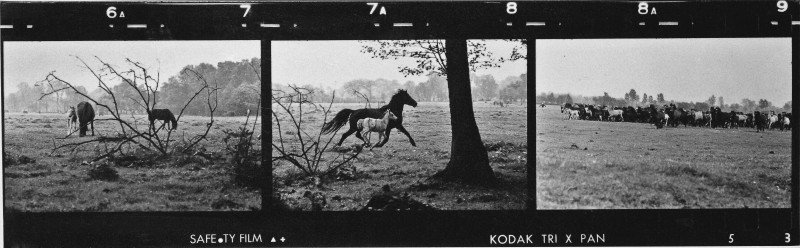
The contact strip of his Kodak Tri X film not only shows how sparingly Thomann photographed, but also proves that there was only this one unforgettable moment that led to the special image of harmony between the two horses. As more people approached the paddock, “the mare felt disturbed, trotted away and instinctively took the foal away from the danger,” Thomann says, describing the situation. “The foal galloped to keep up. I followed the running animals through the rangefinder of my Leica, then pushed the trigger just once: it was the precise moment when the foal had closed its legs and was exactly aligned with the mare’s body. That was the decisive moment. In a fraction of a second, I had taken the picture of my life.” The next shot on his film shows the herd at a distance from the photographer.
Intuition, attentiveness, technical precision, foresight and a large dose of luck had come together in an unprecedented combination. No wonder Thomann quickly gained recognition for this unique photograph: in December of the same year, it won first prize in the Features category at the World Press Photo Award, and was also voted Best Picture by the public at the accompanying exhibition in The Hague. After that, “it went around the world and I didn’t receive any more letters. No other picture triggered so many emotions,” says Thomann.
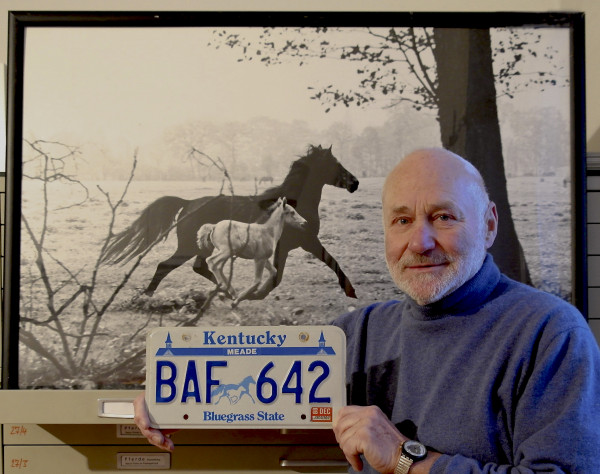
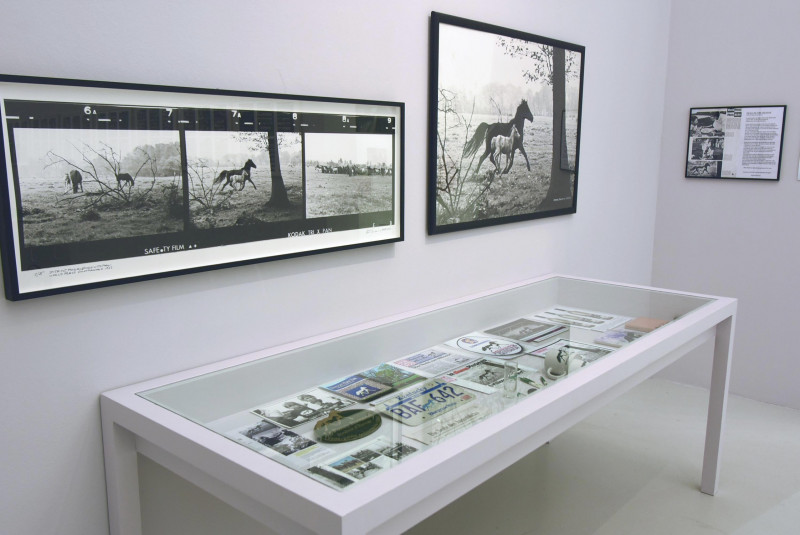
However, it was not just emotions that accompanied Thomann over the following decades. There were also financial questions surrounding copyright issues and strange usages of the classic image. In 1996, the motif was even included in the Guinness Book of Records and declared the most copied photograph in the world. To date, the photographer has collected all manner of finds that have used his image motif. Whether on book covers, T-shirts, mugs or horse farm advertisements, the picture was more or less successfully copied countless times, produced with all kinds of artistic techniques. Even the license plates of the American state of Kentucky featured the iconic image until a few years ago, when the copyright dispute was finally settled in Thomann’s favour.
“I had a good feeling when I pushed the release on my Leica M3, and I was sure that, within 1/250th of a second, I had secured a good picture. However, everything this picture triggered over the following years was beyond anything I could have imagined,” as the photographer’s retrospective resumé explains. The story behind the image has long become worthy of exhibiting, perhaps precisely because of the appreciation of the analogue, perfect moment.
Ulrich Rüter
LFI 6.2025+-
Issue 6.2025 of LFI presents a portfolio of Thomann’s work in the magazine’s Leica Classic segment. More
Peter Thomann+-
Born in Berlin on July 2, 1940 as the son of a metal sculptor and a painter, he grew up in a home where creativity was encouraged. After his parents’ studio was destroyed in the bomb raids of World War II, the family moved to a small town in Germany’s Breisgau region. He trained as a photographer’s apprentice (1956 to 1959) before studying under Otto Steinert at the Folkwang School in Essen (1960 to 1965). A few years of freelance work followed. From 1968 to 2005, he was a staff photographer at Stern magazine. Today, he splits his time between Hamburg and Breisgau to manage both his own archive and his parents’ artistic estate. Thomann’s work has been recognised with numerous awards, and is housed in many international museum collections. More