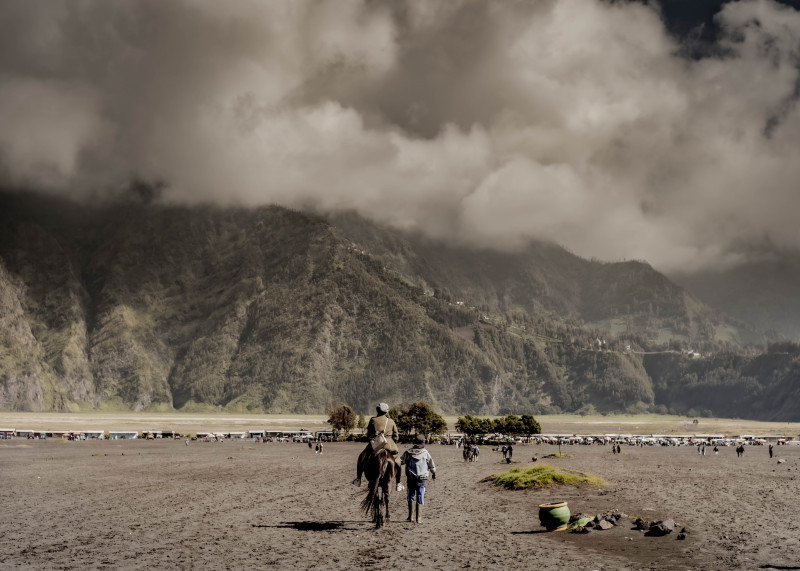
For some, the Indonesian volcano is a tourist attraction – for others it is a place to earn a living. Mount Ijen is a smouldering, toxic crater of haunting beauty and extraordinary appearance. In his reportage, The forgotten miners of Mount Ijen, Lieven Engelen documents the probably last generation of sulphur miners: tourism has gained the upper hand and is writing new rules.
LFI: How did the idea for this project come about?
Lieven Engelen: The idea happened by accident. I was staying in Bandung, Indonesia, working on a project about the release of 40 long-tailed macaque monkeys by the Jakarta Animal Aid Network or JAAN, for short. That project got delayed because of government regulations. Having a ton of time suddenly, I was online and stumbled onto the story of the sulphur miners of Mount Ijen; and immediately got hooked. I flew to Banyuwangi, East Java, and got in touch with a local guide who introduced me to one of the miners’ family.
What exactly does the work of a sulphur miner entail – and what fascinated you about it?
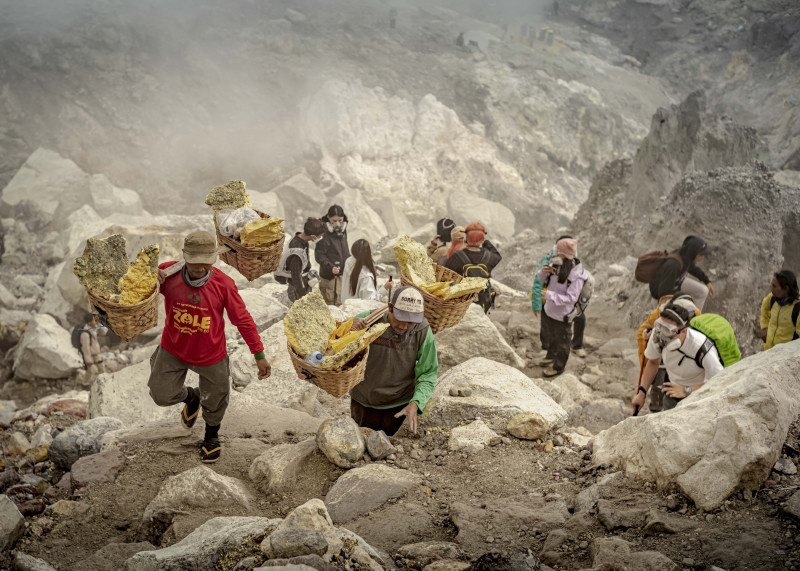
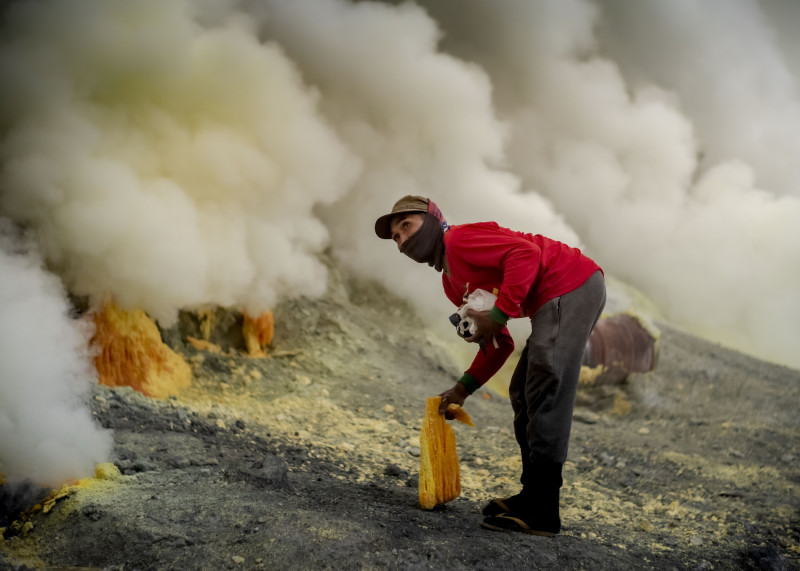
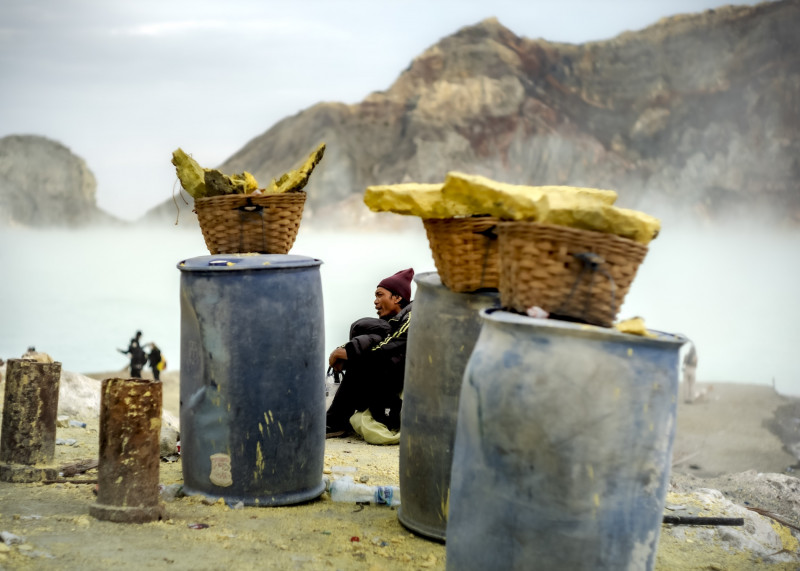
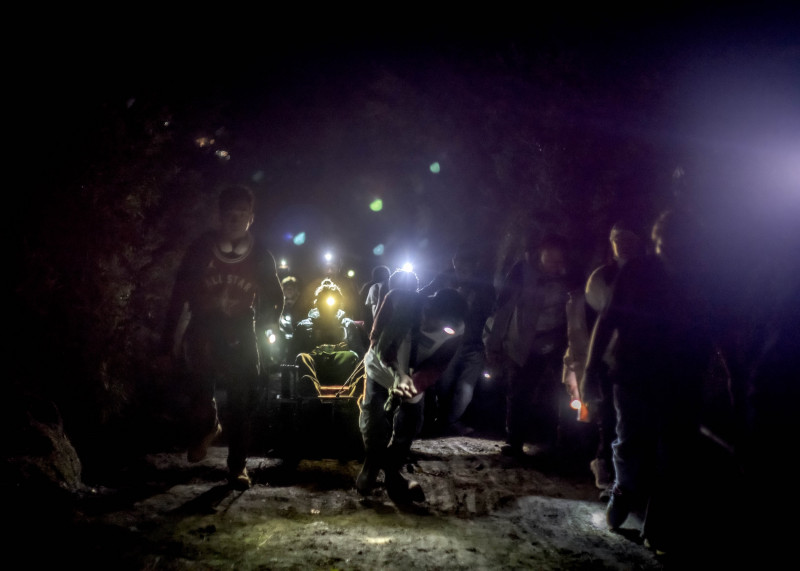
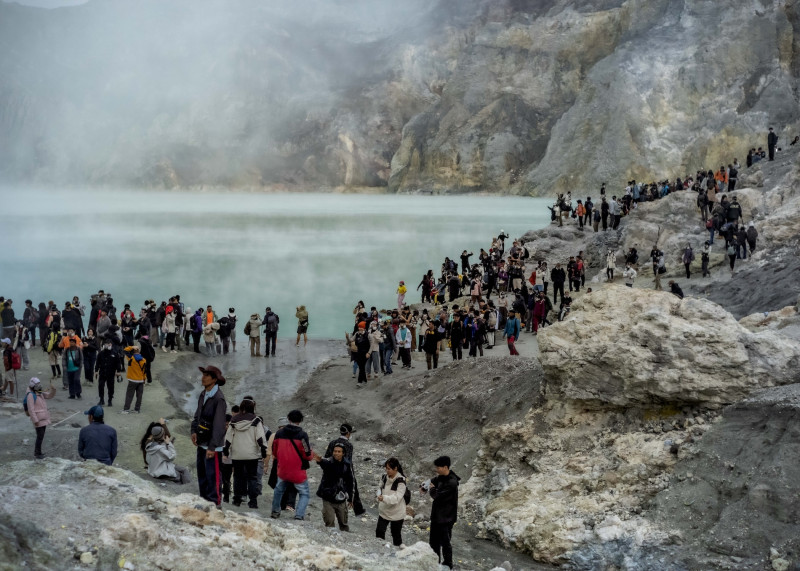
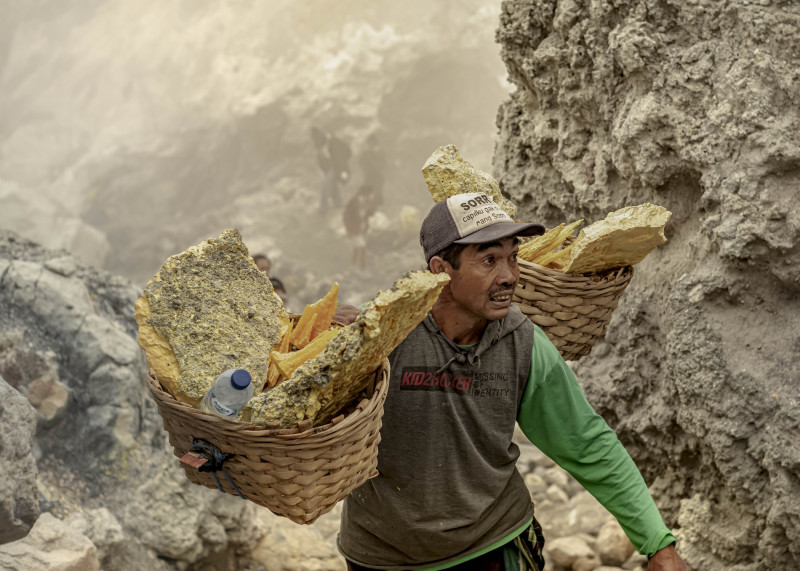
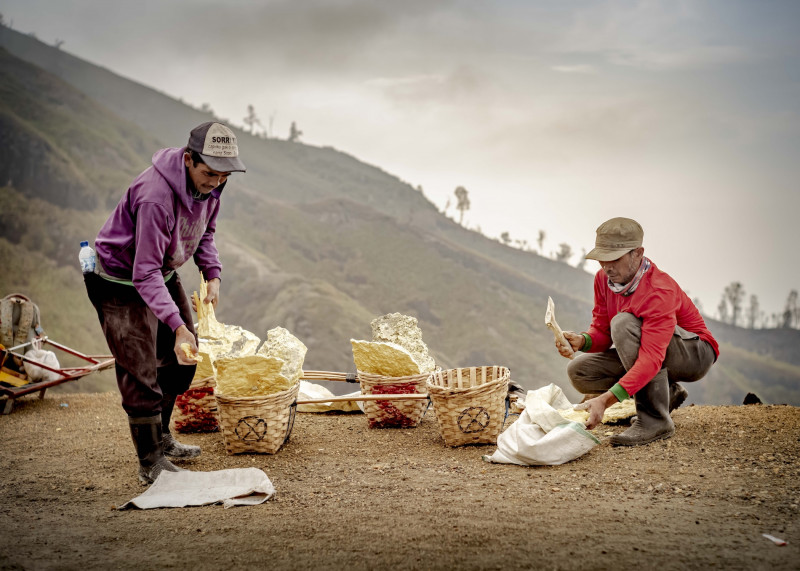
Since 1968, the sulphur miners of Mount Ijen have ventured into this rather unpredictable labyrinth of gas clouds and superheated solfatarics – volcanic vents emitting sulphurous gases – to extract what is locally called ‘Devil’s Gold’. Enveloped in toxic fumes and heat, miners will chip away at hardened blocks of sulphur. After they have harvested enough of the ‘gold’, they will haul the bright yellow material in wicker and bamboo baskets weighing up to 80 kg each, to take it back down the slope where it will be sold to a Chinese company. They earn a meagre 10 to 15 euros a day. As for fascination, Mount Ijen’s extraordinary landscape and vistas have captivated travellers for centuries. Its half-mile, turquoise crater lake takes on an eerie glow in the darkness. Deceptively beautiful, it’s the largest acid lake on Earth. And has a pH lower than that of battery acid – toxic enough to dissolve metal. Even so, Mount Ijen’s smouldering toxic crater remains hauntingly beautiful and an extraordinary sight to behold.
What was your photographic approach, and what challenges did you face?
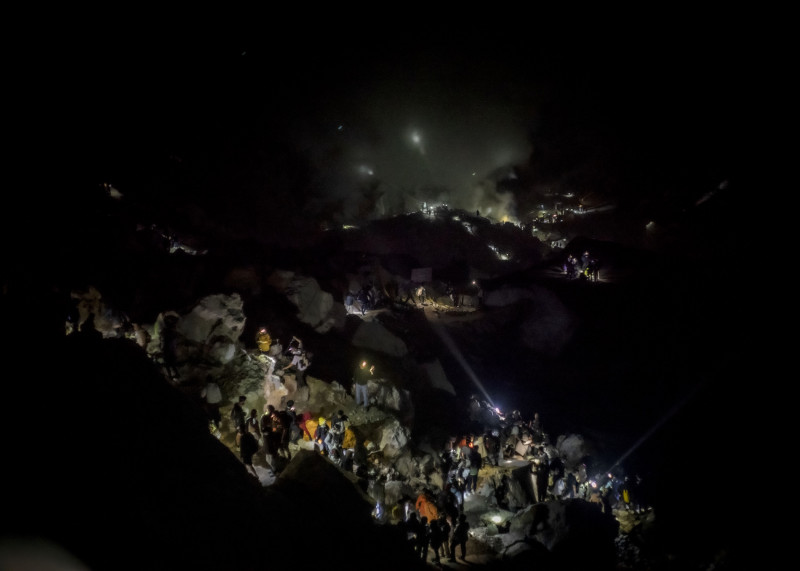
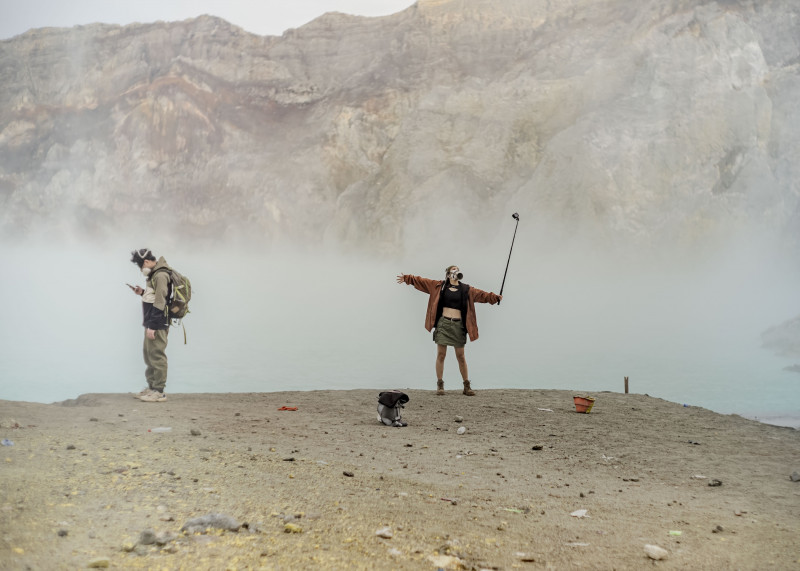
Walking up the steep slope of Mount Ijen at night was a challenge of its own. It was physically exhausting. The moment you reach the top you have to descend into the 800 meter deep crater. Navigating difficult rocky terrain among hordes of tourists who are elbowing their way into the crater, all in search of that elusive Instagram or Tik-Tok post, ignoring the local sulphur miners along the way. Once in the crater, the highly-concentrated levels of sulphur dioxide fumes can lead to breathing difficulties. Without protective gear it would have been impossible. The Leica is an excellent companion in this kind of situation. Its size makes it non-intrusive, allowing you to move around without being burdened.
Can your series be understood as a social criticism?
In a way it is. But it’s up to the viewer whether he or she engages with the proposed work. In the end, when hordes of tourists – into their hundreds if not thousands – quite literally elbow their way into the crater, and in doing so push out the sulphur miners, there is obviously something wrong. Although Mount Ijen has been a blessing for the local tourism industry, it has been less so for the sulphur miners who don’t speak English and whose only knowledge, ironically, relates to Mount Ijen.
You took colour photographs...
I love black and white photography for its simplicity and directness; but colour also has its own qualities. There’s no rule as to why or when. I think every project sets its own parameters. You can’t impose. It’s guided by the journey you’re undertaking. Sulphur took me back to my childhood and the magic I felt every time someone lit up a match. It was as simple as that.
Your series is about the “forgotten miners”. Do you consider photography a form of remembrance culture?
For me, photography is about the past, present and future. It’s a snapshot into what was, what is and what is to come. A reflection of the times we’re living in – from documentary to conceptually-driven photography. Given the present challenging times where nobody really seems to know what’s coming at us, real, authentic photography will play an even bigger role then it used to.
Katja Hübner
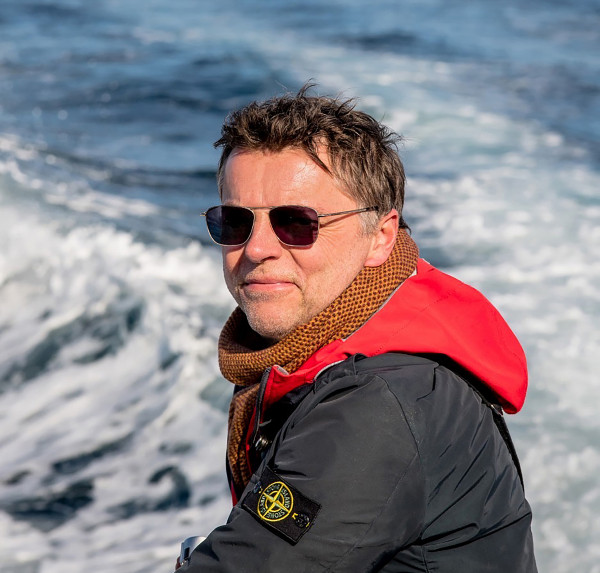
Lieven Engelen+-
The trained graphic designer works as Art Director, Creative Director and Advertising Director for agencies such as BBDO and Lowe Prague. The graduate from the Fotovakschool Amsterdam, began his career as a photographer with an emphasis on landscape and portrait photography, in 2011. Engelen is inspired by the world in general and leaves it up to the viewers to decide how they want to engage with the presented work. More