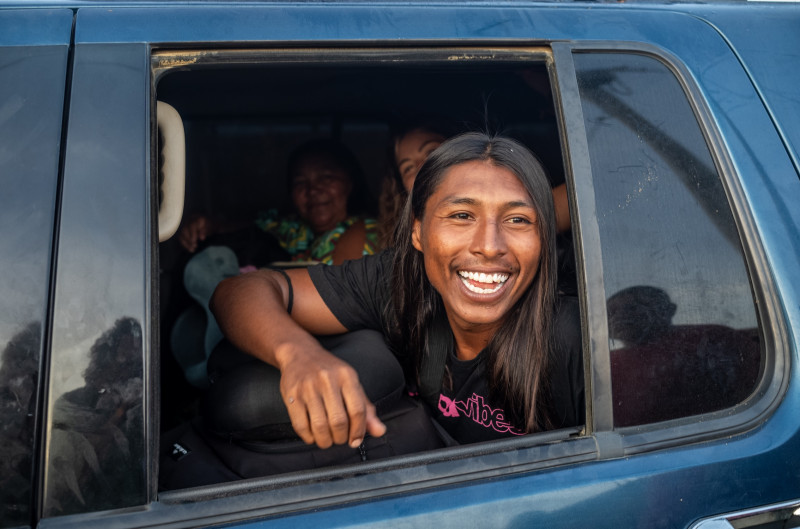
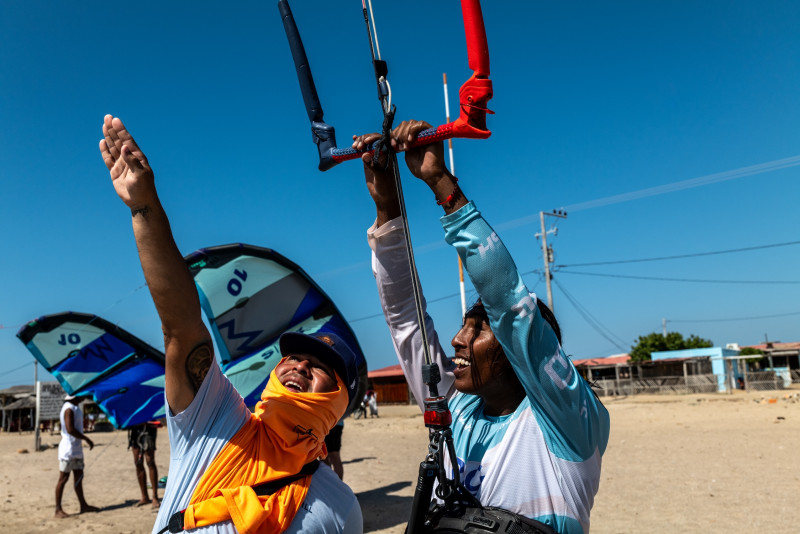
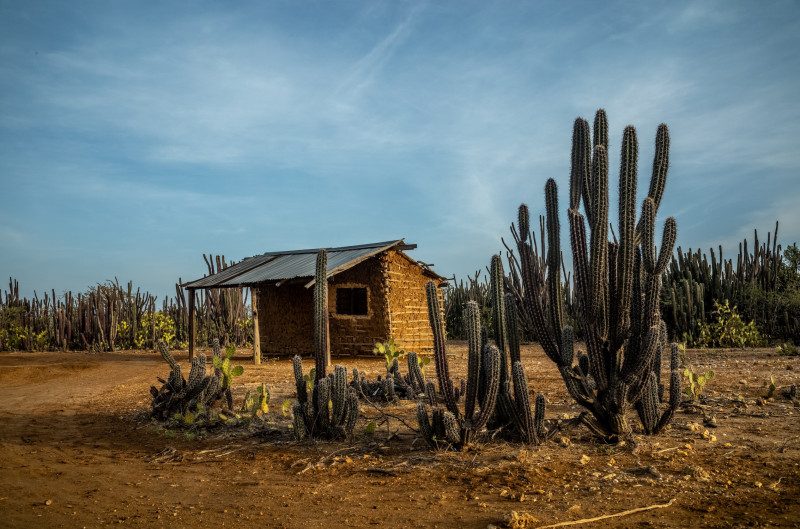
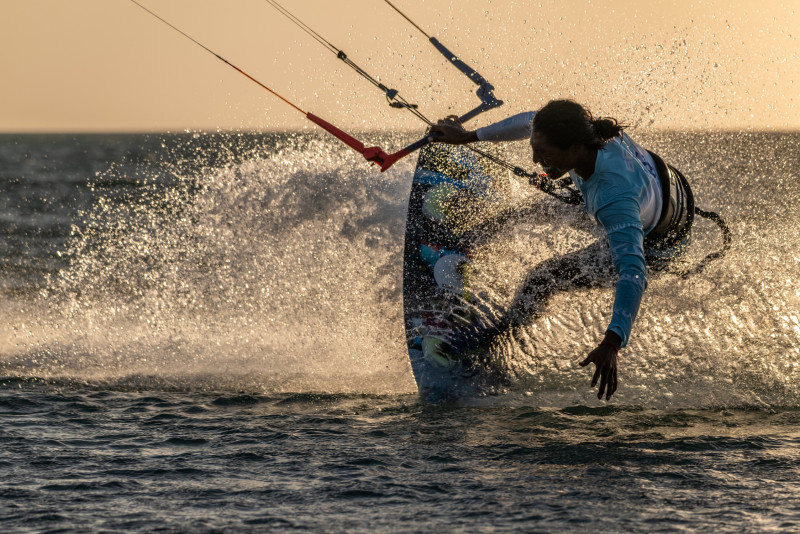
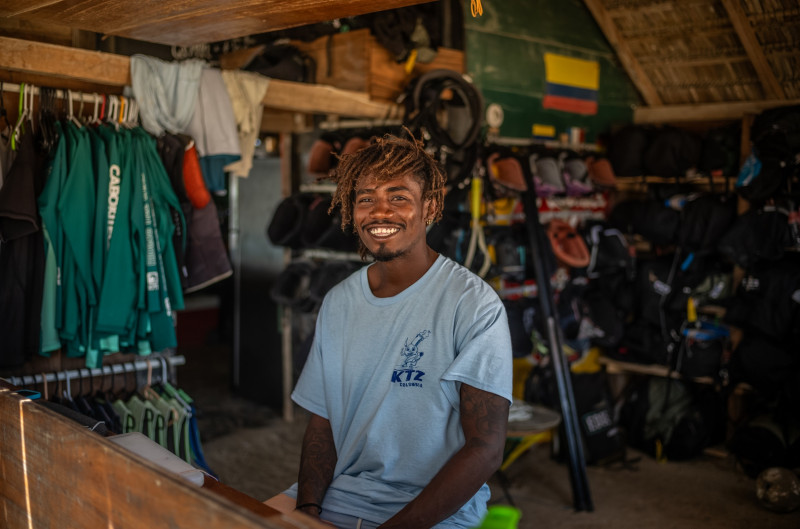
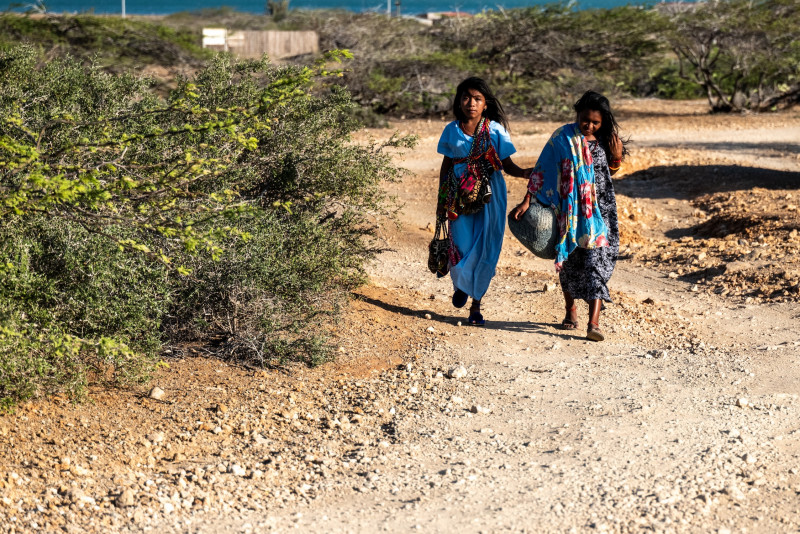
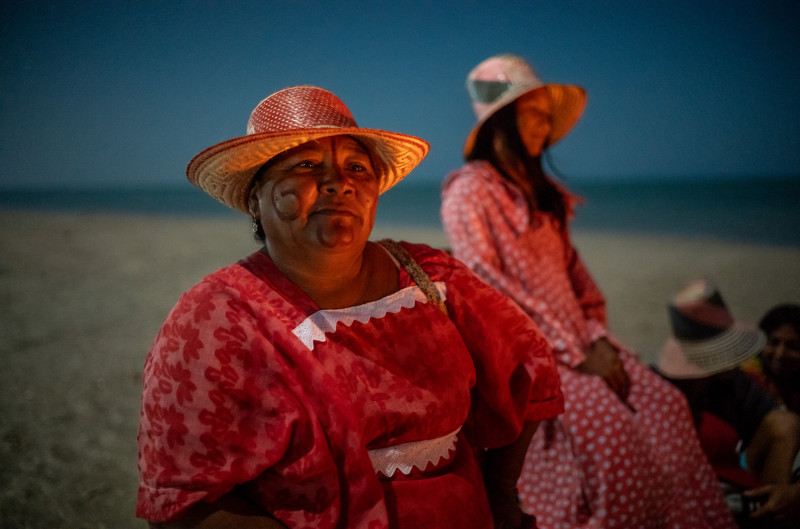
Federico Ríos Escobar found his way to kitesurfing somewhat by chance. Some time ago, he met Beto, an indigenous kitesurfer. This contact resulted in a project highlighting the role that kitesurfing plays for the Wayuu, the indigenous people of Colombia’s La Guajira Peninsula. The images create awareness for the indigenous athletes and reveal how cultural pride and extreme sports come together in an impressive manner.
LFI: What led you to the kitesurfers of Colombia?
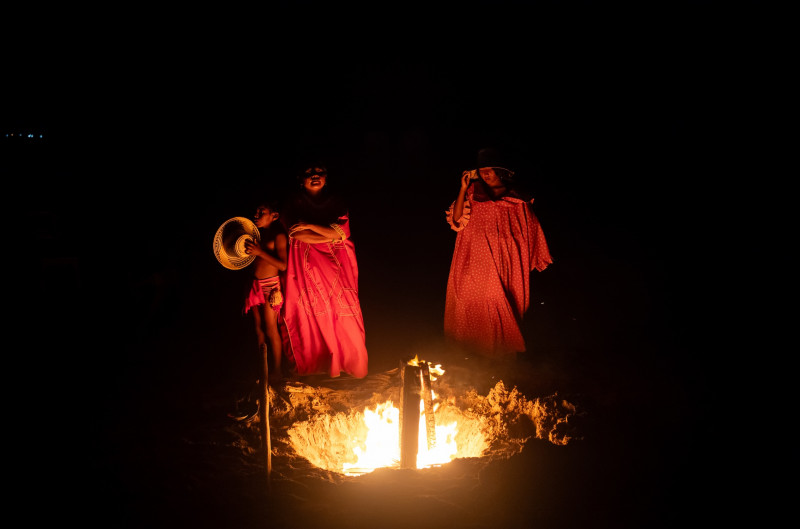
Federico Ríos Escobar: When I first heard about Beto, an indigenous man from the arid deserts of northern Colombia who had risen to become one of the world’s top kitesurfers, I was instantly intrigued. I reached out to him and listened to his remarkable journey: how he taught himself to kitesurf and then passed on that knowledge to his family; how the sport carried him from a remote village where meals are still cooked over open flames to international competitions and global recognition; and how, despite his success, he returns home every year to train new kitesurfers and share his skills with local friends.
What is the meaning of the connection of the indigenous Wayuu and kitesurfing?
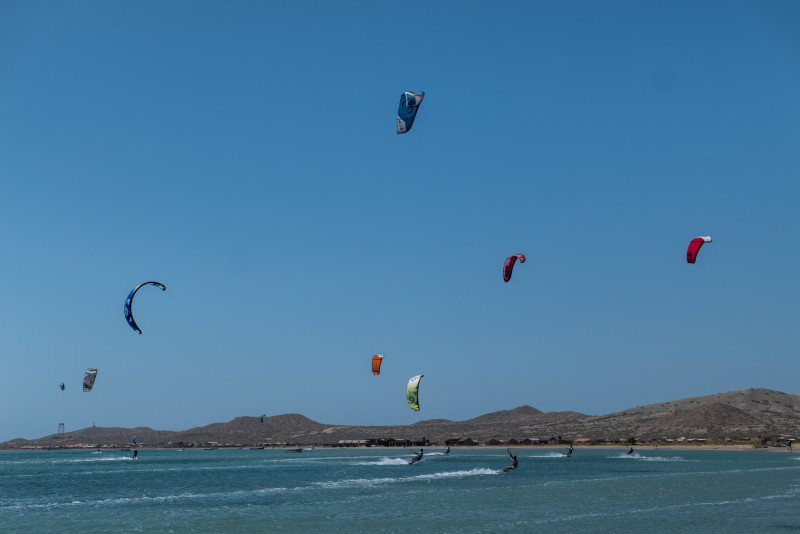
Sustainable livelihoods are scarce for the Wayuu people. In the harsh desert of northern Colombia, many rely on raising sheep, modest tourism, or work in the coal mines and on the train, options that offer little stability or long-term opportunity. But kitesurfing is changing that. The Wayuu are transforming their ancestral territory into a world-class destination for the sport, blending sustainability with cultural pride. Even more remarkable, some Indigenous athletes from the region are rising to international prominence, competing in global kitesurfing contests and redefining what’s possible from one of the remotest corners of Colombia.
Kitesurfing has found a great setting in the waters of the La Guajira Peninsula. What makes the place so unique and inspiring for your project?
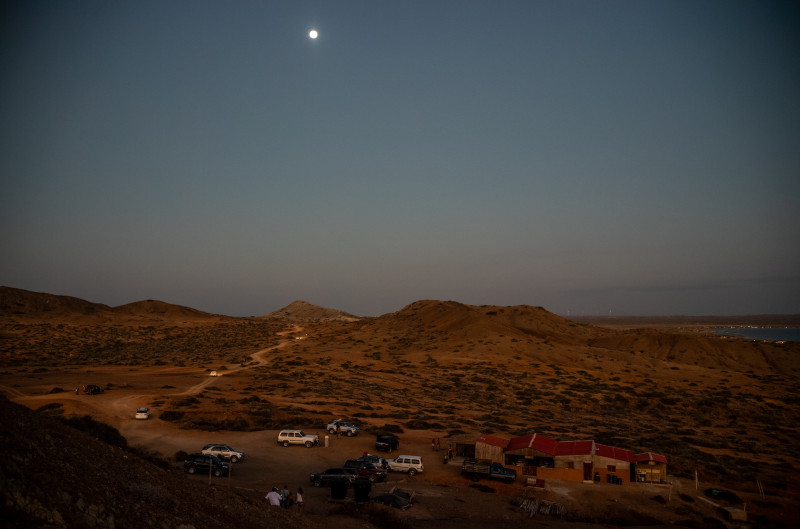
Getting to Cabo de la Vela isn’t easy. After flying into Riohacha, you have to cross the sun-scorched dunes of La Guajira by car, a journey as rugged as the landscape itself. But once you arrive, it feels like stumbling upon paradise: an oasis by the sea with pristine beaches, warm-hearted locals, and sunsets that seem to set the entire horizon ablaze. The air is charged with good energy, and the spirit of the place is unlike anywhere else.
What aspects do you pay particular attention to when photographing people engaged in an extreme sport?
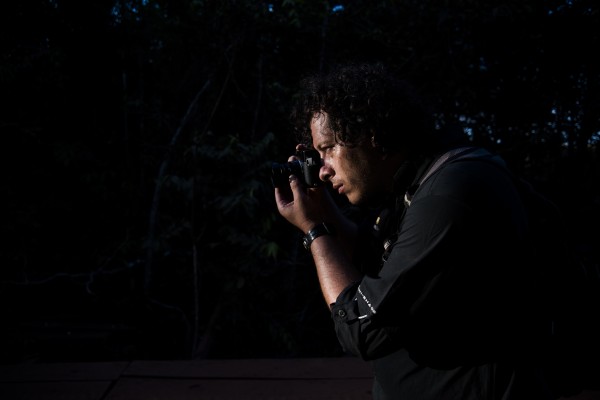
Photographing extreme sports shares many fundamentals with other genres of photography. For me, the essentials remain the same: composition, framing, and light. But in these high-intensity moments, I also strive to highlight the athlete’s performance, not just through technical precision, but by capturing their professional skill with a humanistic perspective. It’s about revealing the person behind the motion, the story within the speed.
What equipment did you use for this project and how did it support your work?
For this project, I used Leica SL2 with a 100-400mm lens and a 24-90mm lens. I also used a M10r with a 35mm f/1.4. The M is always my favourite, but for speed and sports like this, the SL2 performs very well.
Eliza TrappEQUIPMENT: Leica SL2, Vario-Elmar-SL 100-400 f/5-6.3 and Vario-Elmarit-SL 24-90 f/2.8-4 Asph; Leica M10R, Summilux-M 35 f/1.4 Asph
Federico Rios Escobar+-
Born in 1980, the renowned Colombian photojournalist is known for his impressive, in depth, visual narrative. As a regular contributor to The New York Times, he has dedicated his work to complex stories about migration, armed conflicts, and the relationship between society and the environment in Latin America. In 2024, he published his photo book Darién, which focusses on migration through the dangerous Darién region. This work followed his highly-regarded VERDE publication from 2020, which presented a decade of documentation about Colombian guerillas. Ríos Escobar is the recipient of numerous awards, including the World Press Photo 2025 Long Term Latam Winner. More